Cheng Rachel A, Eade Colleen R, Wiedmann Martin
Department of Food Science, Cornell University, Ithaca, NY, United States.
Department of Population Medicine and Diagnostic Sciences, Cornell University, Ithaca, NY, United States.
Front Microbiol. 2019 Jun 26;10:1368. doi: 10.3389/fmicb.2019.01368. eCollection 2019.
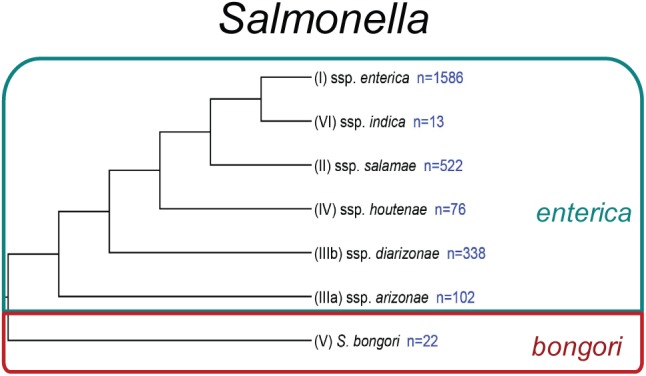
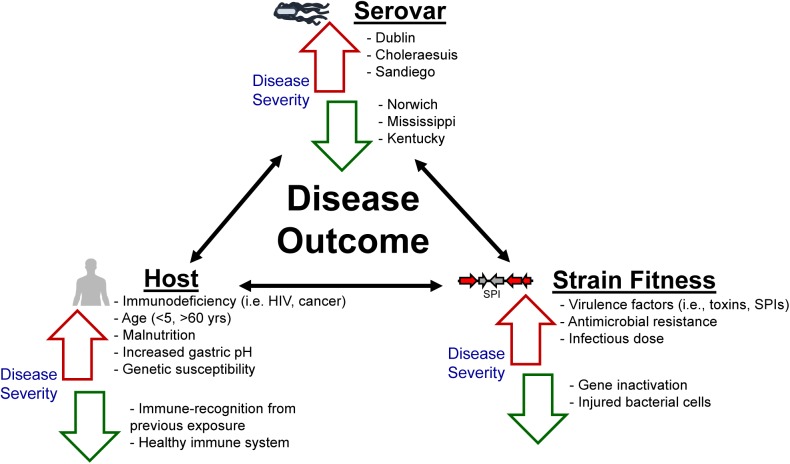
Not all serovars cause the same disease. represents an incredibly diverse species comprising >2,600 unique serovars. While some serovars are host-restricted, others infect a wide range of hosts. The diseases that nontyphoidal (NTS) serovars cause vary considerably, with some serovars being significantly more likely to cause invasive disease in humans than others. Furthermore, while genomic analyses have advanced our understanding of the genetic diversity of these serovars, they have not been able to fully account for the observed clinical differences. One overarching challenge is that much of what is known about 's general biology and virulence strategies is concluded from studies examining a select few serovars, especially serovar Typhimurium. As targeted control strategies have been implemented to control select serovars, an increasing number of foodborne outbreaks involving serovars that are less frequently associated with human clinical illness are being detected. Harnessing what is known about the diversity of NTS serovars represents an important factor in achieving the ultimate goal of reducing salmonellosis-associated morbidity and mortality worldwide. In this review we summarize the current understanding of the differences and similarities among NTS serovars, highlighting the virulence mechanisms, genetic differences, and sources that characterize diversity and contribute to its success as a foodborne pathogen.
并非所有血清型都会引发相同的疾病。沙门氏菌是一个极其多样的物种,包含超过2600种独特的血清型。虽然一些沙门氏菌血清型具有宿主特异性,但其他血清型可感染多种宿主。非伤寒沙门氏菌(NTS)血清型所引发的疾病差异很大,一些血清型比其他血清型更有可能在人类中引发侵袭性疾病。此外,尽管基因组分析增进了我们对这些血清型遗传多样性的理解,但它们仍无法完全解释所观察到的临床差异。一个首要挑战是,关于沙门氏菌的一般生物学特性和毒力策略的许多认识是从对少数血清型(尤其是鼠伤寒血清型)的研究中得出的。随着已实施针对性控制策略来控制特定血清型,越来越多涉及与人类临床疾病关联较少的血清型的食源性疾病暴发被检测到。利用我们对NTS血清型多样性的了解是实现全球降低沙门氏菌病相关发病率和死亡率这一最终目标的重要因素。在本综述中,我们总结了目前对NTS血清型之间异同的理解,突出了毒力机制、遗传差异以及表征沙门氏菌多样性并促成其成为食源性病原体的来源。