Laboratory of Host-Parasite Interaction and Epidemiology, Gonçalo Moniz Institute, Fiocruz-Bahia, Salvador, Brazil.
Laboratory of Vector Born Infectious Diseases, Gonçalo Moniz Institute, Salvador, Brazil.
Front Immunol. 2019 Jun 28;10:1362. doi: 10.3389/fimmu.2019.01362. eCollection 2019.
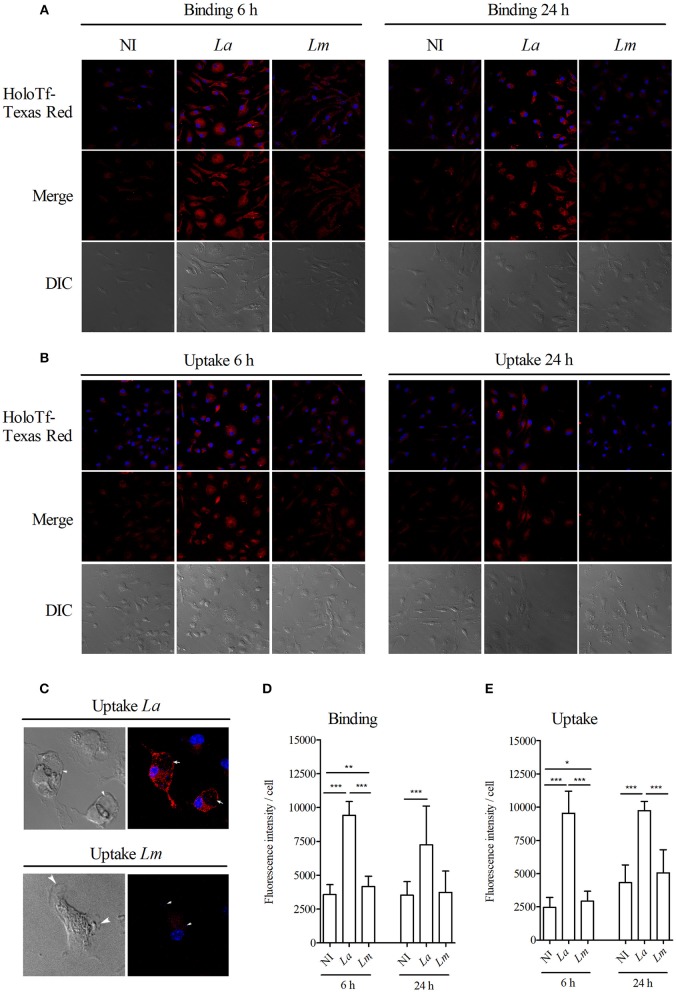
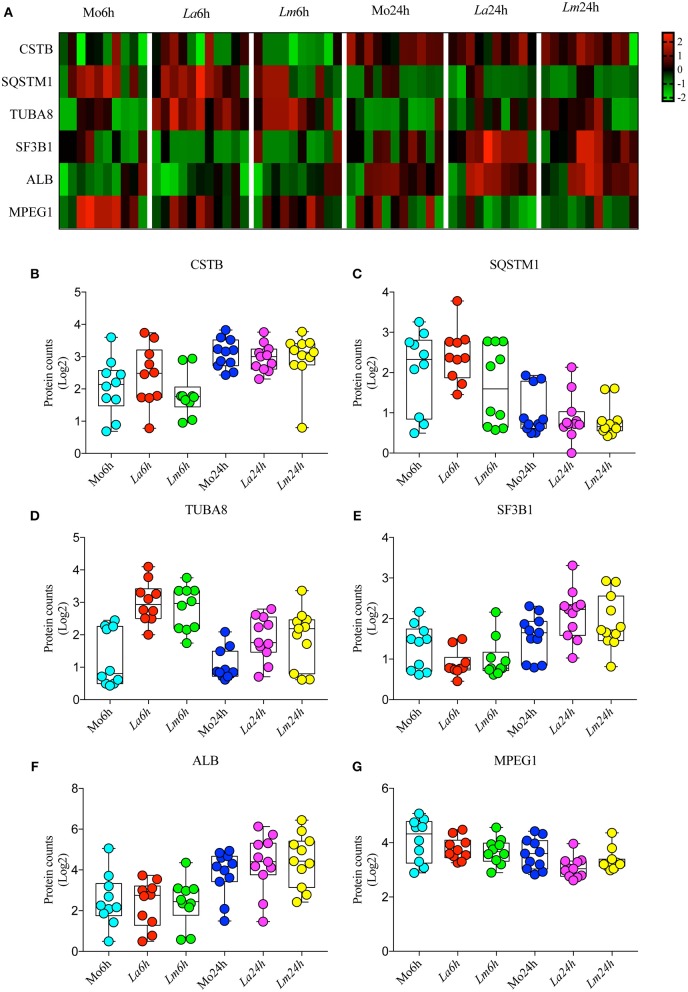
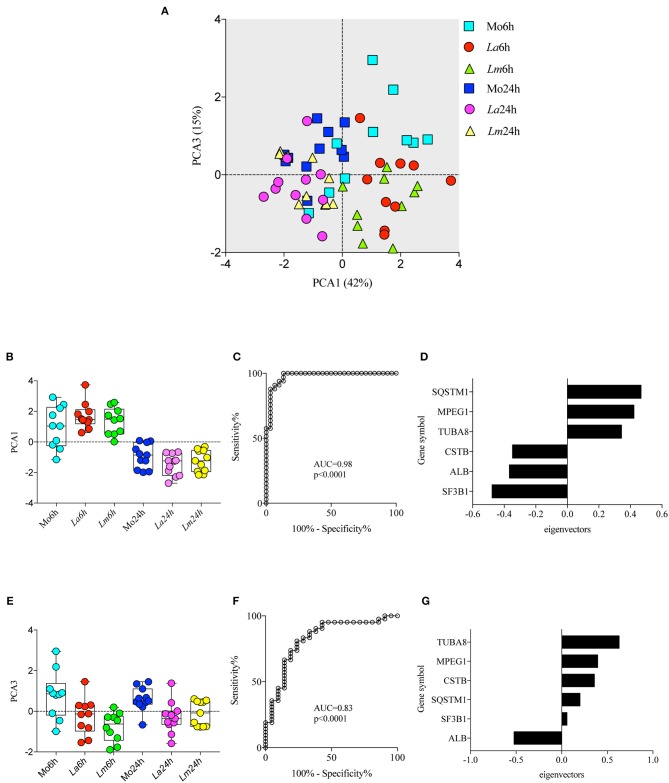
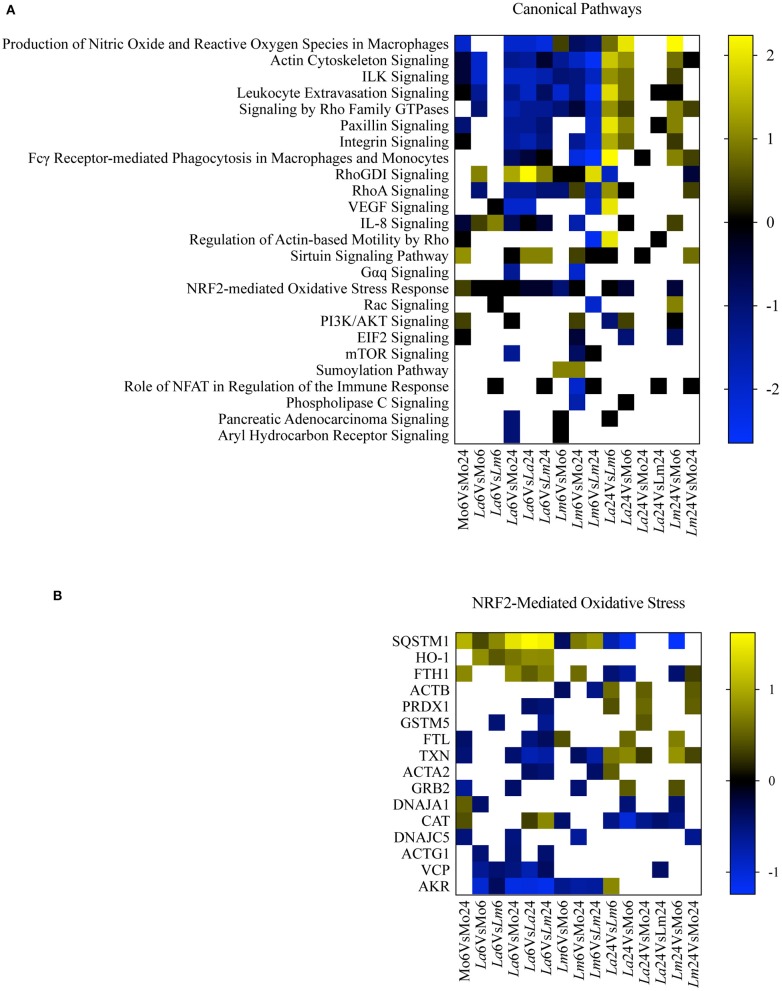
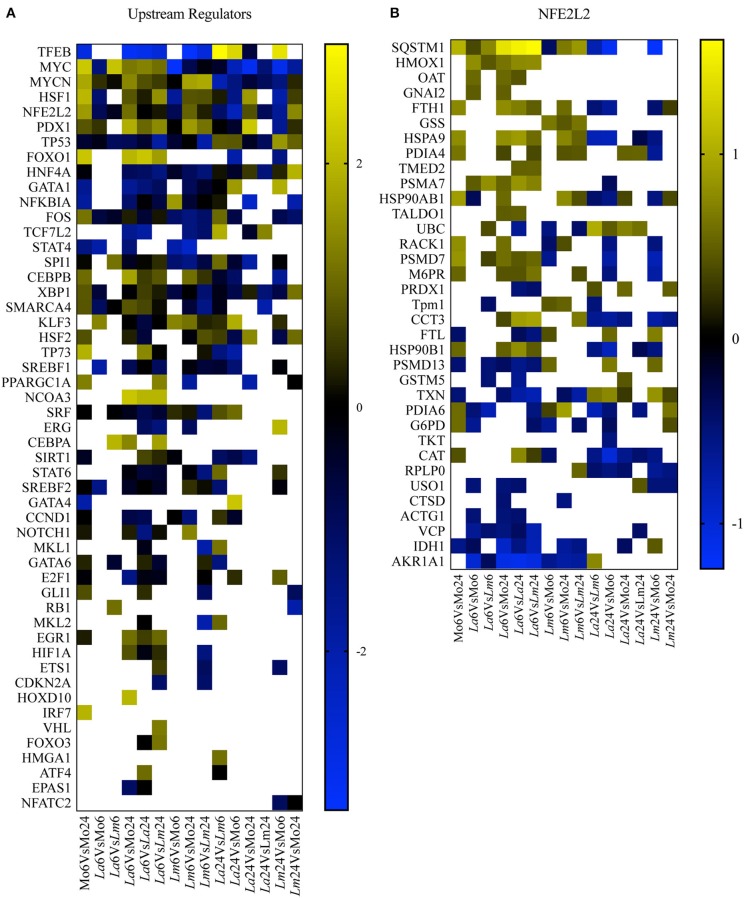
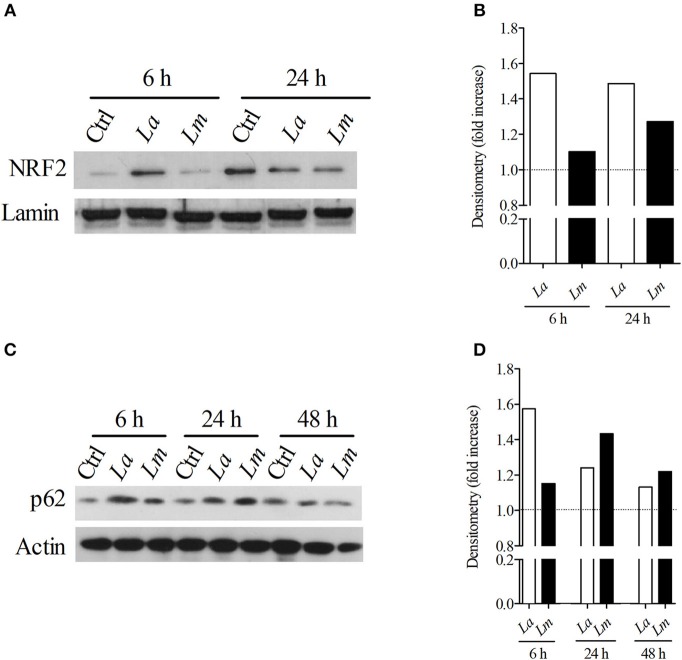
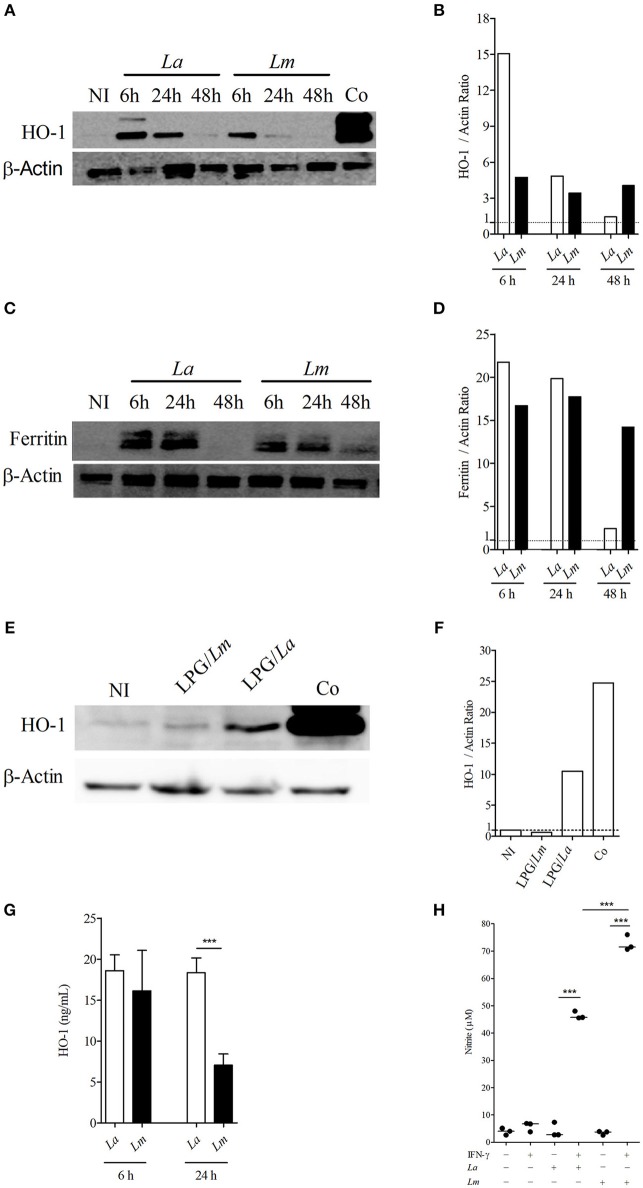
CBA mice macrophages (MØ) control infection by and are susceptive to , suggesting that both parasite species induce distinct responses that play important roles in infection outcome. To evaluate the MØ responses to infection arising from these two species, a proteomic study using a Multidimensional Protein Identification Technology (MudPIT) approach with liquid chromatography tandem mass spectrometry (LC-MS/MS) was carried out on CBA mice bone-marrow MØ (BMMØ). Following SEQUEST analysis, which revealed 2,838 proteins detected in BMMØ, data mining approach found six proteins significantly associated with the tested conditions. To investigate their biological significance, enrichment analysis was performed using Ingenuity Pathway Analysis (IPA). A three steps IPA approach revealed 4 Canonical Pathways (CP) and 7 Upstream Transcriptional Factors (UTFs) strongly associated with the infection process. NRF2 signatures were present in both CPs and UTFs pathways. Proteins involved in iron metabolism, such as heme oxigenase 1 (HO-1) and ferritin besides sequestosome (SQSMT1 or p62) were found in the NRF2 CPs and the NRF2 UTFs. Differences in the involvement of iron metabolism pathway in infection was revealed by the presence of HO-1 and ferritin. Noteworty, HO-1 was strongly associated with infection, while ferritin was regulated by both species. As expected, higher HO-1 and p62 expressions were validated in -infected BMMØ, in addition to decreased expression of ferritin and nitric oxide production. Moreover, BMMØ incubated with LPG also expressed higher levels of HO-1 in comparison to those stimulated with LPG. In addition, -induced uptake of holoTf was higher than that induced by in BMMØ, and holoTf was also detected at higher levels in vacuoles induced by . Taken together, these findings indicate that NRF2 pathway activation and increased HO-1 production, together with higher levels of holoTf uptake, may promote permissiveness to s infection. In this context, differences in protein signatures triggered in the host by and infection could drive the outcomes in distinct clinical forms of leishmaniasis.
CBA 小鼠巨噬细胞 (MØ) 通过控制感染并对 敏感,这表明这两种寄生虫均会诱导不同的反应,这些反应在感染结果中发挥着重要作用。为了评估源自这两种 寄生虫的 MØ 感染反应,采用多维蛋白质鉴定技术 (MudPIT) 结合液相色谱串联质谱 (LC-MS/MS) 的蛋白质组学研究在 CBA 小鼠骨髓巨噬细胞 (BMMØ) 中进行。在 SEQUEST 分析后,在 BMMØ 中检测到 2838 种蛋白质,通过数据挖掘方法发现了 6 种与测试条件显著相关的蛋白质。为了研究它们的生物学意义,使用 IPA 进行了富集分析。IPA 三步法揭示了与感染过程强烈相关的 4 个 Canonical Pathways (CP) 和 7 个 Upstream Transcriptional Factors (UTFs)。NRF2 特征存在于 CP 和 UTF 途径中。涉及铁代谢的蛋白质,如血红素加氧酶 1 (HO-1) 和铁蛋白,以及自噬体 (SQSMT1 或 p62) 存在于 NRF2 CP 和 NRF2 UTF 中。在 感染中,铁代谢途径的参与存在差异,这是通过 HO-1 和铁蛋白的存在来揭示的。值得注意的是,HO-1 与 感染强烈相关,而铁蛋白受两种寄生虫的调节。如预期的那样,在 感染的 BMMØ 中验证了更高的 HO-1 和 p62 表达,同时铁蛋白的表达降低和一氧化氮的产生减少。此外,与 LPG 孵育的 BMMØ 表达更高水平的 HO-1,而与 LPG 刺激的 BMMØ 相比。此外,与 相比,在 BMMØ 中诱导的完整转铁蛋白摄取更高,并且在 诱导的空泡中也检测到更高水平的完整转铁蛋白。综上所述,这些发现表明 NRF2 途径的激活和 HO-1 产量的增加,以及更高水平的完整转铁蛋白摄取,可能促进 感染的易感性。在这种情况下,由 和 感染引发的宿主蛋白特征差异可能会导致不同临床形式的利什曼病的结果。