Gong Guowei, Han Guangyi, He Huan, Dong Tina T X, Tsim Karl W K, Zheng Yuzhong
Department of Bioengineering, Zunyi Medical University, Zhuhai Campus, Zhuhai, Guangdong, 519041, China.
Gansu Institute for Drug Control, Lanzhou, Gansu, 730070, China.
Evid Based Complement Alternat Med. 2019 Jun 16;2019:3648685. doi: 10.1155/2019/3648685. eCollection 2019.
Abnormal storage of white adipocyte tissue (WAT) is the major factor causing obesity. The promising strategies for obesity treatment are building up the brown adipocyte tissue (BAT) and/or expedite fatty acid catabolism. Traditional Chinese Medicine (TCM) sheds light on preventing obesity. Ginger is one of the most effective herbs for antiobesity by accelerating browning WAT. To fortify the antiobesity effect of ginger, an ancient Chinese herbal decoction composed of four herbs, Angelicae Sinensis Radix (ASR), Astragali Radix (AR), Jujuba Fructus (JF), and Zingiberis Rhizoma Recens (ZRR; ginger), was tested here: this herbal formula was written in AD 1155, named as Danggui Buxue Tang (DBT). Therefore, the antiobesity function of this ancient herbal decoction was revealed by cultured 3T3-L1 cells.
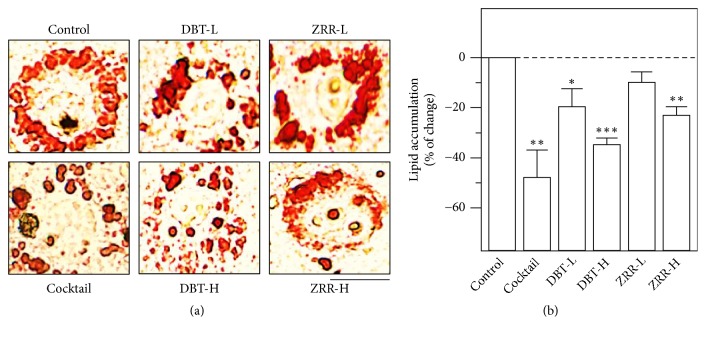
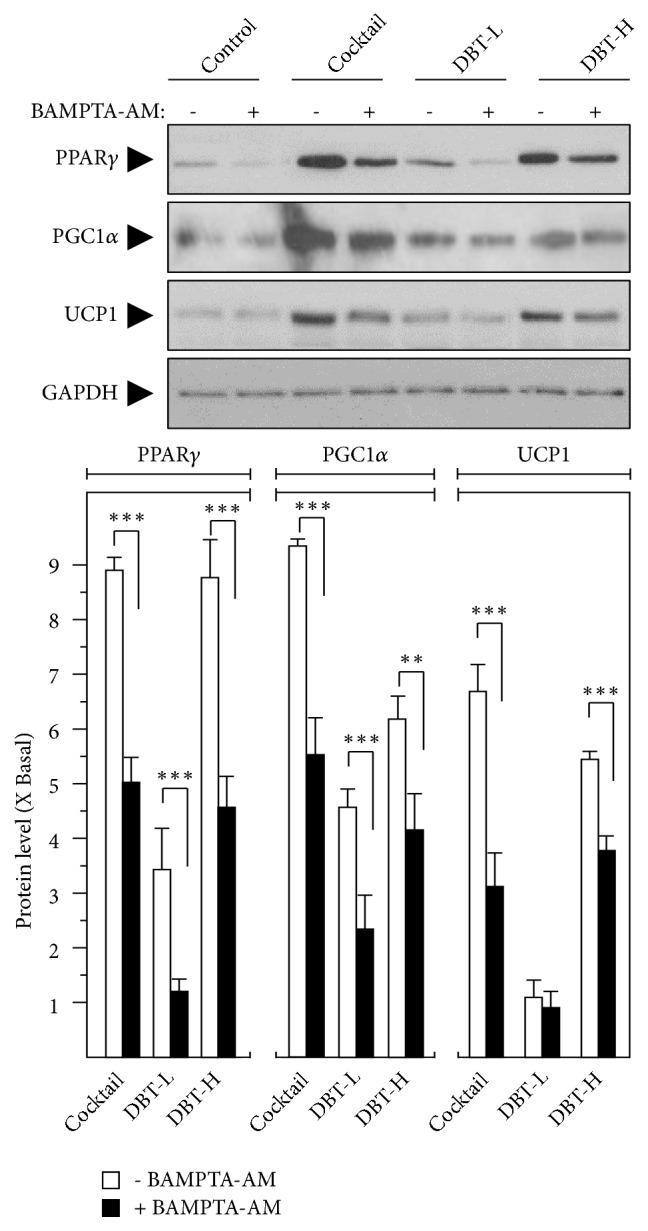
The lipid accumulation was detected by Oil Red O staining. Furthermore, the underlying working mechanisms of antiobesity functions of DBT were confirmed in 3T3-L1 cells by confocal microscopy, western blot, and RT-PCR.
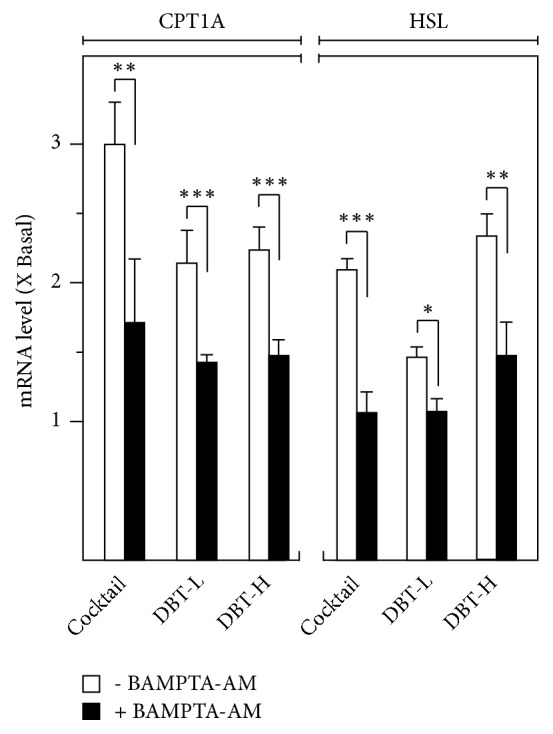
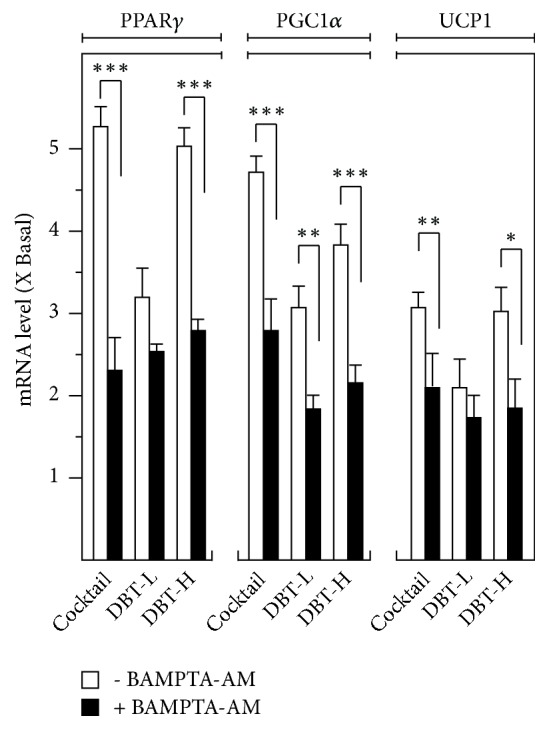
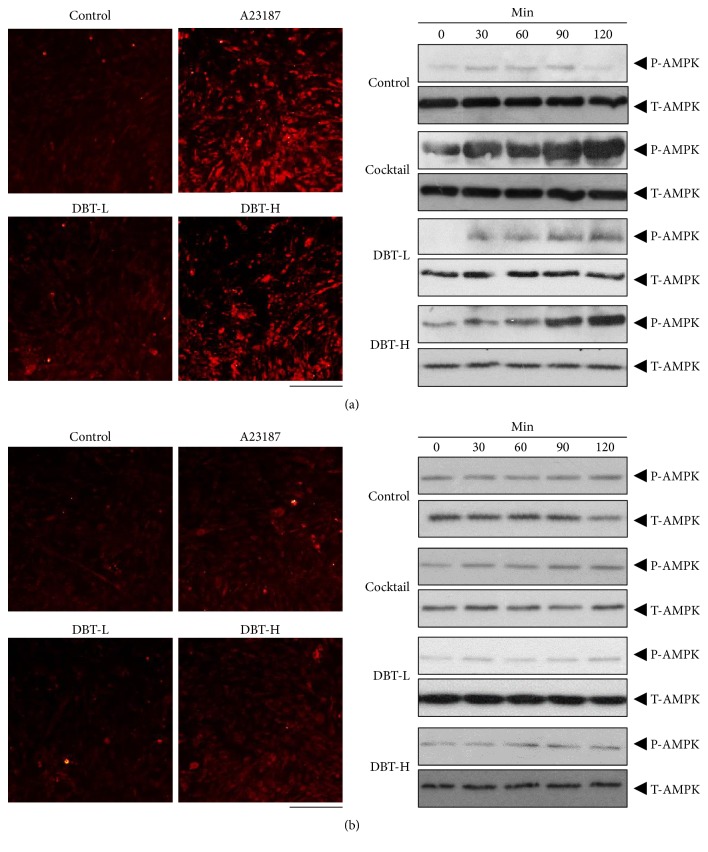
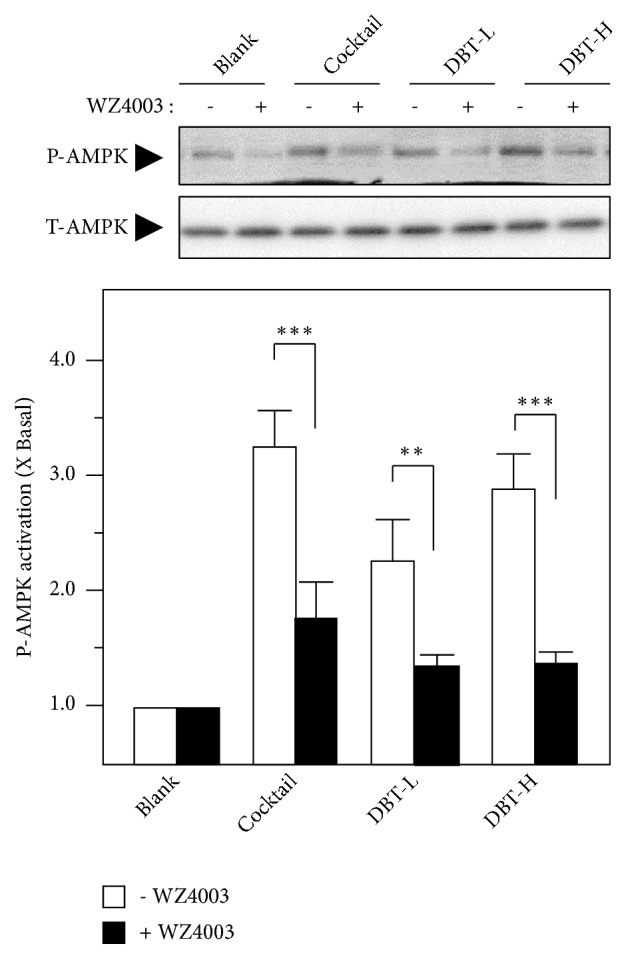
DBT was able to actuate brown fat-specific gene activations, which included (i) expression of PPAR, UCP1, and PCG1 and (ii) fatty acid oxidation genes, i.e., CPT1A and HSL. The increase of browning WAT, triggered by DBT, was possibly mediated by a Ca-AMPK signaling pathway, because the application of Ca chelator, BAMPTA-AM, reversed the effect.
These findings suggested that the herbal mixture DBT could potentiate the antiobesity functions of ginger, which might have potential therapeutic implications.
白色脂肪组织(WAT)的异常储存是导致肥胖的主要因素。肥胖治疗的有效策略是增加棕色脂肪组织(BAT)和/或加速脂肪酸分解代谢。传统中医(TCM)为预防肥胖提供了思路。生姜是通过加速白色脂肪组织褐变来实现抗肥胖效果的最有效草药之一。为增强生姜的抗肥胖作用,本文对一种由四味中药组成的古代中药汤剂进行了测试:该中药配方记载于公元1155年,名为当归补血汤(DBT)。因此,通过培养的3T3-L1细胞揭示了这种古代中药汤剂的抗肥胖功能。
采用油红O染色检测脂质积累。此外,通过共聚焦显微镜、蛋白质免疫印迹法和逆转录聚合酶链反应在3T3-L1细胞中证实了DBT抗肥胖功能的潜在作用机制。
DBT能够激活棕色脂肪特异性基因的表达,其中包括(i)过氧化物酶体增殖物激活受体(PPAR)、解偶联蛋白1(UCP1)和过氧化物酶体增殖物激活受体γ共激活因子1(PCG1)的表达,以及(ii)脂肪酸氧化基因,即肉碱棕榈酰转移酶1A(CPT1A)和激素敏感脂肪酶(HSL)。DBT引发的白色脂肪组织褐变增加可能是由钙-腺苷酸活化蛋白激酶(Ca-AMPK)信号通路介导的,因为应用钙螯合剂乙二醇双四乙酸乙酰甲酯(BAPTA-AM)可逆转该效应。
这些发现表明,中药合剂DBT可以增强生姜的抗肥胖功能,可能具有潜在的治疗意义。