Rahma Osmalina Nur, Rahmatillah Akif
Department of Physics, Airlangga University, Surabaya, Indonesia.
J Med Signals Sens. 2019 Apr-Jun;9(2):130-136. doi: 10.4103/jmss.JMSS_54_18.
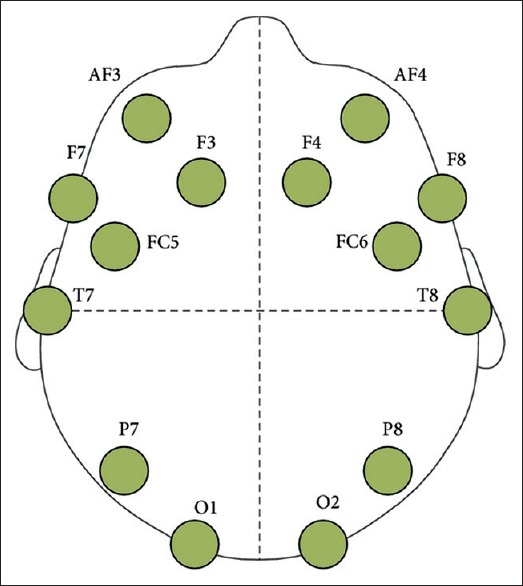
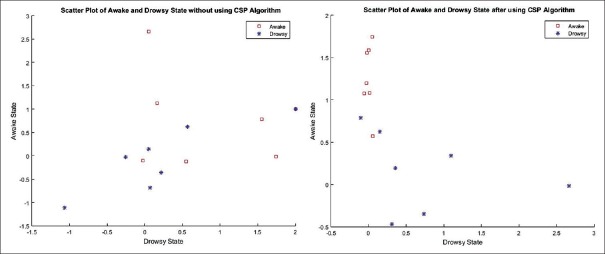
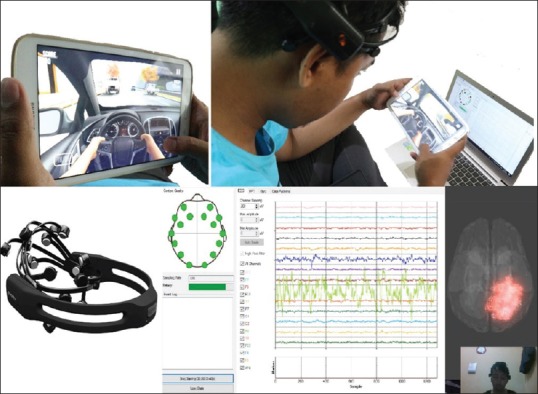
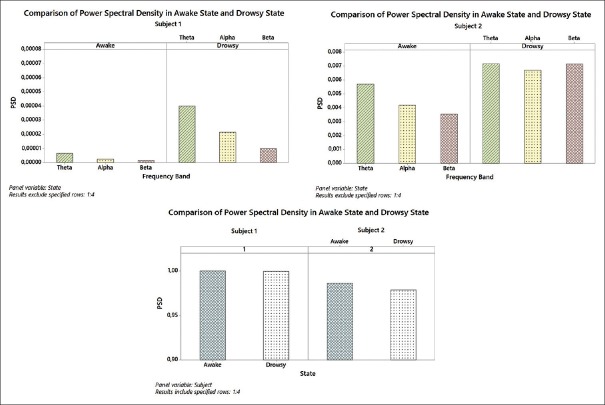
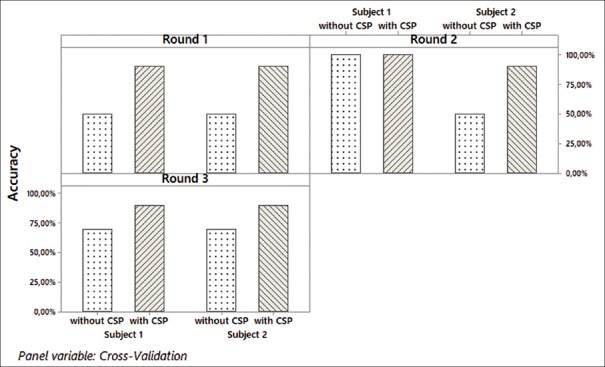
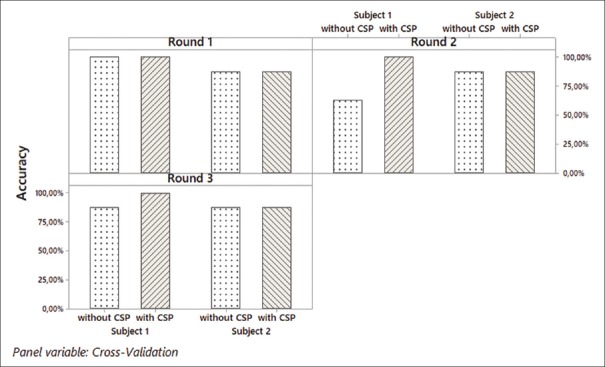
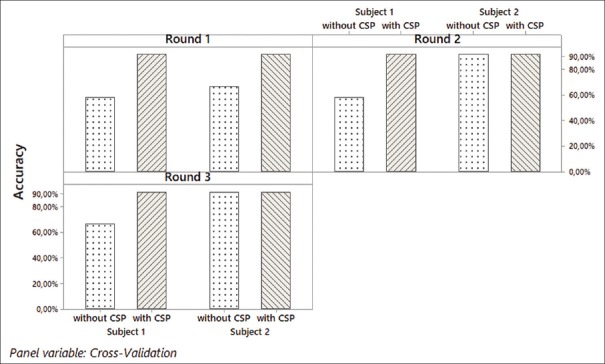
An alarm system has become essential to prevent someone from drowsiness while driving, considering the high incidence due to fatigue or drowsiness. This study offered an alternative to overcome all the limitations provided by the conventional system to detect sleepiness based on the driver's brain electrical activity using wearable electroencephalogram (EEG), which is lighter and easy to use. The EEG signals were collected using EMOTIV Epoc + and then were decomposed into narrowband frequency, such as delta, theta, alpha, and beta using DWT. The relative power, as the result of feature extraction, then were processed further by calculating its variance using the common spatial pattern (CSP) method to optimize the accuracy of extreme learning machine (ELM). Comparison of relative power between awake and drowsy state showed that during the drowsy state, theta-wave, alpha-wave, and beta-wave were tend to be higher than in the awake state. However, despite with the help of ELM, the accuracy was not too high (below 87%). The feature extraction which continued by calculating its variance using CSP algorithm before classified by ELM obtained a high accuracy, even with small amount of data training. This showed that CSP combining with ELM could be useful to shorten the time in training/calibration session, yet still, obtained high accuracy in classifying the awake state and drowsy state. The overall average accuracy of testing ranged from 91.67% to 93.75%. This study could increase the ability of EEG in detecting drowsiness that is important to prevent the risk caused by driving in a drowsy state.
考虑到疲劳或困倦导致的高发生率,警报系统对于防止某人在驾驶时困倦已变得至关重要。本研究提供了一种替代方案,以克服传统系统基于驾驶员大脑电活动使用可穿戴脑电图(EEG)检测困倦所存在的所有局限性,该可穿戴脑电图更轻便且易于使用。使用EMOTIV Epoc +收集EEG信号,然后使用离散小波变换(DWT)将其分解为窄带频率,如δ波、θ波、α波和β波。作为特征提取结果的相对功率,随后使用共同空间模式(CSP)方法通过计算其方差进一步处理,以优化极限学习机(ELM)的准确性。清醒状态和困倦状态之间相对功率的比较表明,在困倦状态下,θ波、α波和β波往往高于清醒状态。然而,尽管借助了ELM,准确率并不太高(低于87%)。在通过ELM分类之前,使用CSP算法计算其方差进行的特征提取获得了较高的准确率,即使数据训练量较少。这表明CSP与ELM相结合有助于缩短训练/校准时间,同时在对清醒状态和困倦状态进行分类时仍能获得较高的准确率。测试的总体平均准确率在91.67%至93.75%之间。本研究可以提高脑电图检测困倦的能力,这对于预防困倦驾驶所带来的风险很重要。