Scripps Institution of Oceanography, University of California, San Diego, CA, 92093, USA.
Microbial and Environmental Genomics Group, J. Craig Venter Institute, La Jolla, CA, 92037, USA.
ISME J. 2019 Nov;13(11):2817-2833. doi: 10.1038/s41396-019-0472-2. Epub 2019 Jul 18.
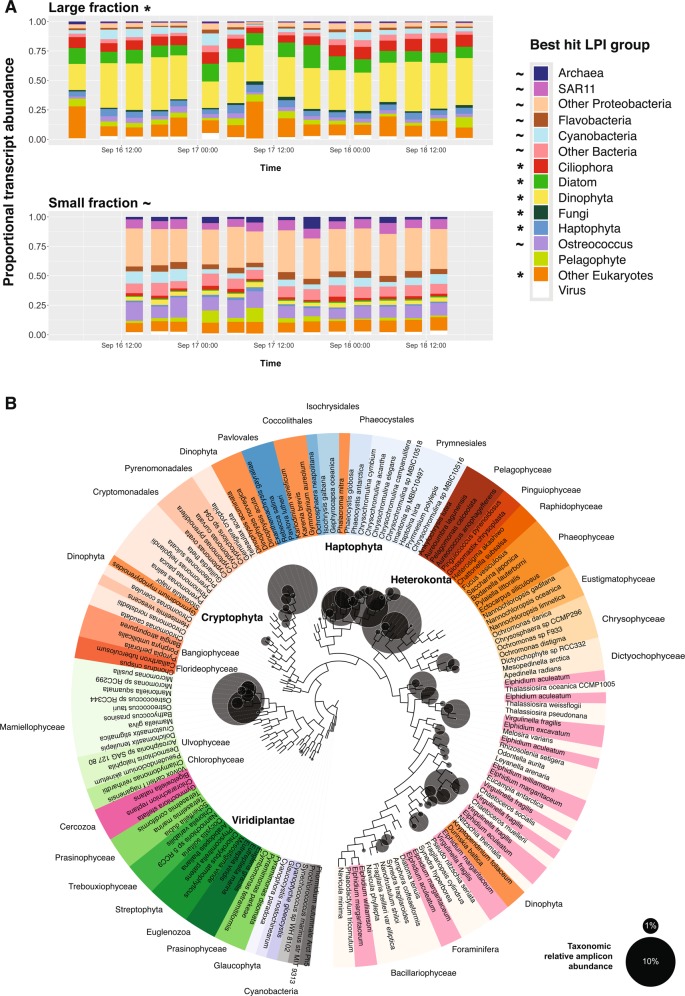
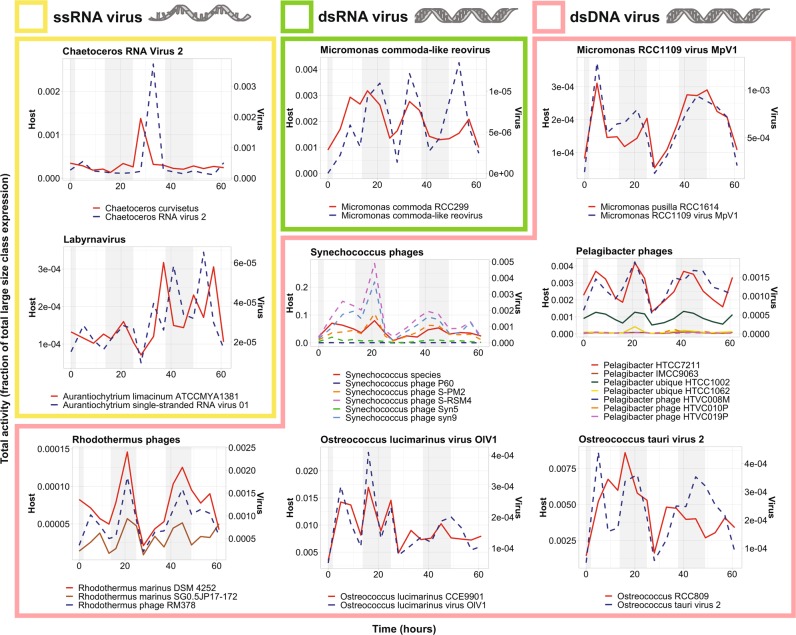
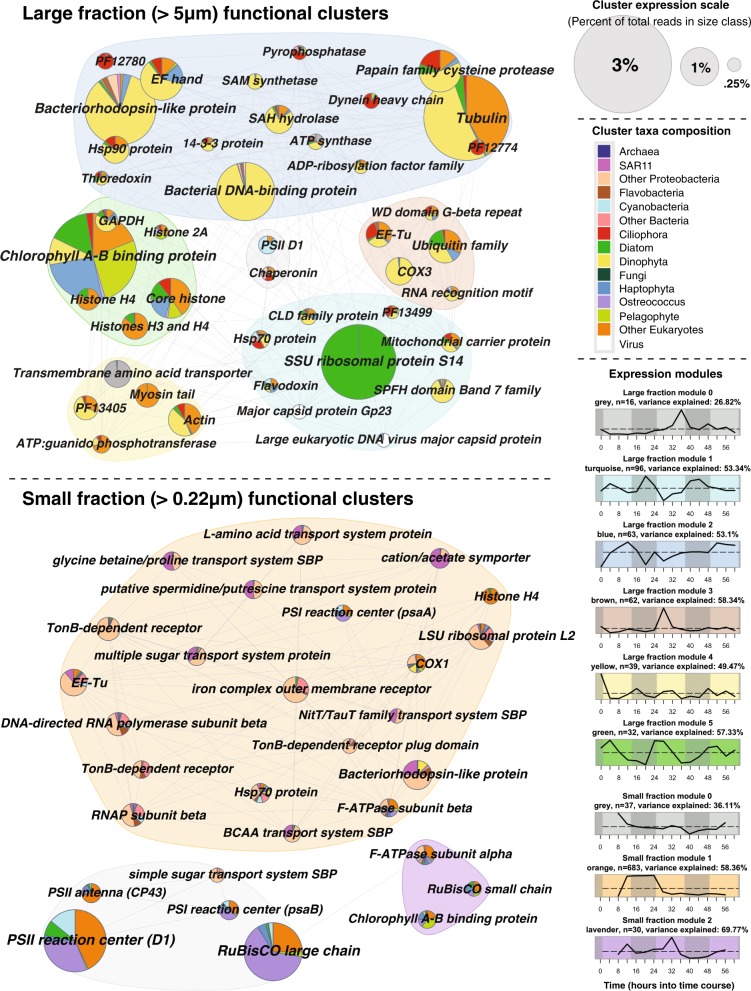
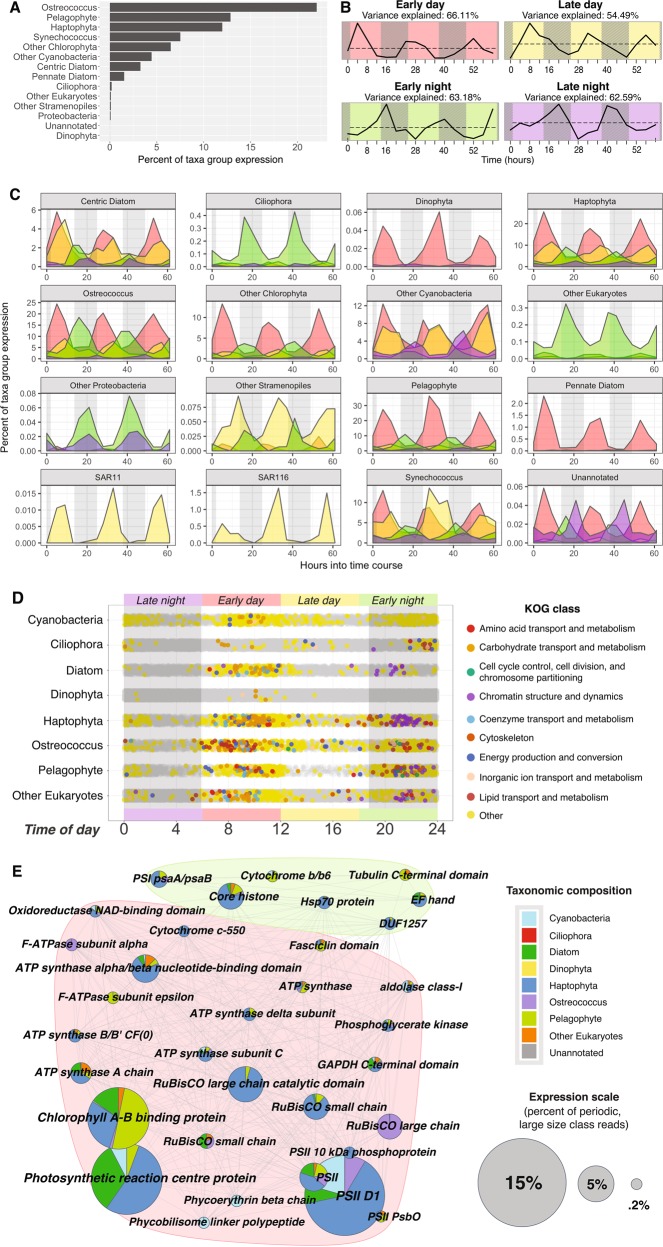
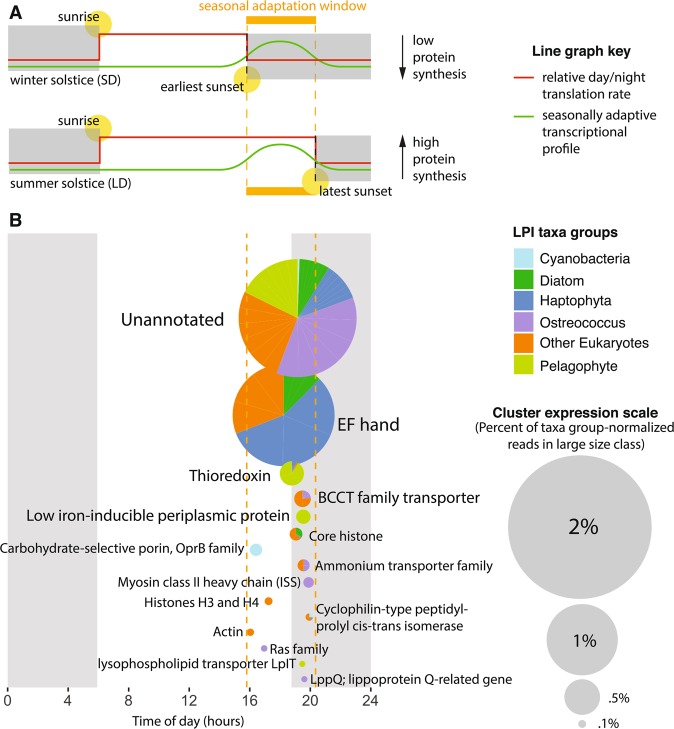
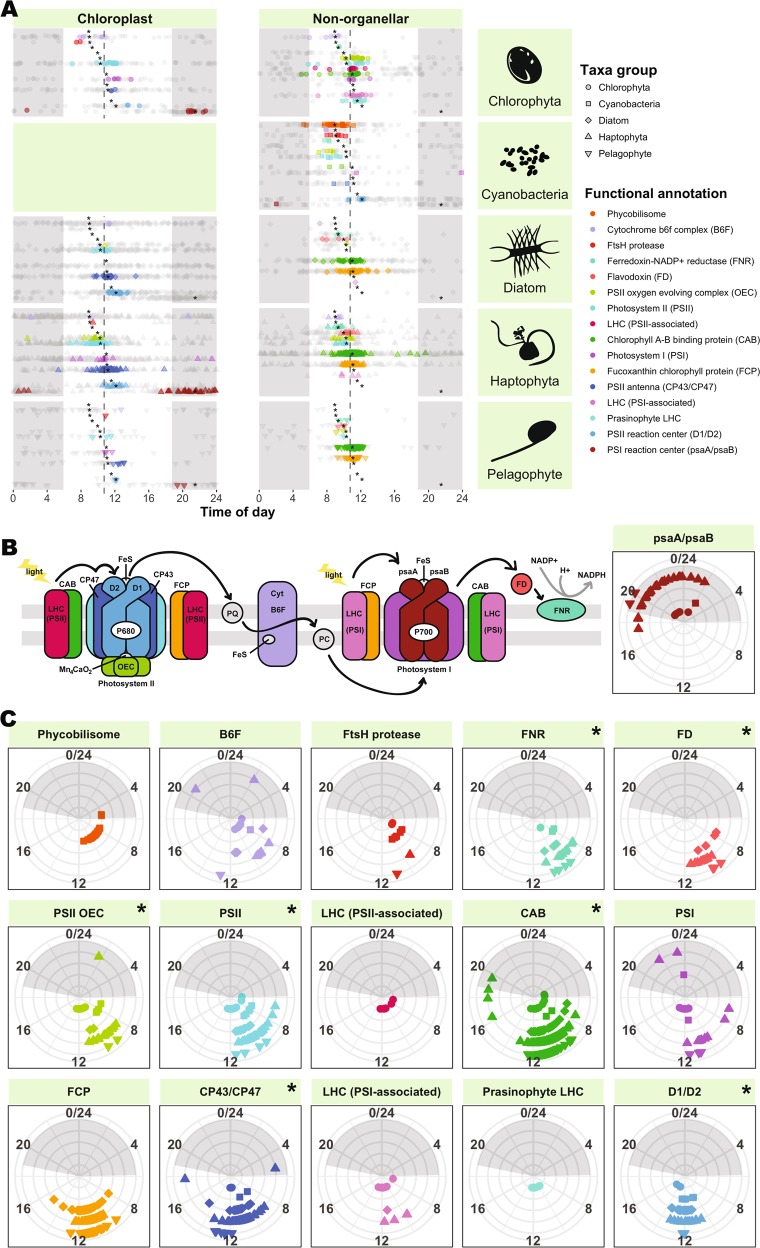
Phytoplankton and associated microbial communities provide organic carbon to oceanic food webs and drive ecosystem dynamics. However, capturing those dynamics is challenging. Here, an in situ, semi-Lagrangian, robotic sampler profiled pelagic microbes at 4 h intervals over ~2.6 days in North Pacific high-nutrient, low-chlorophyll waters. We report on the community structure and transcriptional dynamics of microbes in an operationally large size class (>5 μm) predominantly populated by dinoflagellates, ciliates, haptophytes, pelagophytes, diatoms, cyanobacteria (chiefly Synechococcus), prasinophytes (chiefly Ostreococcus), fungi, archaea, and proteobacteria. Apart from fungi and archaea, all groups exhibited 24-h periodicity in some transcripts, but larger portions of the transcriptome oscillated in phototrophs. Periodic photosynthesis-related transcripts exhibited a temporal cascade across the morning hours, conserved across diverse phototrophic lineages. Pronounced silica:nitrate drawdown, a high flavodoxin to ferredoxin transcript ratio, and elevated expression of other Fe-stress markers indicated Fe-limitation. Fe-stress markers peaked during a photoperiodically adaptive time window that could modulate phytoplankton response to seasonal Fe-limitation. Remarkably, we observed viruses that infect the majority of abundant taxa, often with total transcriptional activity synchronized with putative hosts. Taken together, these data reveal a microbial plankton community that is shaped by recycled production and tightly controlled by Fe-limitation and viral activity.
浮游植物和相关微生物群落为海洋食物网提供有机碳,并驱动生态系统动态。然而,捕捉这些动态具有挑战性。在这里,我们使用一种原位、半拉格朗日、机器人采样器,在北太平洋高营养、低叶绿素水域中,以 4 小时的间隔,对浮游微生物进行了约 2.6 天的剖面测量。我们报告了一个操作上较大的尺寸类群(>5 μm)中微生物的群落结构和转录动态,该类群主要由腰鞭毛藻、纤毛虫、甲藻、浮游植物、硅藻、蓝细菌(主要是聚球藻)、原绿藻(主要是海链藻)、真菌、古菌和变形菌组成。除了真菌和古菌,所有组别的一些转录本都表现出 24 小时的周期性,但大部分转录本在光养生物中振荡。周期性的光合作用相关转录本在上午的几个小时内表现出时间级联,在不同的光养生物谱系中都保持一致。明显的硅氮比下降、黄素蛋白到铁氧还蛋白的转录物比值高,以及其他铁胁迫标记物的表达升高,表明存在铁限制。铁胁迫标记物在一个光周期适应的时间窗口内达到峰值,这个时间窗口可以调节浮游植物对季节性铁限制的反应。值得注意的是,我们观察到了感染大多数优势类群的病毒,其总转录活性通常与假定的宿主同步。总之,这些数据揭示了一个由再循环产生塑造的微生物浮游群落,并且受到铁限制和病毒活性的严格控制。