Galati Manuela, Minetola Paolo, Rizza Giovanni
Department of Management and Production Engineering (DIGEP), Integrated Additive Manufacturing Center (IAM), Politecnico di Torino, Torino 10129, Italy.
Materials (Basel). 2019 Jul 9;12(13):2211. doi: 10.3390/ma12132211.
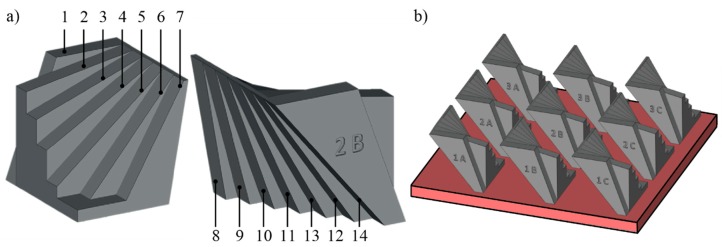
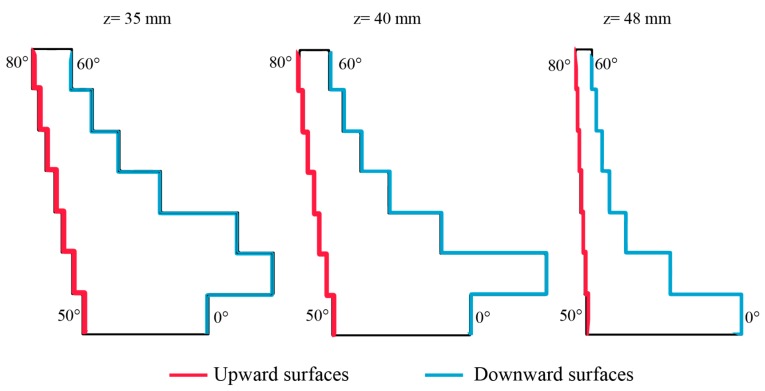
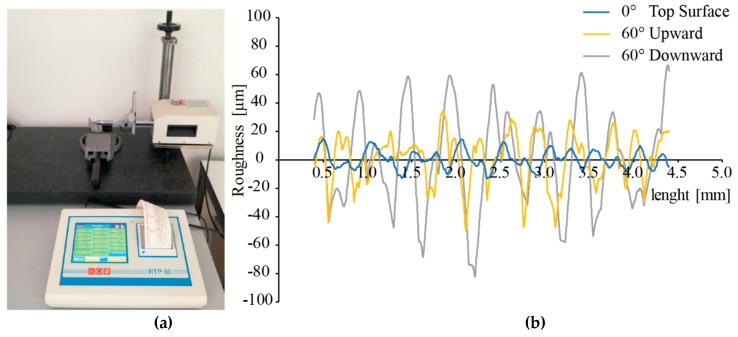
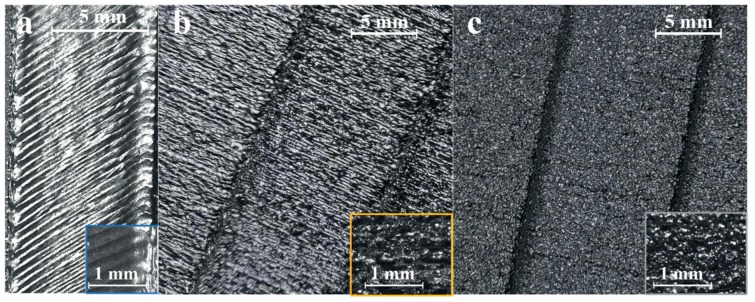
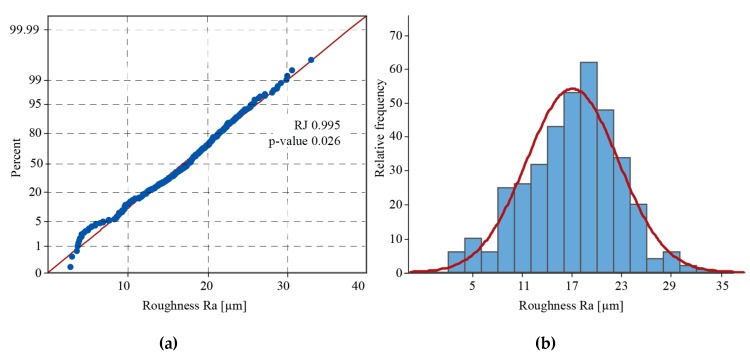
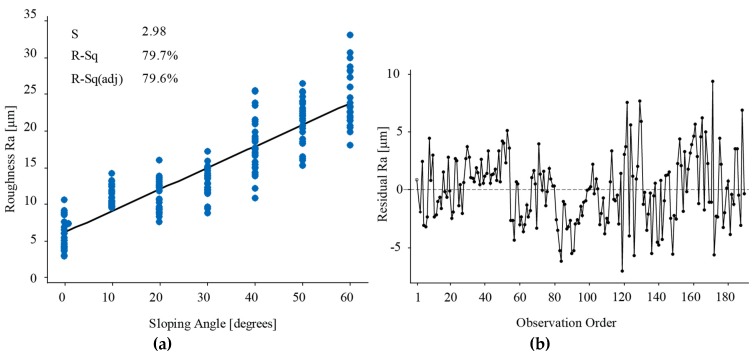
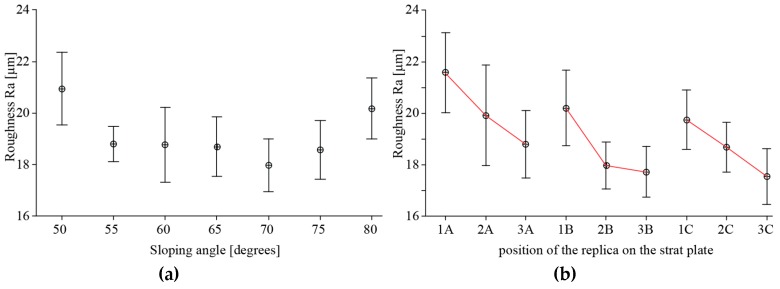
Electron Beam Melting (EBM) is a metal powder bed fusion (PBF) process in which the heat source is an electron beam. Differently from other metal PBF processes, today, EBM is used for mass production. As-built EBM parts are clearly recognisable by their surface roughness, which is, in some cases, one of the major limitations of the EBM process. The aim of this work is to investigate the effects of the orientation and the slope of the EBM surfaces on the surface roughness. Additionally, the machine repeatability is studied by measuring the roughness of surfaces built at different positions on the start plate. To these aims, a specific artefact was designed. Replicas of the artefact were produced using an Arcam A2X machine and Ti6Al4V powder. Descriptive and inferential statistical methods were applied to investigate whether the surface morphology was affected by process factors. The results show significant differences between the upward and downward surfaces. The upward surfaces appear less rough than the downward ones, for which a lower standard deviation was obtained in the results. The roughness of the upward surfaces is linearly influenced by the sloping angle, while the heat distribution on the cross-section was found to be a key factor in explaining the roughness of the downward surfaces.
电子束熔炼(EBM)是一种金属粉末床熔融(PBF)工艺,其中热源为电子束。与其他金属PBF工艺不同的是,如今EBM已用于大规模生产。增材制造的EBM零件因其表面粗糙度而易于识别,在某些情况下,这是EBM工艺的主要局限之一。本文的目的是研究EBM表面的取向和斜率对表面粗糙度的影响。此外,通过测量起始板上不同位置构建表面的粗糙度来研究机器的可重复性。为实现这些目标,设计了一种特定的工件。使用Arcam A2X机器和Ti6Al4V粉末制作了该工件的复制品。应用描述性和推断性统计方法来研究表面形态是否受工艺因素影响。结果表明,向上表面和向下表面之间存在显著差异。向上表面看起来比向下表面更光滑,向下表面的结果中获得了更低的标准差。向上表面的粗糙度受倾斜角度的线性影响,而横截面的热分布被发现是解释向下表面粗糙度的关键因素。