Trott Daniel W, Fadel Paul J
Department of Kinesiology, University of Texas at Arlington, Arlington, TX, USA.
Exp Physiol. 2019 Oct;104(10):1455-1471. doi: 10.1113/EP087499. Epub 2019 Aug 8.
What is the topic of this review? This review summarizes and synthesizes what is known about the contribution of inflammation to age-related arterial dysfunction. What advances does it highlight? This review details observational evidence for the relationship of age-related inflammation and arterial dysfunction, insight from autoimmune inflammatory diseases and their effects on arterial function, interventional evidence linking inflammation and age-related arterial dysfunction, insight into age-related arterial inflammation from preclinical models and interventions to ameliorate age-related inflammation and arterial dysfunction.
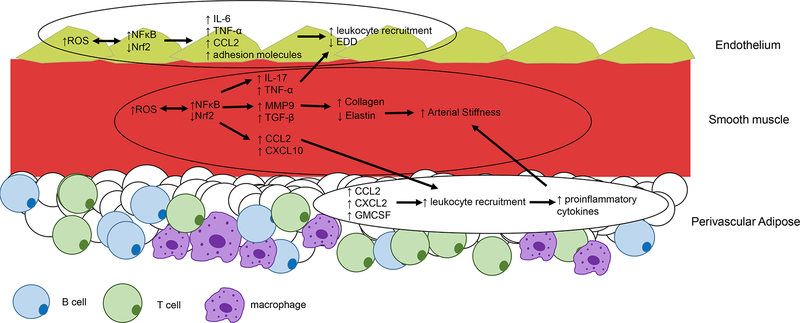
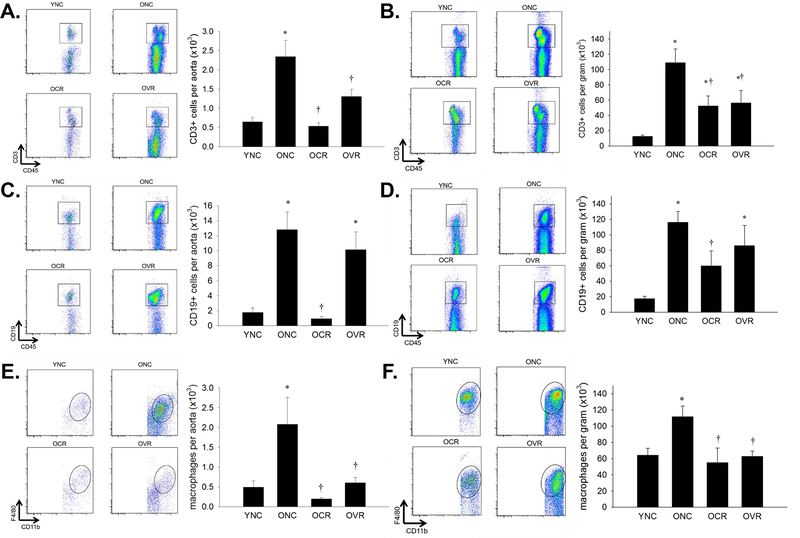
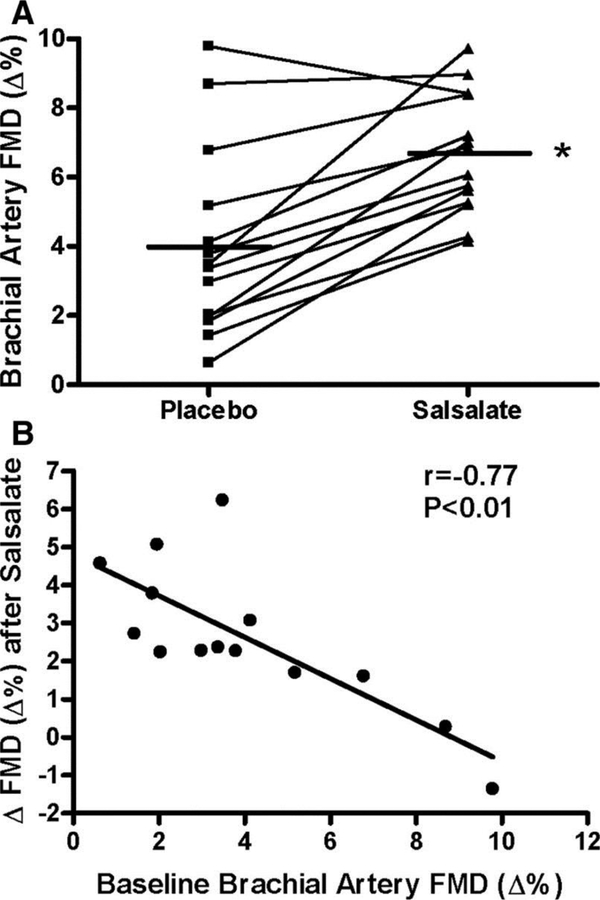
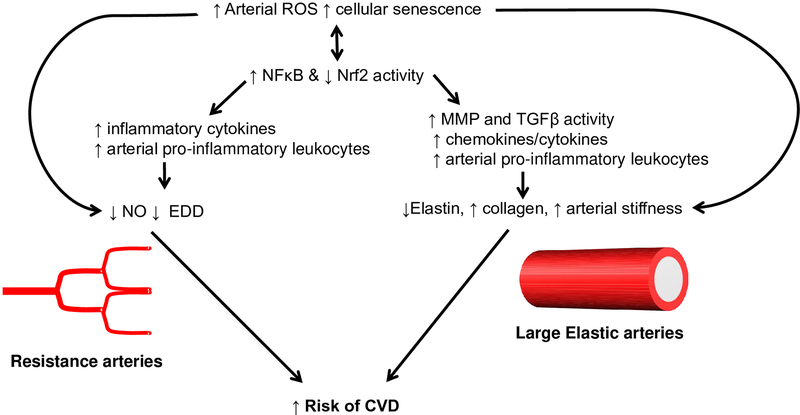
Advanced age is a primary risk factor for cardiovascular disease, the leading cause of death in the industrialized world. Two major components of arterial ageing are stiffening of the large arteries and impaired endothelium-dependent dilatation in multiple vascular beds. These two alterations are major contributors to the development of overt cardiovascular disease. Increasing inflammation with advanced age is likely to play a role in this arterial dysfunction. The purpose of this review is to synthesize what is known about inflammation and its relationship to age-related arterial dysfunction. This review discusses both the initial observational evidence for the relationship of age-related inflammation and arterial dysfunction and the evidence that inflammatory autoimmune diseases are associated with a premature arterial ageing phenotype. We next discuss interventional and mechanistic evidence linking inflammation and age-related arterial dysfunction in older adults. We also attempt to summarize the relevant evidence from preclinical models. Lastly, we discuss interventions in both humans and animals that have been shown to ameliorate age-related arterial inflammation and dysfunction. The available evidence provides a strong basis for the role of inflammation in both large artery stiffening and impairment of endothelium-dependent dilatation; however, the specific inflammatory mediators, the initiating factors and the relative importance of the endothelium, smooth muscle cells, perivascular adipose tissue and immune cells in arterial inflammation are not well understood. With the expansion of the ageing population, ameliorating age-related arterial inflammation represents an important potential strategy for preserving vascular health in the elderly.
本综述的主题是什么?本综述总结并综合了关于炎症对与年龄相关的动脉功能障碍的影响的已知信息。它突出了哪些进展?本综述详细阐述了与年龄相关的炎症和动脉功能障碍之间关系的观察性证据、自身免疫性炎症性疾病及其对动脉功能影响的见解、将炎症与与年龄相关的动脉功能障碍联系起来的干预性证据、临床前模型中与年龄相关的动脉炎症的见解以及改善与年龄相关的炎症和动脉功能障碍的干预措施。
高龄是心血管疾病的主要危险因素,而心血管疾病是工业化国家的主要死因。动脉老化的两个主要组成部分是大动脉僵硬和多个血管床中内皮依赖性舒张功能受损。这两种改变是明显心血管疾病发展的主要因素。随着年龄增长炎症增加可能在这种动脉功能障碍中起作用。本综述的目的是综合关于炎症及其与与年龄相关的动脉功能障碍的关系的已知信息。本综述讨论了与年龄相关的炎症和动脉功能障碍之间关系的初始观察性证据以及炎症性自身免疫性疾病与过早动脉老化表型相关的证据。接下来,我们讨论将炎症与老年人中与年龄相关的动脉功能障碍联系起来的干预性和机制性证据。我们还试图总结临床前模型的相关证据。最后,我们讨论已被证明可改善与年龄相关的动脉炎症和功能障碍的人类和动物干预措施。现有证据为炎症在大动脉僵硬和内皮依赖性舒张功能受损中的作用提供了有力依据;然而,具体的炎症介质、起始因素以及内皮、平滑肌细胞、血管周围脂肪组织和免疫细胞在动脉炎症中的相对重要性尚不清楚。随着老年人口的增加,改善与年龄相关的动脉炎症是维护老年人血管健康的一项重要潜在策略。