Department of Biophysics and Radiation Biology, Semmelweis University, Budapest, Hungary.
Faculty of Information Technology, Pázmány Péter Catholic University, Budapest, Hungary.
Cell Mol Life Sci. 2020 Feb;77(4):765-778. doi: 10.1007/s00018-019-03211-4. Epub 2019 Jul 20.
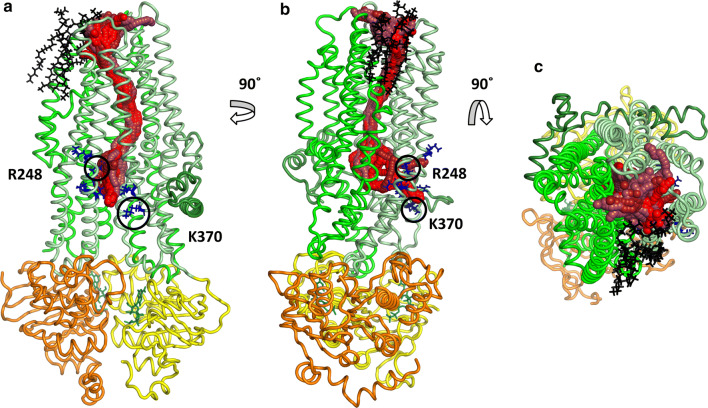
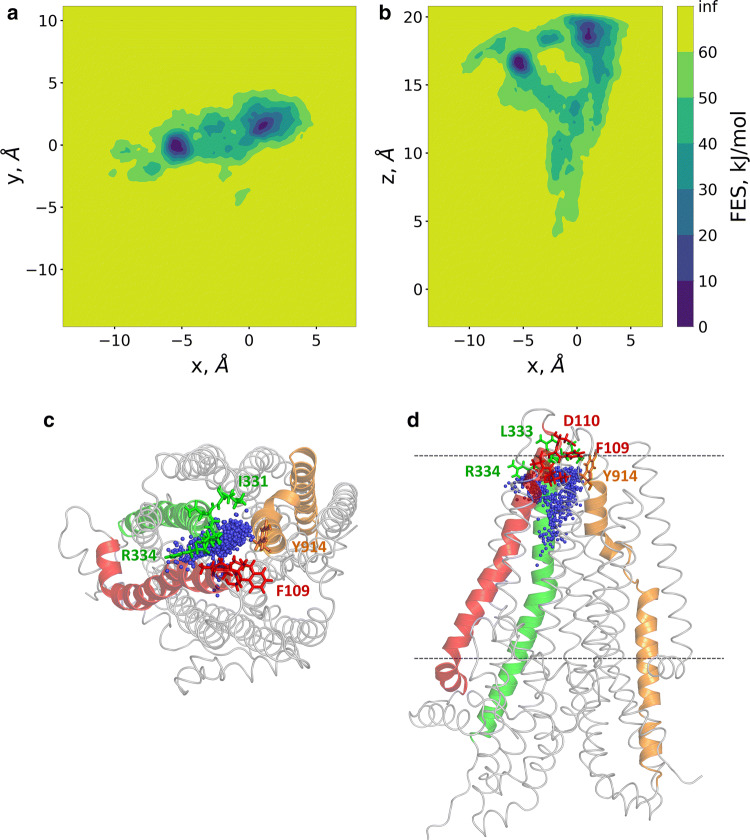
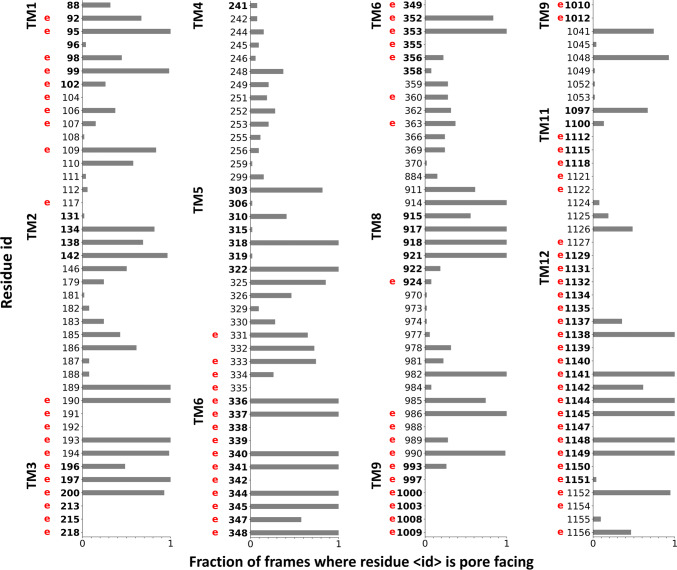
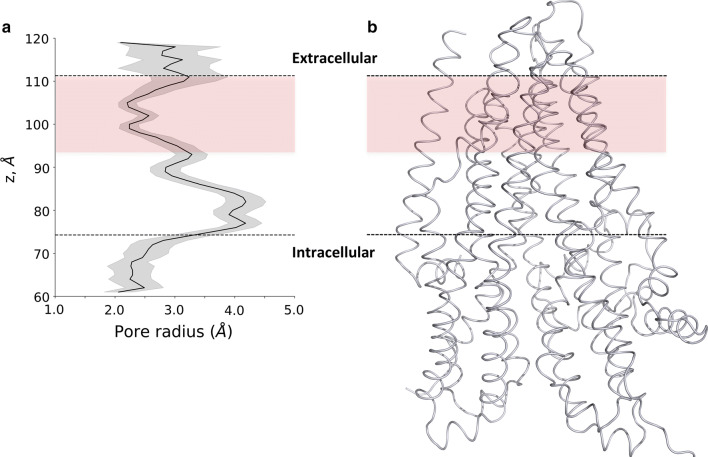
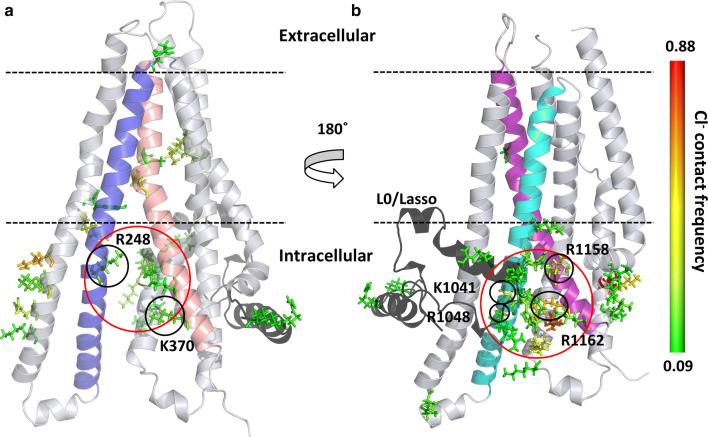
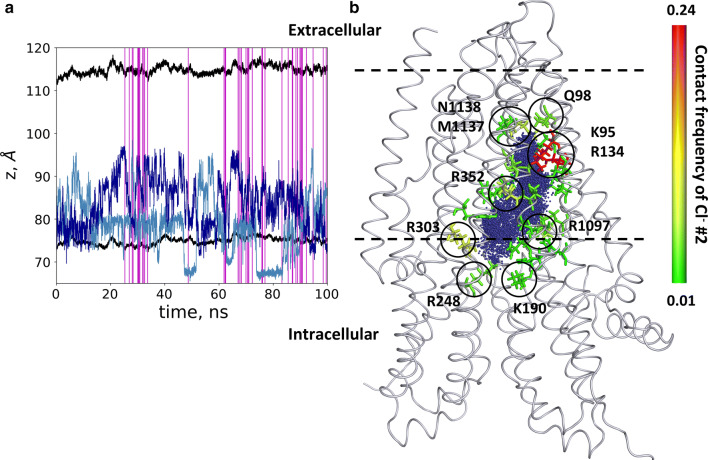
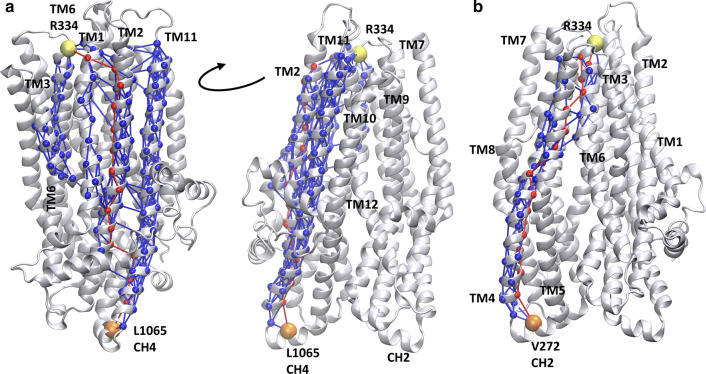
Cystic fibrosis (CF), a lethal monogenic disease, is caused by pathogenic variants of the CFTR chloride channel. The majority of CF mutations affect protein folding and stability leading overall to diminished apical anion conductance of epithelial cells. The recently published cryo-EM structures of full-length human and zebrafish CFTR provide a good model to gain insight into structure-function relationships of CFTR variants. Although, some of the structures were determined in the phosphorylated and ATP-bound active state, none of the static structures showed an open pathway for chloride permeation. Therefore, we performed molecular dynamics simulations to generate a conformational ensemble of the protein and used channel detecting algorithms to identify conformations with an opened channel. Our simulations indicate a main intracellular entry at TM4/6, a secondary pore at TM10/12, and a bottleneck region involving numerous amino acids from TM1, TM6, and TM12 in accordance with experiments. Since chloride ions entered the pathway in our equilibrium simulations, but did not traverse the bottleneck region, we performed metadynamics simulations, which revealed two possible exits. One of the chloride ions exits includes hydrophobic lipid tails that may explain the lipid-dependency of CFTR function. In summary, our in silico study provides a detailed description of a potential chloride channel pathway based on a recent cryo-EM structure and may help to understand the gating of the CFTR chloride channel, thus contributing to novel strategies to rescue dysfunctional mutants.
囊性纤维化 (CF) 是一种致命的单基因疾病,由 CFTR 氯离子通道的致病变体引起。大多数 CF 突变会影响蛋白质折叠和稳定性,从而导致上皮细胞顶端阴离子传导能力降低。最近发表的全长人类和斑马鱼 CFTR 的冷冻电镜结构为深入了解 CFTR 变体的结构-功能关系提供了良好的模型。尽管其中一些结构是在磷酸化和 ATP 结合的活性状态下确定的,但没有一个静态结构显示氯离子渗透的开放途径。因此,我们进行了分子动力学模拟,以生成蛋白质的构象集合,并使用通道检测算法来识别具有开放通道的构象。我们的模拟表明,主要的细胞内入口位于 TM4/6,次要的孔道位于 TM10/12,瓶颈区域涉及 TM1、TM6 和 TM12 中的许多氨基酸,与实验结果一致。由于氯离子在我们的平衡模拟中进入了该途径,但没有穿过瓶颈区域,我们进行了元动力学模拟,揭示了两个可能的出口。其中一个氯离子出口包括疏水性脂质尾巴,这可能解释了 CFTR 功能的脂质依赖性。总之,我们的计算机研究基于最近的冷冻电镜结构,详细描述了一种潜在的氯离子通道途径,可能有助于理解 CFTR 氯离子通道的门控,从而为挽救功能失调的突变体提供新的策略。