Bravo-Santano Natalia, Ellis James K, Calle Yolanda, Keun Hector C, Behrends Volker, Letek Michal
Health Sciences Research Centre, University of Roehampton, London SW15 4JD, UK.
Division of Cancer, Department of Surgery and Cancer, Faculty of Medicine, Imperial College London, London W12 0HS, UK.
Metabolites. 2019 Jul 20;9(7):148. doi: 10.3390/metabo9070148.
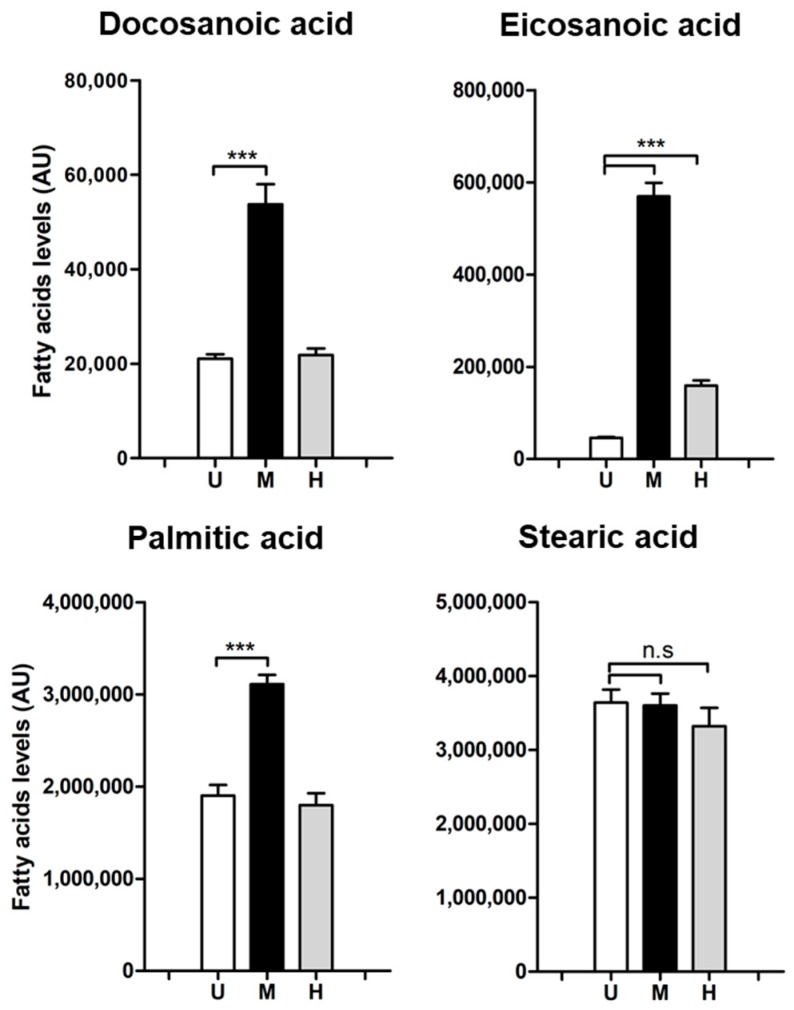
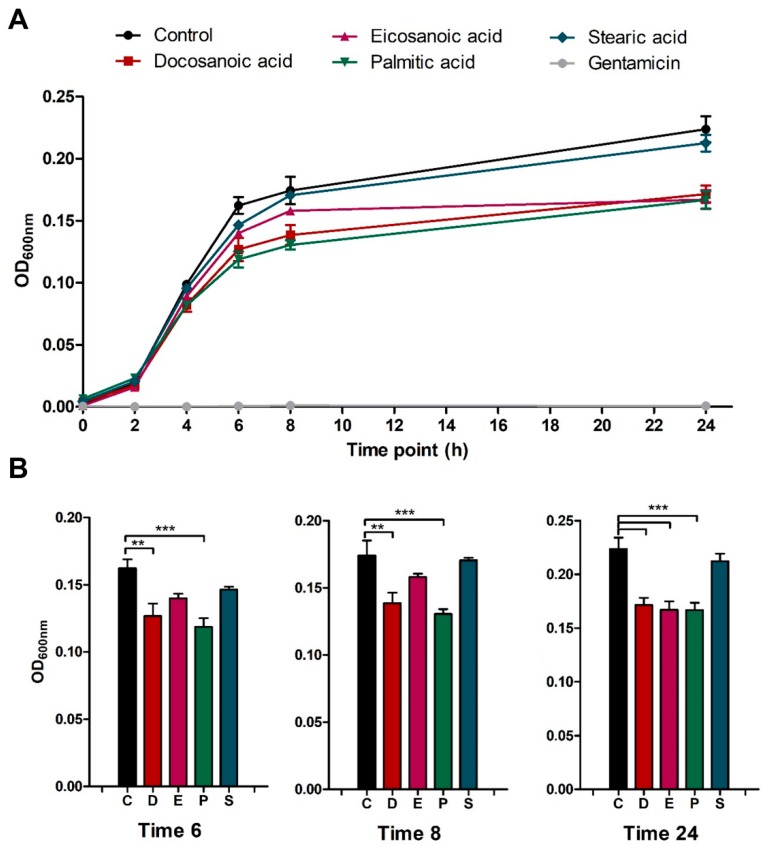
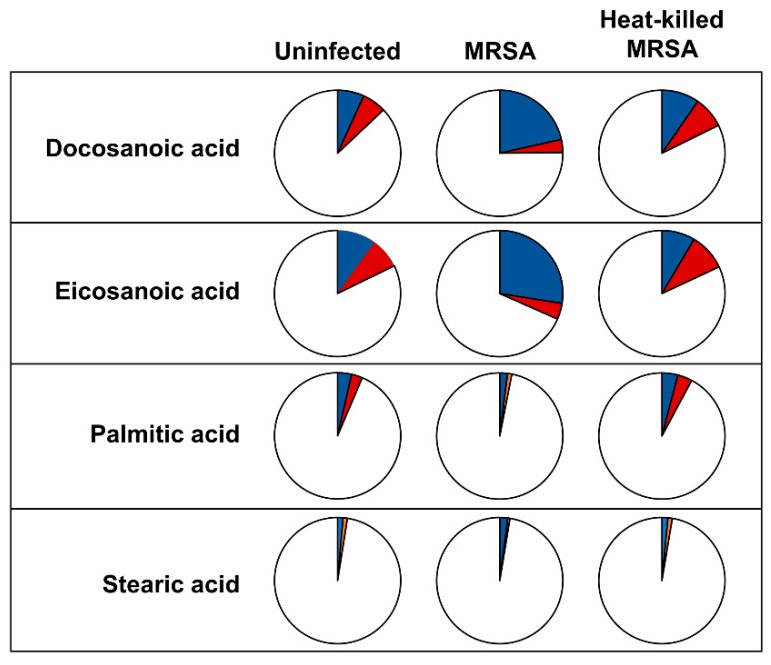
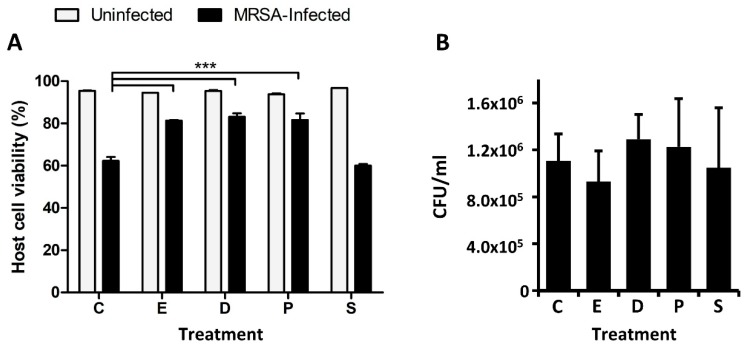
As a facultative intracellular pathogen, is able to invade and proliferate within many types of mammalian cells. Intracellular bacterial replication relies on host nutrient supplies and, therefore, cell metabolism is closely bound to intracellular infection. Here, we investigated how invasion affects the host membrane-bound fatty acids. We quantified the relative levels of fatty acids and their labelling pattern after intracellular infection by gas chromatography-mass spectrometry (GC-MS). Interestingly, we observed that the levels of three host fatty acids-docosanoic, eicosanoic and palmitic acids-were significantly increased in response to intracellular infection. Accordingly, labelling carbon distribution was also affected in infected cells, in comparison to the uninfected control. In addition, treatment of HeLa cells with these three fatty acids showed a cytoprotective role by directly reducing growth.
作为一种兼性细胞内病原体,能够在多种类型的哺乳动物细胞内侵袭和增殖。细胞内细菌的复制依赖于宿主的营养供应,因此,细胞代谢与细胞内感染密切相关。在此,我们研究了侵袭如何影响宿主膜结合脂肪酸。我们通过气相色谱-质谱联用(GC-MS)对细胞内感染后脂肪酸的相对水平及其标记模式进行了定量分析。有趣的是,我们观察到,响应细胞内感染,三种宿主脂肪酸——二十二烷酸、二十烷酸和棕榈酸的水平显著升高。因此,与未感染的对照相比,感染细胞中的标记碳分布也受到了影响。此外,用这三种脂肪酸处理HeLa细胞显示出通过直接减少生长发挥细胞保护作用。