School of Architecture and Urban Planning, Nanjing University, 22 Hankou Road, Nanjing 210093, China.
Int J Environ Res Public Health. 2019 Jul 19;16(14):2587. doi: 10.3390/ijerph16142587.
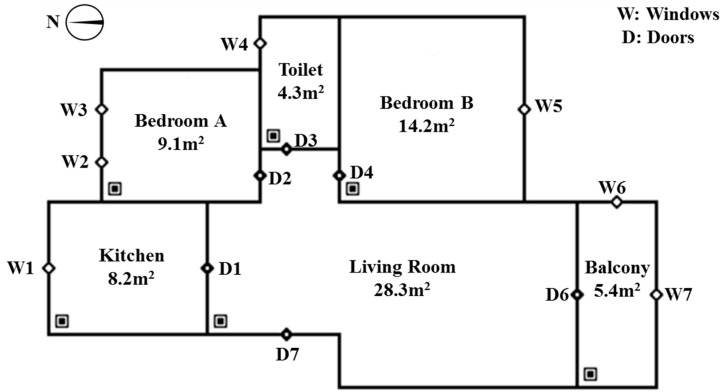
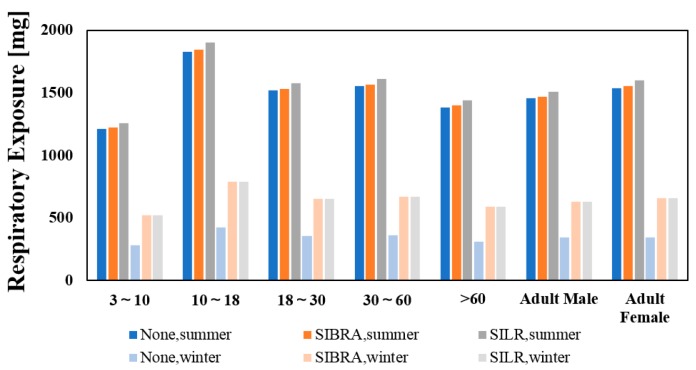
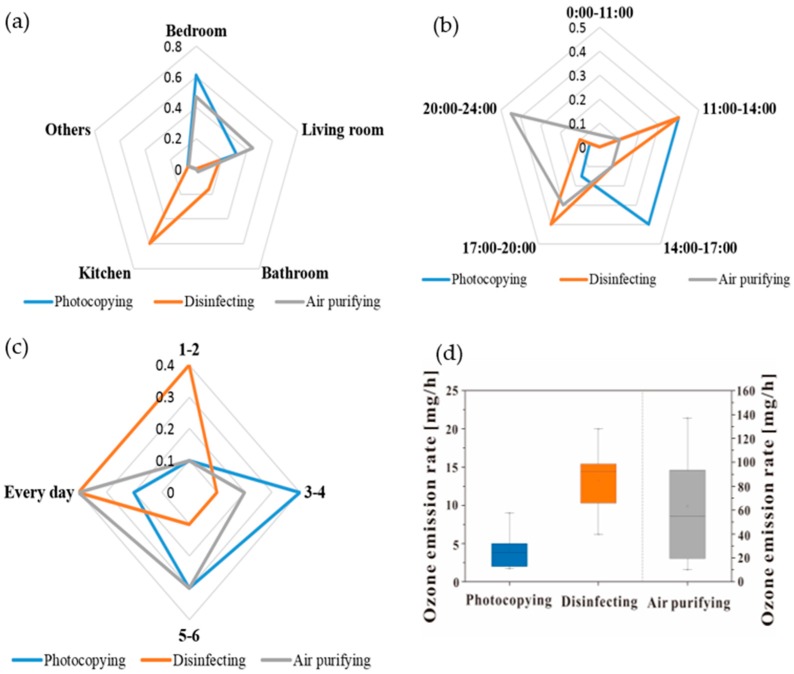
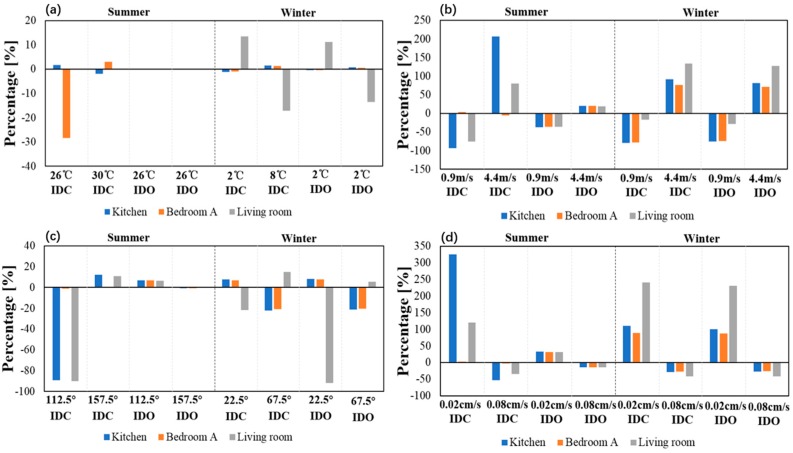
Ozone has become one of the most serious air pollutants in China in recent years. Since people spend most of their time indoors, the ozone in the indoor environment could be a major factor affecting the occupants' health. The indoor ozone in residential buildings mainly comes from two sources: outdoor atmosphere and indoor ozone produced by electrical devices. In this study, a typical residence in Nanjing was taken as an example to calculate and compare the contributions of indoor and outdoor sources to ozone in the building. A questionnaire survey about the type, the placement, and the frequency of use of the ozone emission devices was performed to provide the basis for the settings of indoor ozone sources. The multi-zone software CONTAM was used hourly to simulate the ozone concentration in summer and in winter with inner doors either closed or open, and it was noted whether there were ozone emission devices indoors or not. Source contribution was quantified and compared by three methods in this paper: (1) the average indoor/outdoor (I/O) ratio, (2) the I/O ratio frequency, and (3) the ratio of indoor ozone concentration without ozone sources to that with ozone sources. The results showed that the contribution of outdoor sources was much greater than that of indoor sources in summer, but in winter, the frequency of I/O > 1 could reach 55.8% of the total seasonal time, and the ratio of indoor ozone concentration without sources to that with sources could reach as high as 74.3%. This meant that the indoor concentration had the potential to exceed the outdoor. Furthermore, human respiratory exposure in different ages and genders was calculated. It was found that teenagers aged 10-18 years old and female adults had a higher respiratory exposure level.
臭氧近年来已成为中国最严重的空气污染物之一。由于人们大部分时间都在室内度过,室内环境中的臭氧可能是影响居住者健康的主要因素。住宅建筑中的室内臭氧主要来自两个来源:室外大气和室内电器产生的臭氧。本研究以南京的一栋典型住宅为例,计算并比较了室内和室外源对建筑物中臭氧的贡献。通过问卷调查了解了臭氧排放设备的类型、位置和使用频率,为设置室内臭氧源提供了依据。使用多区域软件 CONTAM 分别在夏季和冬季模拟了内门关闭和打开时的臭氧浓度,以及室内是否有臭氧排放设备。本文采用三种方法对源贡献进行了量化和比较:(1)平均室内/室外(I/O)比,(2)I/O 比频率,(3)无臭氧源和有臭氧源时室内臭氧浓度的比值。结果表明,夏季室外源的贡献远大于室内源,但在冬季,I/O>1 的频率可达到总季节时间的 55.8%,无源时室内臭氧浓度与有源时的比值可达 74.3%。这意味着室内浓度有可能超过室外浓度。此外,还计算了不同年龄和性别的人体呼吸暴露水平。结果发现,10-18 岁的青少年和成年女性呼吸暴露水平较高。