Department of BioNano Technology, Gachon University, 1342 Seongnam-Daero, Sujeong-Gu, Seongnam-Si, Gyeonggi-do 13120, Korea.
Institute of Research and Development, Duy Tan University, Da Nang 550000, Vietnam.
Int J Environ Res Public Health. 2020 Apr 23;17(8):2927. doi: 10.3390/ijerph17082927.
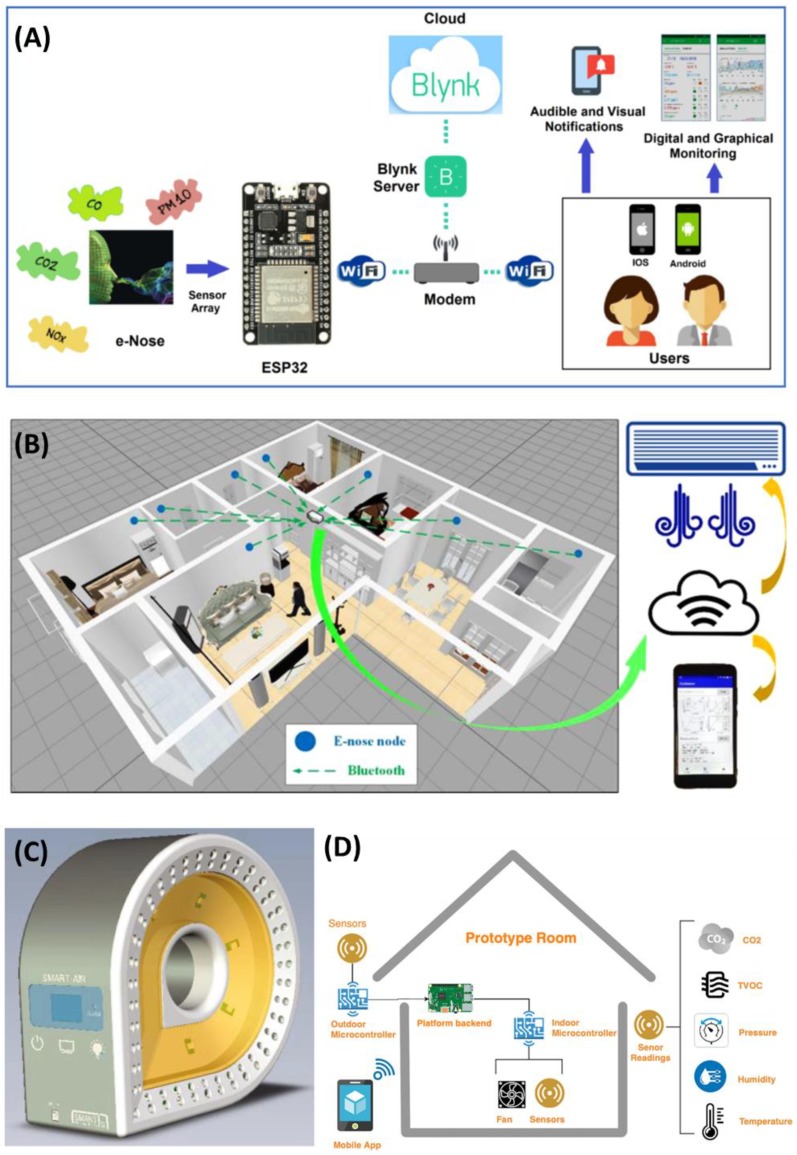
Indoor air pollution (IAP) is a serious threat to human health, causing millions of deaths each year. A plethora of pollutants can result in IAP; therefore, it is very important to identify their main sources and concentrations and to devise strategies for the control and enhancement of indoor air quality (IAQ). Herein, we provide a critical review and evaluation of the major sources of major pollutant emissions, their health effects, and issues related to IAP-based illnesses, including sick building syndrome (SBS) and building-related illness (BRI). In addition, the strategies and approaches for control and reduction of pollutant concentrations are pointed out, and the recent trends in efforts to resolve and improve IAQ, with their respective advantages and potentials, are summarized. It is predicted that the development of novel materials for sensors, IAQ-monitoring systems, and smart homes is a promising strategy for control and enhancement of IAQ in the future.
室内空气污染(IAP)对人类健康构成严重威胁,每年导致数百万人死亡。大量污染物会导致 IAP;因此,确定其主要来源和浓度并制定控制和改善室内空气质量(IAQ)的策略非常重要。在此,我们对主要污染物排放的主要来源、它们的健康影响以及与室内空气污染相关的问题进行了批判性的回顾和评估,包括病态建筑综合征(SBS)和与建筑相关的疾病(BRI)。此外,还指出了控制和降低污染物浓度的策略和方法,并总结了近年来解决和改善室内空气质量的最新趋势及其各自的优势和潜力。预计开发用于传感器、室内空气质量监测系统和智能家居的新型材料是未来控制和改善室内空气质量的有前途的策略。