National Engineering Laboratory for Animal Breeding and MOA Key Laboratory of Animal Genetics and Breeding, Department of Animal Genetics and Breeding, China Agricultural University, Beijing 100193, China.
Beijing General Station of Animal Husbandry, Beijing 100125, China.
Genes (Basel). 2019 Jul 19;10(7):552. doi: 10.3390/genes10070552.
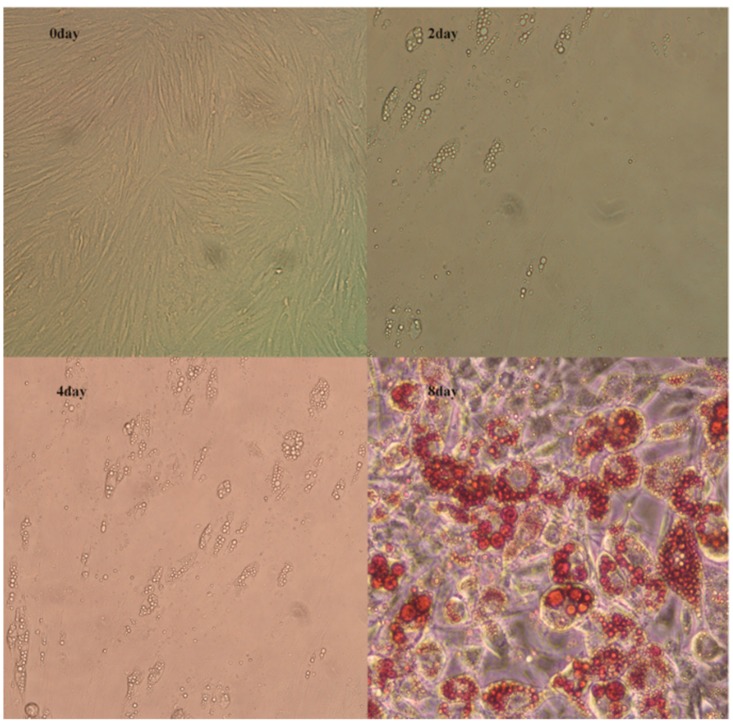
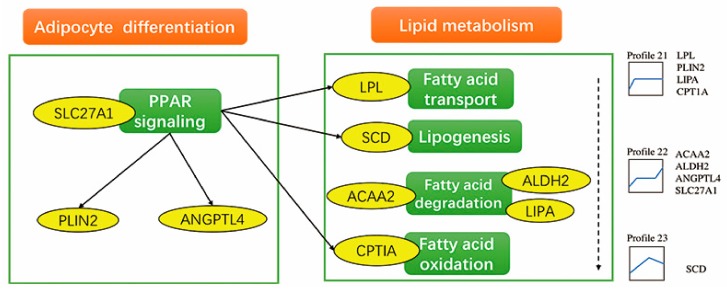
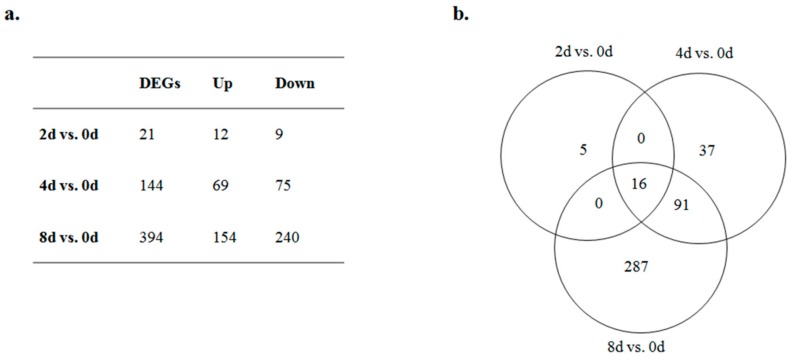
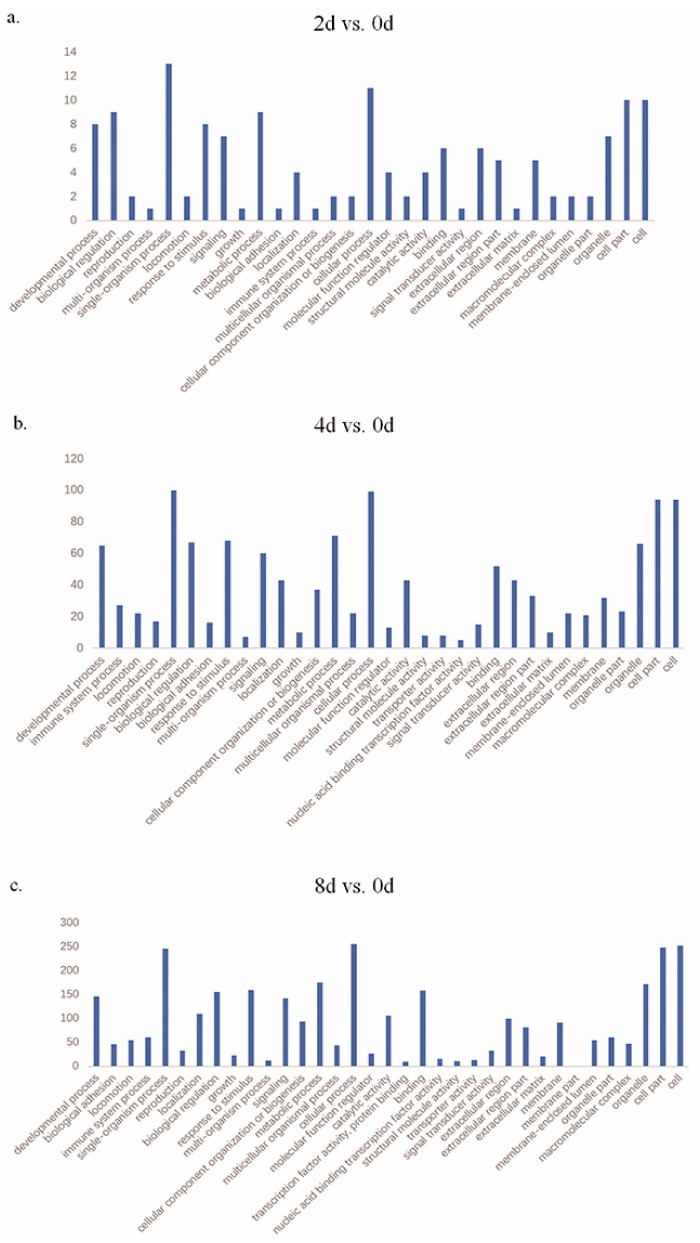
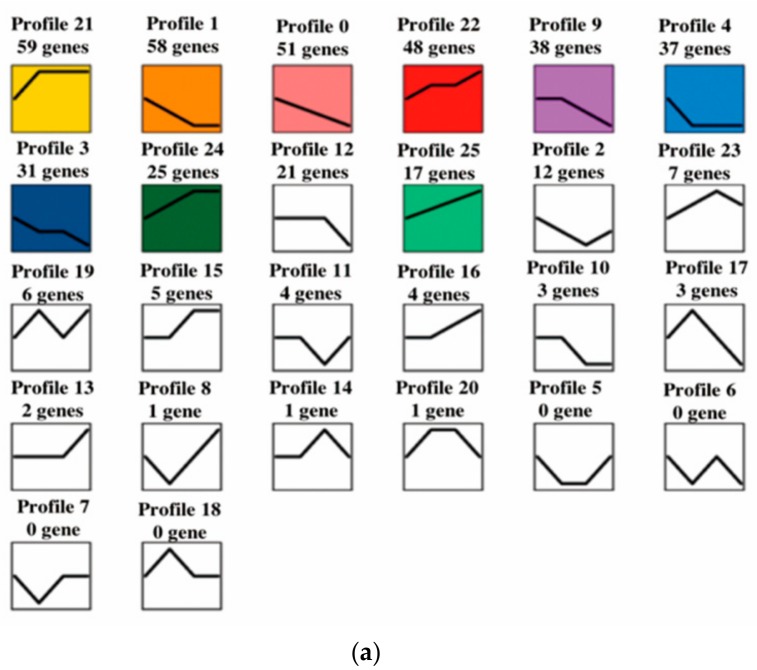
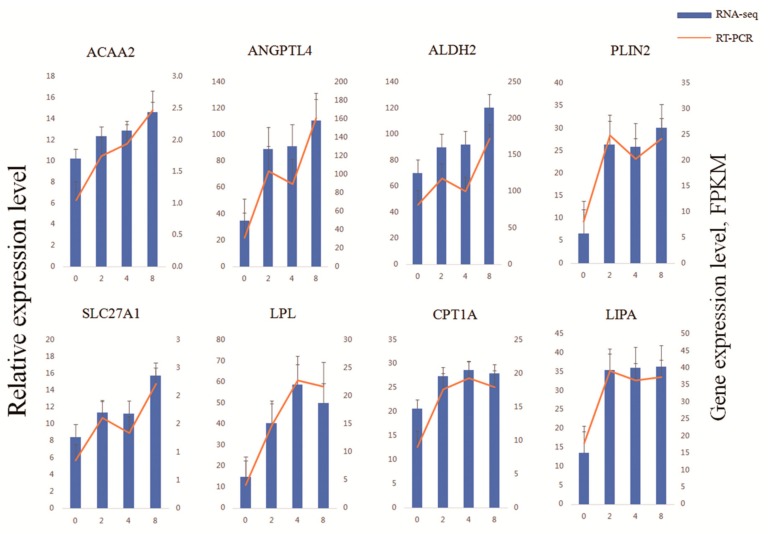
Fat deposition in pigs, which significantly contributes to meat quality, fattening efficiency, reproductive performance, and immunity, is critically affected by preadipocyte adipogenic differentiation. We elucidated adipogenesis in pigs using transcriptome analysis. Preadipocytes from subcutaneous adipose tissue (SAT) of Landrace piglets were differentiated into adipocytes in vitro. RNA sequencing (RNA-seq) used to screen differentially expressed genes (DEGs) during preadipocyte differentiation up to day 8 revealed 15,918 known and 586 novel genes. We detected 21, 144, and 394 DEGs, respectively, including 16 genes differentially expressed at days 2, 4 and 8 compared to day 0. Th number of DEGs increased time-dependently. Lipid metabolism, cell differentiation and proliferation, peroxisome proliferator-activated receptor (PPAR), wingless-type MMTV integration site (Wnt), tumor necrosis factor (TNF) signaling, and steroid biosynthesis were significant at days 2, 4, and 8 compared to day 0 (adjusted < 0.05). Short time-series expression miner (STEM) analysis obtained 26 clusters of differential gene expression patterns, and nine were significant ( < 0.05). Functional analysis showed many significantly enriched lipid deposition- and cellular process-related biological processes and pathways in profiles 9, 21, 22, and 24. Glycerolipid and fatty-acid metabolism, PPAR signaling, fatty-acid degradation, phosphoinositide 3-kinase (PI3K)/protein kinase B (Akt), and TNF signaling were observed during preadipocyte differentiation in vitro. These findings will facilitate the comprehension of preadipocyte differentiation and fat deposition in pigs.
猪的脂肪沉积对肉质、育肥效率、繁殖性能和免疫力有重要影响,其主要受前体脂肪细胞的脂肪生成分化调控。本研究通过转录组分析阐明了猪的脂肪生成。从长白仔猪的皮下脂肪组织(SAT)分离前体脂肪细胞并在体外分化为脂肪细胞。RNA 测序(RNA-seq)用于筛选前体脂肪细胞分化至第 8 天的差异表达基因(DEGs),共鉴定出 15918 个已知基因和 586 个新基因。我们分别检测到 21、144 和 394 个 DEGs,包括与第 0 天相比在第 2、4 和 8 天差异表达的 16 个基因。DEGs 的数量随时间呈依赖性增加。与第 0 天相比,第 2、4 和 8 天的脂质代谢、细胞分化和增殖、过氧化物酶体增殖物激活受体(PPAR)、无翅型 MMV 整合位点(Wnt)、肿瘤坏死因子(TNF)信号和甾体生物合成显著上调(调整后 < 0.05)。短时间序列表达 miner(STEM)分析获得了 26 个差异基因表达模式簇,其中 9 个显著( < 0.05)。功能分析显示,在第 9、21、22 和 24 个图谱中,许多与脂质沉积和细胞过程相关的生物过程和途径显著富集。在体外前体脂肪细胞分化过程中观察到甘油磷脂和脂肪酸代谢、PPAR 信号、脂肪酸降解、磷酸肌醇 3-激酶(PI3K)/蛋白激酶 B(Akt)和 TNF 信号。这些发现将有助于理解猪前体脂肪细胞分化和脂肪沉积。