Merigueti Thiago Castanheira, Carneiro Marcia Weber, Carvalho-Assef Ana Paula D'A, Silva-Jr Floriano Paes, da Silva Fabricio Alves Barbosa
Scientific Computing Program-Oswaldo Cruz Foundation (FIOCRUZ), Rio de Janeiro, Brazil.
Graduate Program in Biotechnology for Health and Investigative Medicine-Oswaldo Cruz Foundation (FIOCRUZ), Bahia, Brazil.
Front Genet. 2019 Jul 4;10:633. doi: 10.3389/fgene.2019.00633. eCollection 2019.
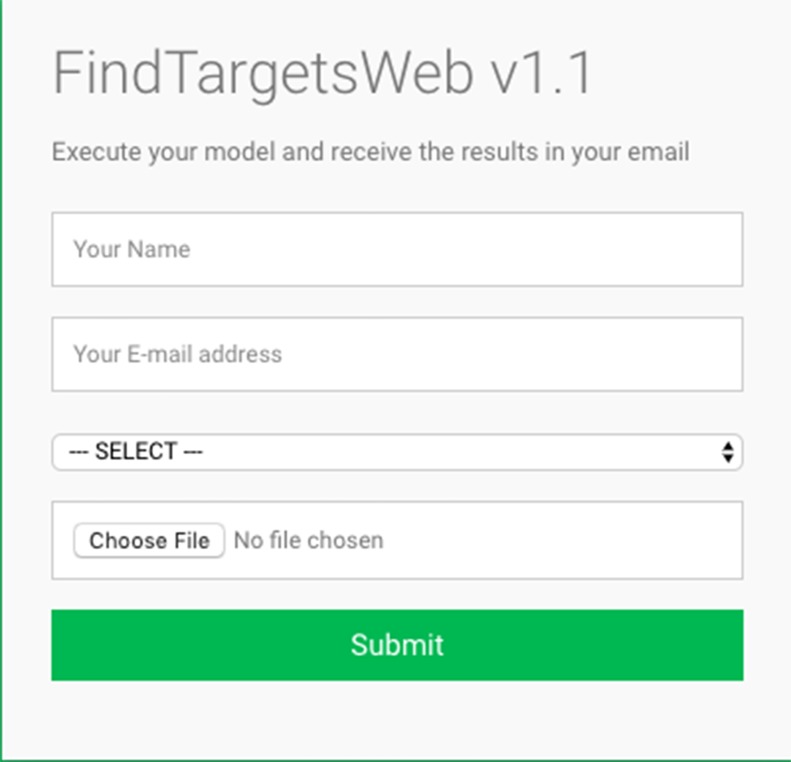
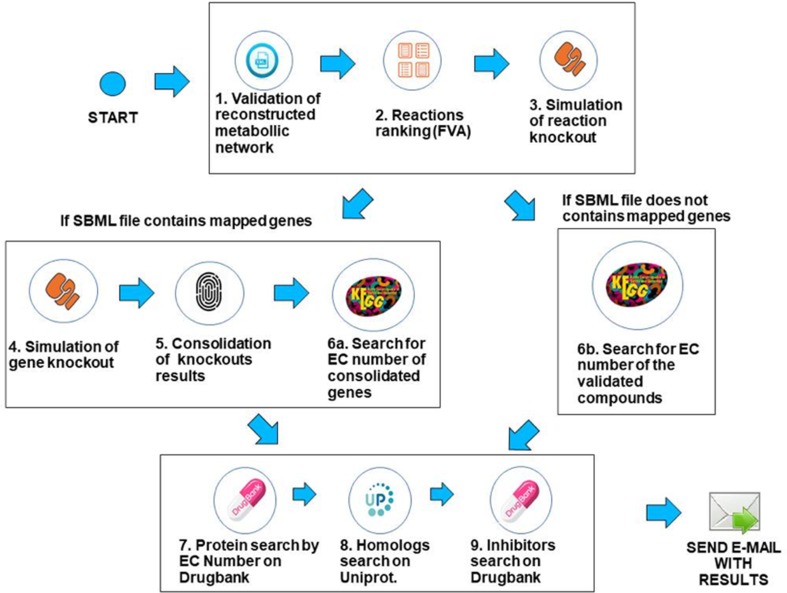
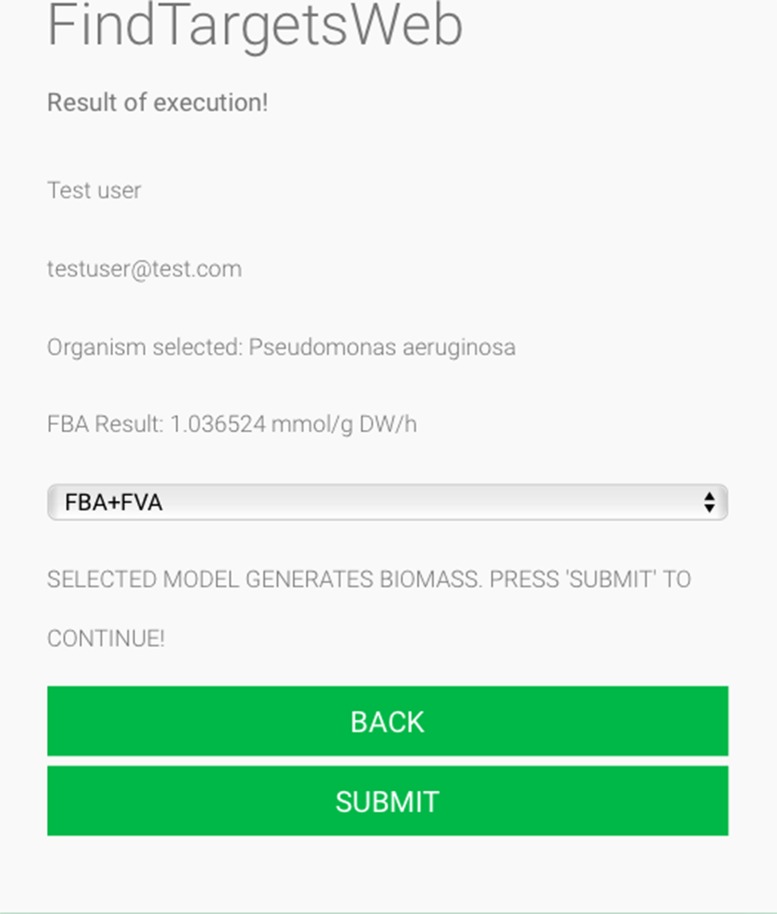
Healthcare-associated infections (HAIs) are a serious public health problem. They can be associated with morbidity and mortality and are responsible for the increase in patient hospitalization. Antimicrobial resistance among pathogens causing HAI has increased at alarming levels. In this paper, a robust method for analyzing genome-scale metabolic networks of bacteria is proposed in order to identify potential therapeutic targets, along with its corresponding web implementation, dubbed FindTargetsWEB. The proposed method assumes that every metabolic network presents fragile genes whose blockade will impair one or more metabolic functions, such as biomass accumulation. FindTargetsWEB automates the process of identification of such fragile genes using flux balance analysis (FBA), flux variability analysis (FVA), extended Systems Biology Markup Language (SBML) file parsing, and queries to three public repositories, i.e., KEGG, UniProt, and DrugBank. The web application was developed in Python using COBRApy and Django. The proposed method was demonstrated to be robust enough to process even non-curated, incomplete, or imprecise metabolic networks, in addition to integrated host-pathogen models. A list of potential therapeutic targets and their putative inhibitors was generated as a result of the analysis of metabolic networks available in the literature and a curated version of the metabolic network of a multidrug-resistant strain belonging to a clone endemic in Brazil ( ST277). Genome-scale metabolic networks of other gram-positive and gram-negative bacteria, such as , , and , were also analyzed using FindTargetsWEB. Multiple potential targets have been found using the proposed method in all metabolic networks, including some overlapping between two or more pathogens. Among the potential targets, several have been previously reported in the literature as targets for antimicrobial development, and many targets have approved drugs. Despite similarities in the metabolic network structure for closely related bacteria, we show that the method is able to selectively identify targets in pathogenic non-pathogenic organisms. This new computational system can give insights into the identification of new candidate therapeutic targets for pathogenic bacteria and discovery of new antimicrobial drugs through genome-scale metabolic network analysis and heterogeneous data integration, even for non-curated or incomplete networks.
医疗保健相关感染(HAIs)是一个严重的公共卫生问题。它们可能与发病率和死亡率相关,并导致患者住院时间延长。引起HAI的病原体中的抗菌药物耐药性已上升到令人担忧的水平。在本文中,提出了一种用于分析细菌基因组规模代谢网络的强大方法,以识别潜在的治疗靶点,以及其相应的网络实现,称为FindTargetsWEB。所提出的方法假设每个代谢网络都存在脆弱基因,其阻断将损害一种或多种代谢功能,例如生物量积累。FindTargetsWEB使用通量平衡分析(FBA)、通量变异性分析(FVA)、扩展的系统生物学标记语言(SBML)文件解析以及对三个公共知识库(即KEGG、UniProt和DrugBank)的查询,自动识别此类脆弱基因的过程。该网络应用程序使用COBRApy和Django在Python中开发。所提出的方法被证明足够强大,除了集成的宿主 - 病原体模型外,还能处理甚至未经过整理、不完整或不准确的代谢网络。通过对文献中可用的代谢网络以及巴西地方性克隆中一种耐多药菌株的代谢网络的整理版本进行分析,生成了潜在治疗靶点及其推定抑制剂的列表。还使用FindTargetsWEB分析了其他革兰氏阳性和革兰氏阴性细菌的基因组规模代谢网络,如 、 和 。使用所提出的方法在所有代谢网络中都发现了多个潜在靶点,包括两种或更多病原体之间的一些重叠靶点。在潜在靶点中,有几个先前在文献中已被报道为抗菌药物开发的靶点,并且许多靶点有已批准的药物。尽管密切相关细菌的代谢网络结构存在相似性,但我们表明该方法能够在致病和非致病生物体中选择性地识别靶点。这个新的计算系统可以通过基因组规模代谢网络分析和异构数据集成,为致病细菌新候选治疗靶点的识别和新抗菌药物的发现提供见解,即使对于未经过整理或不完整的网络也是如此。