Narayan Vanya, Sarkar Rashmi, Barman Krishna Deb, Prakash S Krishna
Department of Dermatology, Maulana Azad Medical College, New Delhi and Acharyashree Bhikshu Government Hospital, New Delhi, India.
Department of Dermatology, Acharyashree Bhikshu Government Hospital, New Delhi, India.
Indian Dermatol Online J. 2019 Jul-Aug;10(4):406-412. doi: 10.4103/idoj.IDOJ_359_18.
There is a paucity of literature about the atypical clinical manifestations in children with atopic dermatitis (AD) in Asian setting, and colonization with methicillin-resistant (MRSA), and its association with disease severity, if any.
To elucidate atypical clinical patterns of AD in children and to determine the MRSA isolation and its association with disease severity.
We studied 55 pediatric patients from 2 months to 10 years of age, of either sex, diagnosed with AD based on the diagnostic criteria of Hanifin and Rajka. History, clinical examination (including atypical features), and severity score using SCORing Atopic Dermatitis (SCORAD) severity index were recorded. Swabs from the cutaneous lesion and anterior nares were collected from each case and processed. Statistical analysis was done by SPSS (V 17).
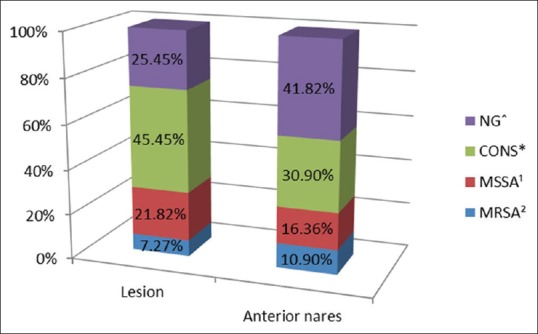
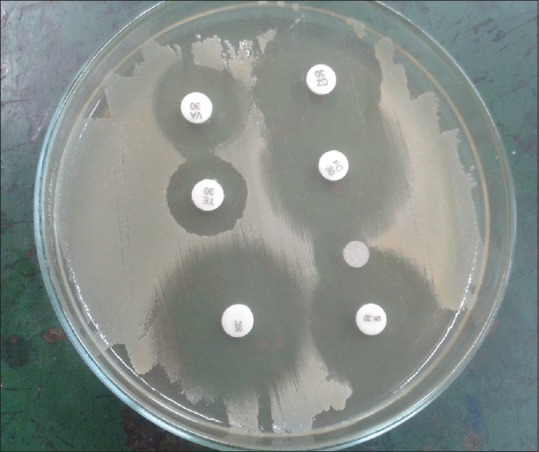
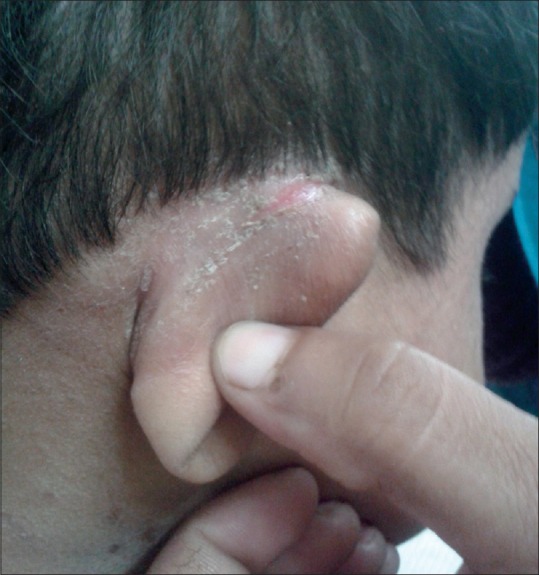
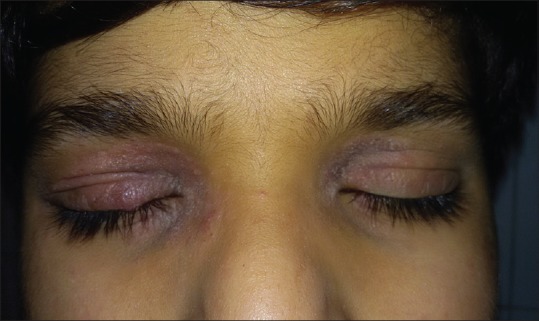
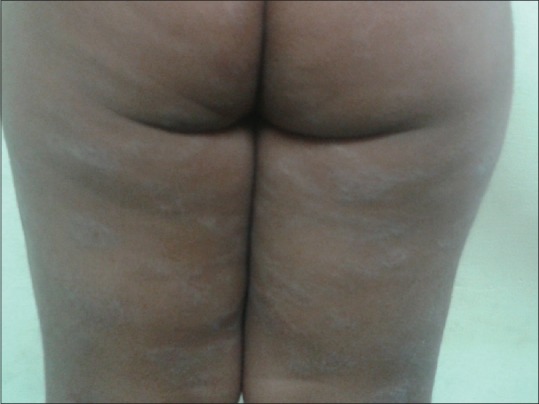
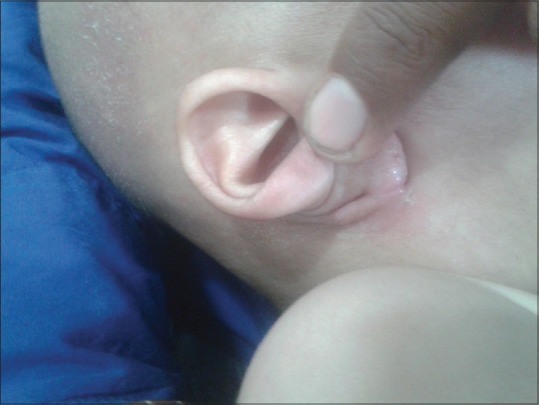
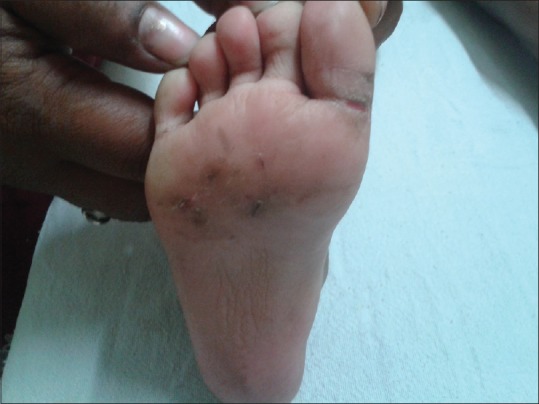
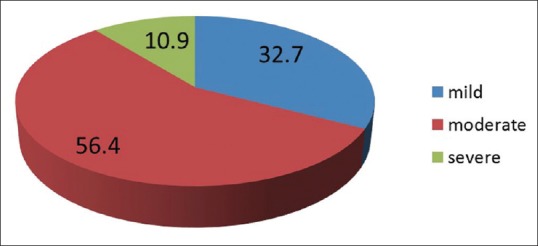
Atypical clinical features were seen in 52.7% of cases. Retroauricular fissures (among atypical features), oozing, crusting, darkening, early age at onset, and nipple eczema were found to be significantly associated with disease severity ( < 0.05). The majority of the cases (56.4%) fell in the moderate disease severity (mean SCORAD 32.02). MRSA showed an isolation frequency of 7.27% from the skin swabs and 10.90% from the nares. No significant association was found between isolates (including MRSA) and disease severity in our study. A high degree of fluoroquinolone resistance was noted in MRSA isolates.
Further characterization of by superantigen profiling was not done.
Patients with AD need to be evaluated for atypical features which may serve as markers of severe disease.
在亚洲环境中,关于特应性皮炎(AD)患儿非典型临床表现、耐甲氧西林金黄色葡萄球菌(MRSA)定植及其与疾病严重程度(若有)之间关系的文献较少。
阐明儿童AD的非典型临床模式,并确定MRSA的分离情况及其与疾病严重程度的关系。
我们研究了55例年龄在2个月至10岁之间的儿科患者,性别不限,根据Hanifin和Rajka的诊断标准诊断为AD。记录病史、临床检查(包括非典型特征)以及使用特应性皮炎严重程度评分(SCORAD)严重程度指数的严重程度评分。从每个病例的皮肤病变和前鼻孔采集拭子并进行处理。使用SPSS(V 17)进行统计分析。
52.7%的病例出现非典型临床特征。发现耳后裂隙(在非典型特征中)、渗出、结痂、色素沉着、发病年龄早和乳头湿疹与疾病严重程度显著相关(P<0.05)。大多数病例(56.4%)属于中度疾病严重程度(平均SCORAD 32.02)。MRSA在皮肤拭子中的分离频率为7.27%,在前鼻孔中的分离频率为10.90%。在我们的研究中,未发现葡萄球菌分离株(包括MRSA)与疾病严重程度之间存在显著关联。在MRSA分离株中发现了高度的氟喹诺酮耐药性。
未通过超抗原谱对分离株进行进一步表征。
需要对AD患者进行非典型特征评估,这些特征可能是严重疾病的标志物。