D'Souza Zinia, Blackburn Jessica Bailey, Kudlyk Tetyana, Pokrovskaya Irina D, Lupashin Vladimir V
Department of Physiology, University of Arkansas for Medical Sciences, Little Rock, AR, United States.
Front Cell Dev Biol. 2019 Jul 3;7:118. doi: 10.3389/fcell.2019.00118. eCollection 2019.
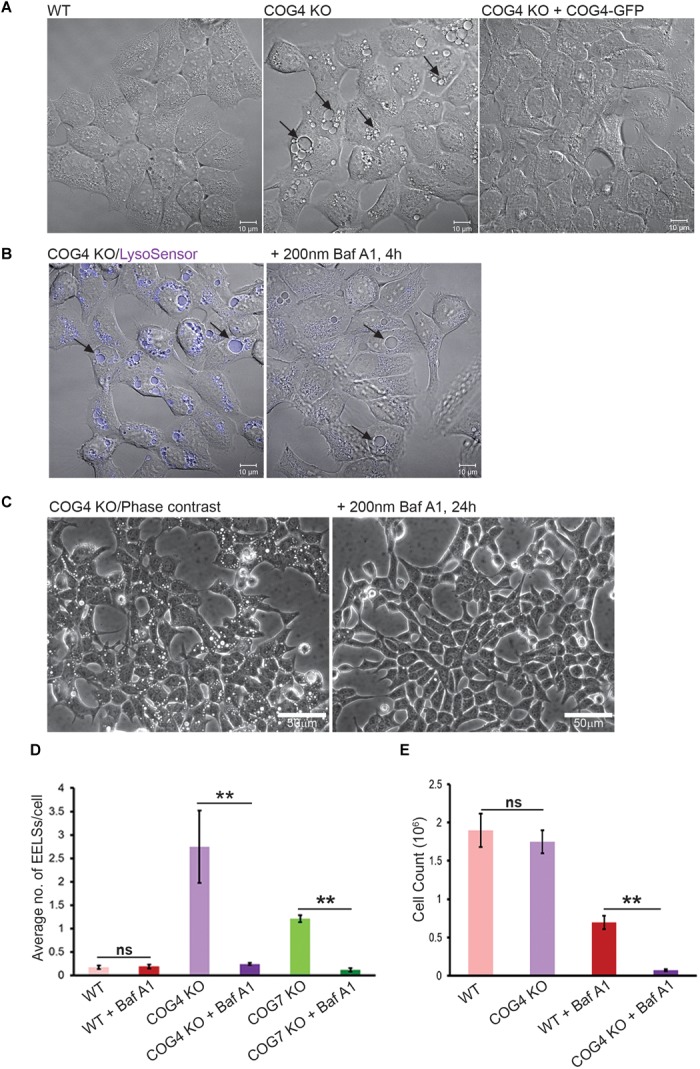
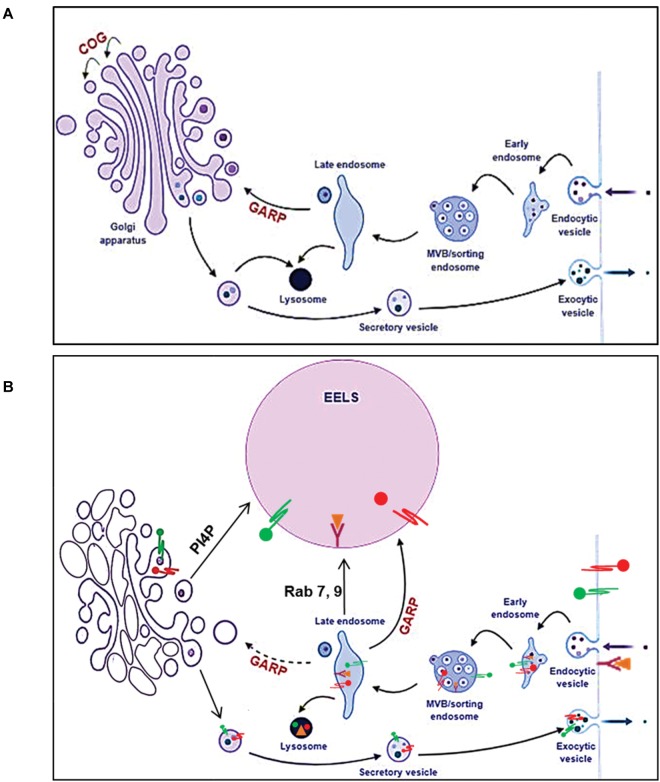
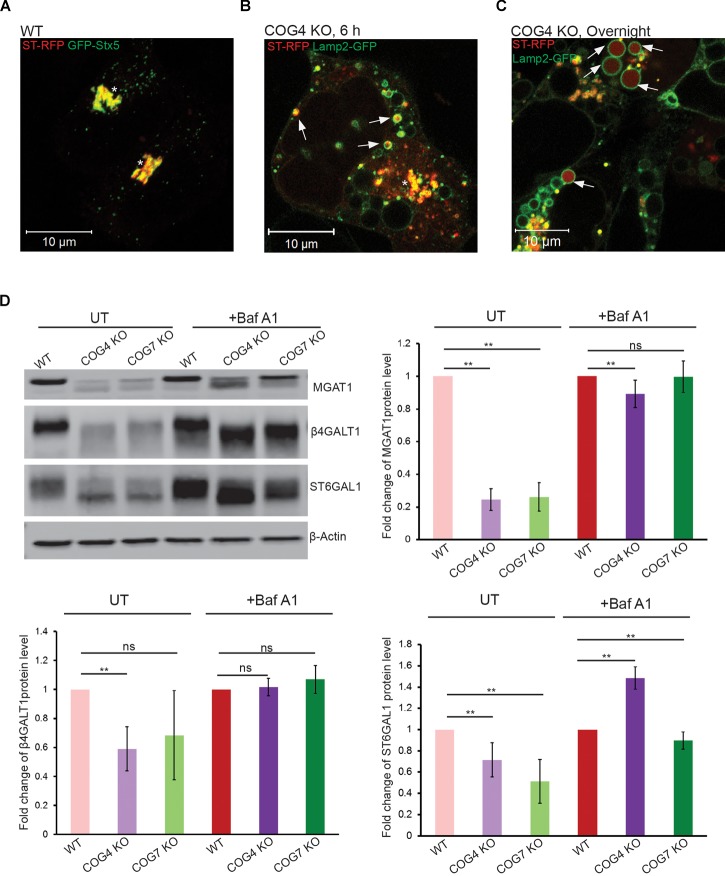
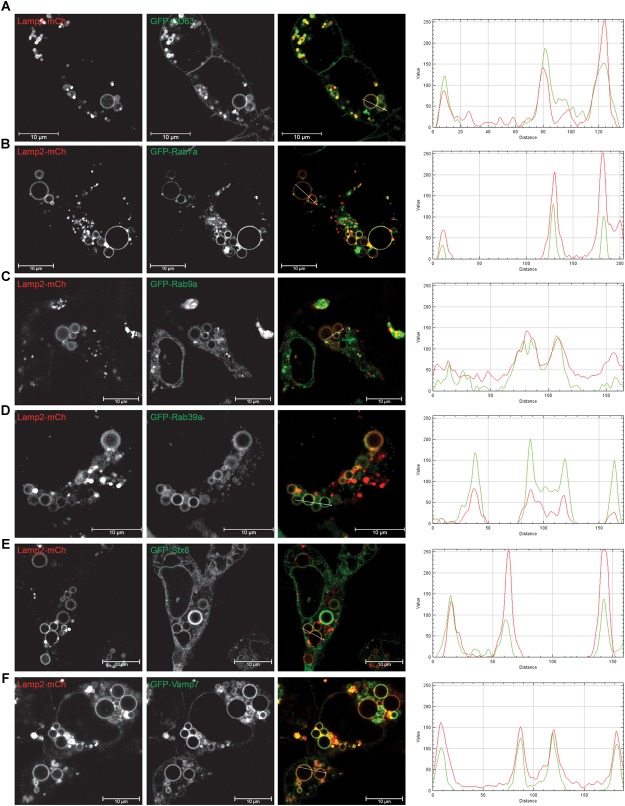
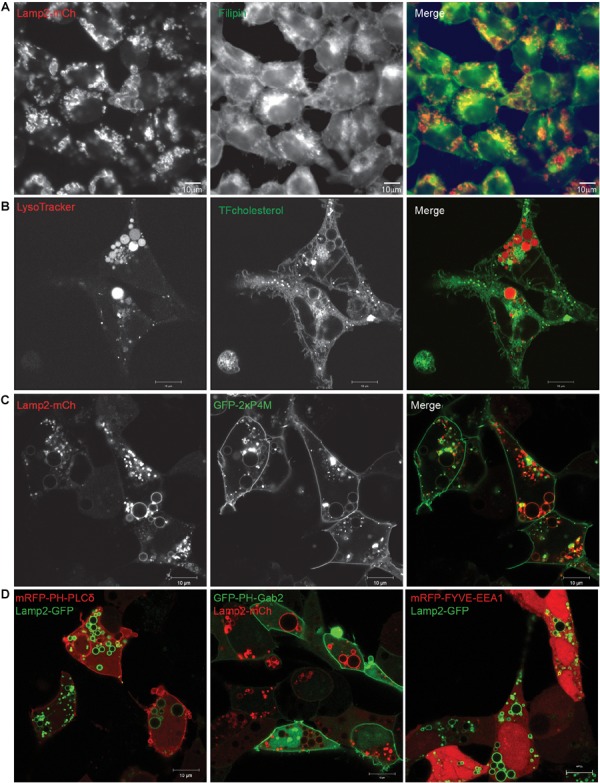
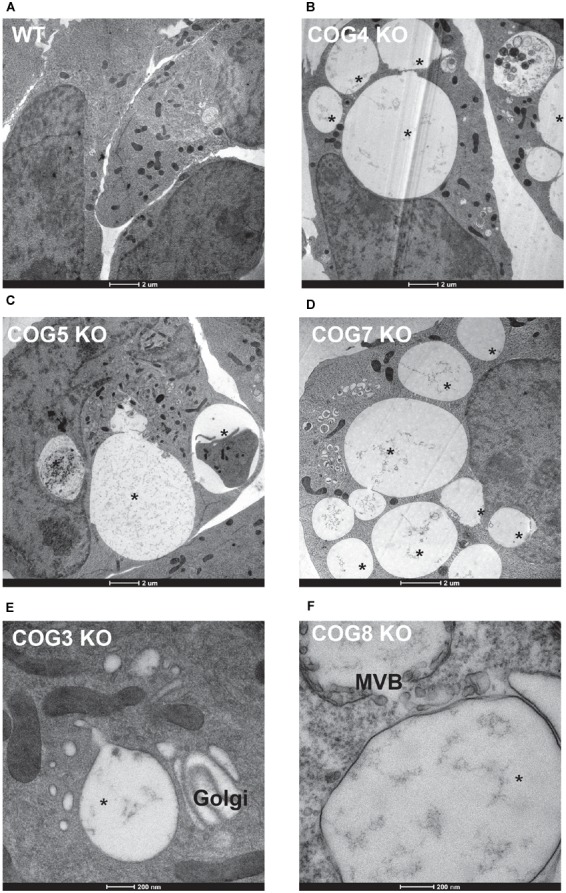
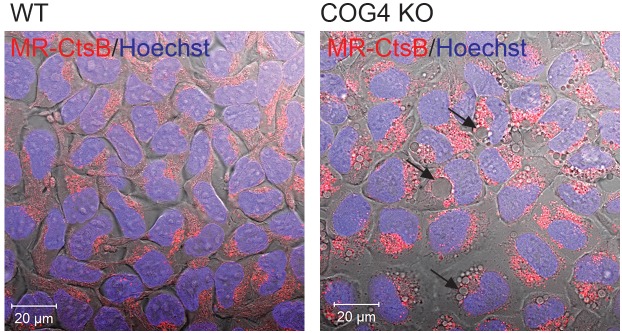
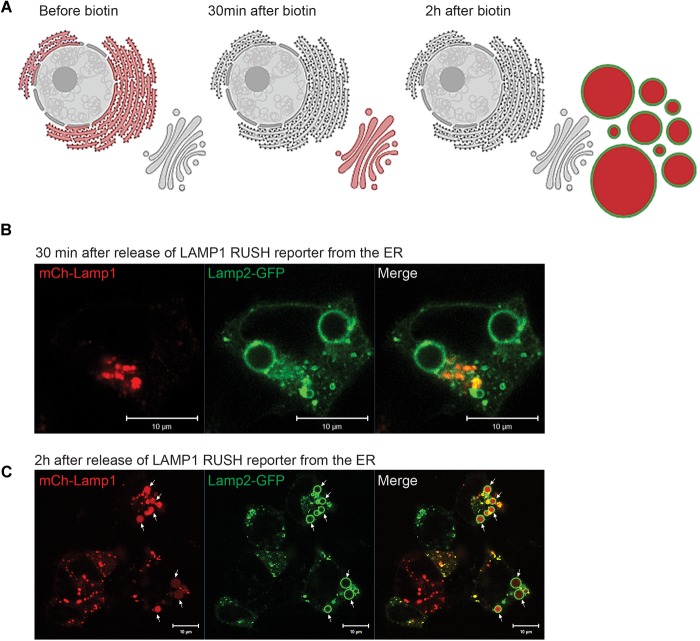
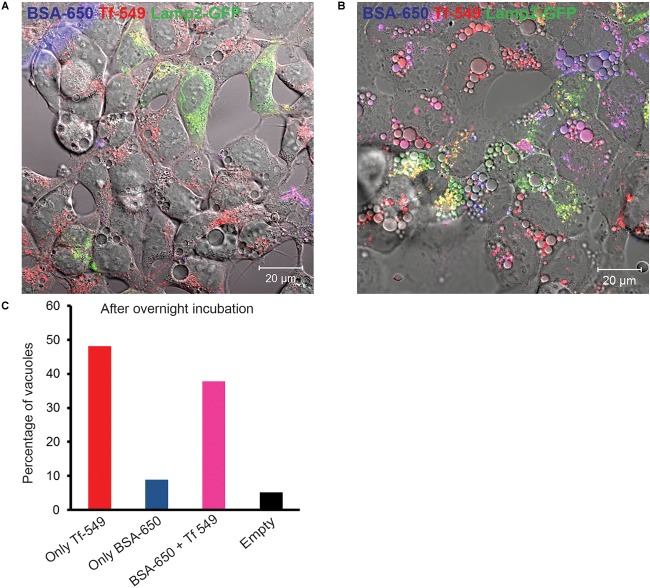
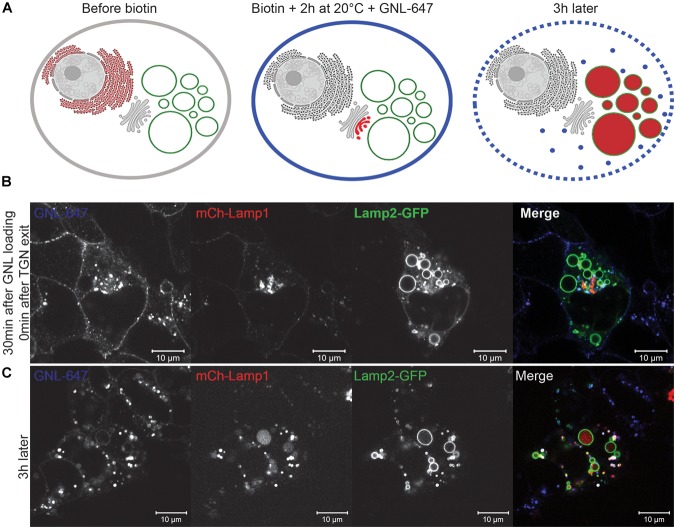
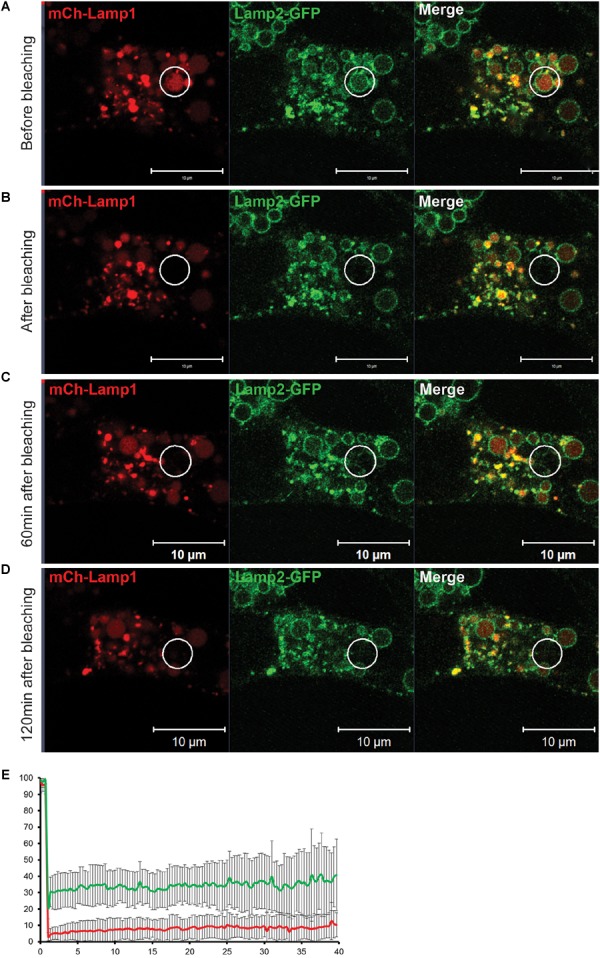
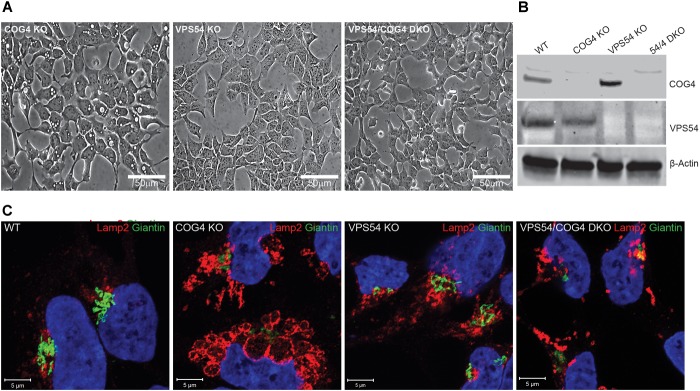
The conserved oligomeric complex (COG) is a multi-subunit vesicle tethering complex that functions in retrograde trafficking at the Golgi. We have previously demonstrated that the formation of enlarged endo-lysosomal structures (EELSs) is one of the major glycosylation-independent phenotypes of cells depleted for individual COG complex subunits. Here, we characterize the EELSs in HEK293T cells using microscopy and biochemical approaches. Our analysis revealed that the EELSs are highly acidic and that vATPase-dependent acidification is essential for the maintenance of this enlarged compartment. The EELSs are accessible to both -Golgi enzymes and endocytic cargo. Moreover, the EELSs specifically accumulate endolysosomal proteins Lamp2, CD63, Rab7, Rab9, Rab39, Vamp7, and STX8 on their surface. The EELSs are distinct from lysosomes and do not accumulate active Cathepsin B. Retention using selective hooks (RUSH) experiments revealed that biosynthetic cargo mCherry-Lamp1 reaches the EELSs much faster as compared to both receptor-mediated and soluble endocytic cargo, indicating TGN origin of the EELSs. In support to this hypothesis, EELSs are enriched with TGN specific lipid PI4P. Additionally, analysis of COG4/VPS54 double KO cells revealed that the activity of the GARP tethering complex is necessary for EELSs' accumulation, indicating that protein mistargeting and the imbalance of Golgi-endosome membrane flow leads to the formation of EELSs in COG-deficient cells. The EELSs are likely to serve as a degradative storage hybrid organelle for mistargeted Golgi enzymes and underglycosylated glycoconjugates. To our knowledge this is the first report of the formation of an enlarged hybrid endosomal compartment in a response to malfunction of the intra-Golgi trafficking machinery.
保守寡聚复合体(COG)是一种多亚基囊泡拴系复合体,在高尔基体的逆行运输中发挥作用。我们之前已经证明,形成扩大的内溶酶体结构(EELSs)是单个COG复合体亚基缺失的细胞中主要的非糖基化依赖性表型之一。在这里,我们使用显微镜和生化方法对HEK293T细胞中的EELSs进行了表征。我们的分析表明,EELSs具有高度酸性,并且vATPase依赖性酸化对于维持这个扩大的区室至关重要。EELSs对高尔基体酶和内吞货物都可及。此外,EELSs在其表面特异性积累内溶酶体蛋白Lamp2、CD63、Rab7、Rab9、Rab39、Vamp7和STX8。EELSs与溶酶体不同,不积累活性组织蛋白酶B。使用选择性挂钩(RUSH)实验的滞留结果显示,与受体介导的和可溶性内吞货物相比,生物合成货物mCherry-Lamp1到达EELSs的速度要快得多,这表明EELSs起源于反式高尔基体网络(TGN)。为支持这一假设,EELSs富含TGN特异性脂质PI4P。此外,对COG4/VPS54双敲除细胞的分析表明,GARP拴系复合体的活性对于EELSs的积累至关重要,表示蛋白质错误靶向和高尔基体 - 内体膜流的失衡导致了COG缺陷细胞中EELSs的形成。EELSs可能作为错误靶向的高尔基体酶和糖基化不足的糖缀合物的降解性储存混合细胞器。据我们所知,这是第一份关于因高尔基体内运输机制故障而形成扩大的混合内体区室的报告。