Tarter Kara D, Levy Craig E, Yaglom Hayley D, Adams Laura E, Plante Lydia, Casal Mariana G, Gouge Dawn H, Rathman Robin, Stokka Dawn, Weiss Joli, Venkat Heather, Walker Kathleen R
Arizona Department of Health Services, Phoenix, AZ 85007.
Maricopa County Department of Public Health, Phoenix, AZ 85012.
J Am Mosq Control Assoc. 2019 Mar;35(1):11-18. doi: 10.2987/18-6789.1.
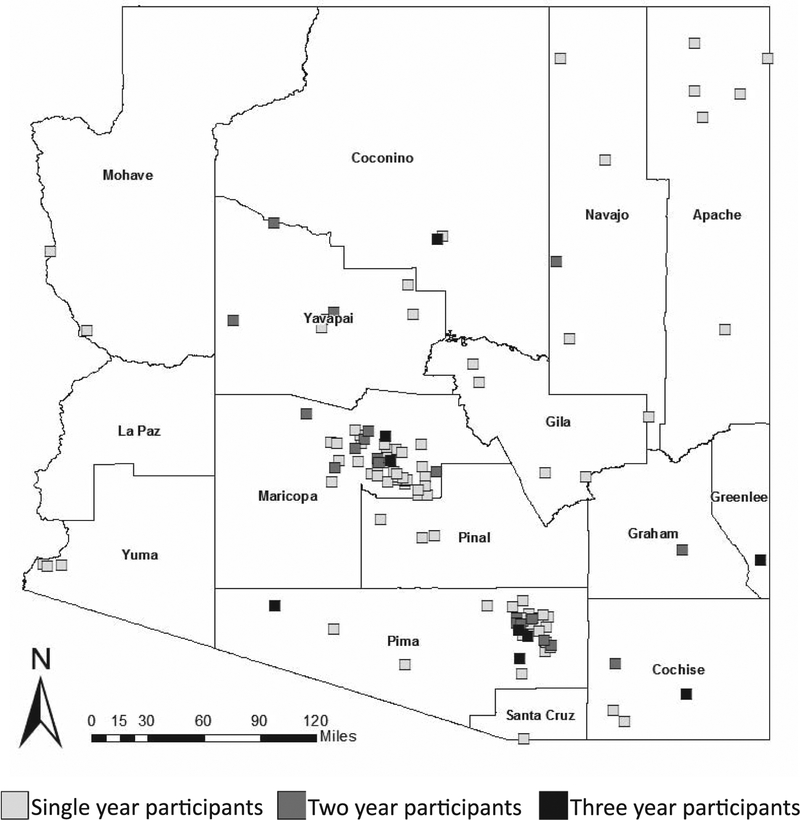
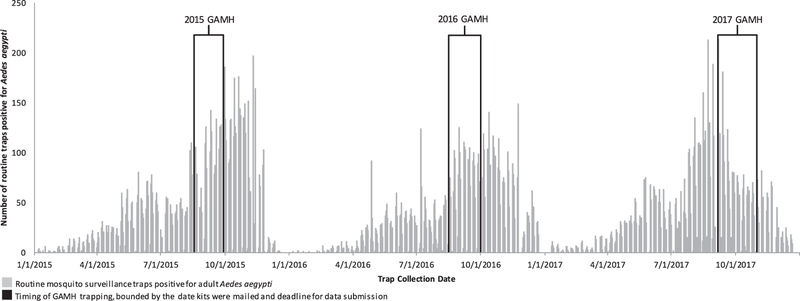
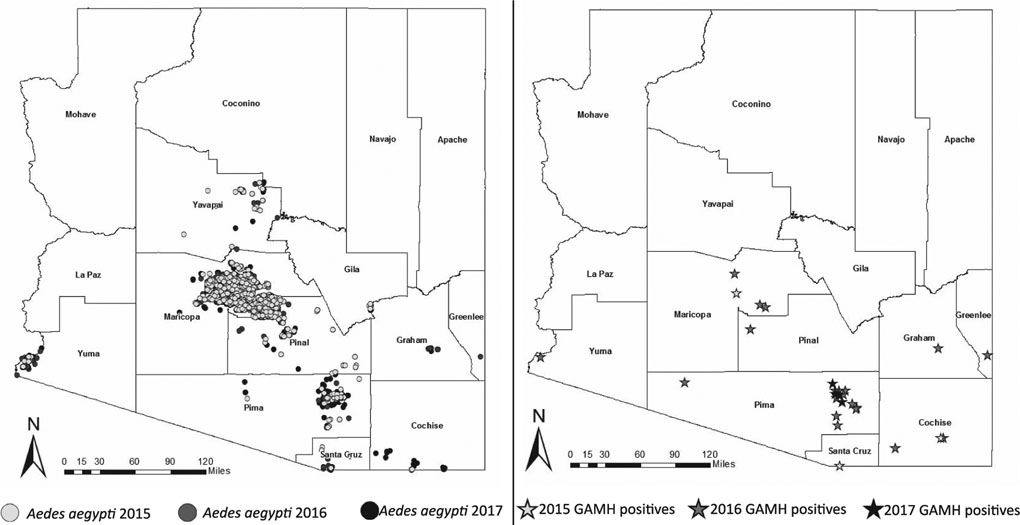
Vector surveillance is an essential component of vector-borne disease prevention, but many communities lack resources to support extensive surveillance. The Great Arizona Mosquito Hunt (GAMH) was a collaborative citizen science project conducted during 2015-17 to enhance surveillance for in Arizona. Citizen science projects engage the public in scientific research in order to further scientific knowledge while improving community understanding of a specific field of science and the scientific process. Participating schools and youth organizations across the state conducted oviposition trapping for 1-4 wk during peak season in Arizona and returned the egg sheets to collaborating entomologists for identification. During the 3-year program, 120 different schools and youth organizations participated. Few participants actually collected eggs in their traps in 2015 or 2017, but about one-third of participants collected eggs during 2016, including 3 areas that were not previously reported to have . While relatively few new areas of activity were identified, GAMH was found to be a successful method of engaging citizen scientists. Future citizen science mosquito surveillance projects might be useful to further define the ecology and risk for vector-borne diseases in Arizona.
病媒监测是病媒传播疾病预防的重要组成部分,但许多社区缺乏资源来支持广泛的监测。亚利桑那州大型蚊子捕猎活动(GAMH)是2015年至2017年期间开展的一个公民科学合作项目,旨在加强亚利桑那州对[某种蚊子,原文未明确写出具体名称]的监测。公民科学项目让公众参与科学研究,以增进科学知识,同时提高社区对特定科学领域和科学过程的理解。全州参与项目的学校和青年组织在亚利桑那州蚊子繁殖高峰期进行了1至4周的产卵诱捕,并将卵片返还给合作的昆虫学家进行鉴定。在为期三年的项目中,有120个不同的学校和青年组织参与。2015年或2017年,实际在诱捕器中收集到[某种蚊子,原文未明确写出具体名称]卵的参与者很少,但2016年约有三分之一的参与者收集到了卵,其中包括3个此前未报告有[某种蚊子,原文未明确写出具体名称]活动的地区。虽然发现新的[某种蚊子,原文未明确写出具体名称]活动区域相对较少,但GAMH被证明是吸引公民科学家参与的一种成功方法。未来的公民科学蚊子监测项目可能有助于进一步明确亚利桑那州病媒传播疾病的生态和风险。