University of Colorado School of Medicine, Aurora, Colorado, USA.
Colorado School of Public Health, Aurora, Colorado, USA.
BJOG. 2019 Nov;126(12):1491-1497. doi: 10.1111/1471-0528.15885. Epub 2019 Aug 25.
To evaluate the association between marijuana use and a composite adverse pregnancy outcome using biological sampling.
Retrospective cohort study.
Single tertiary center.
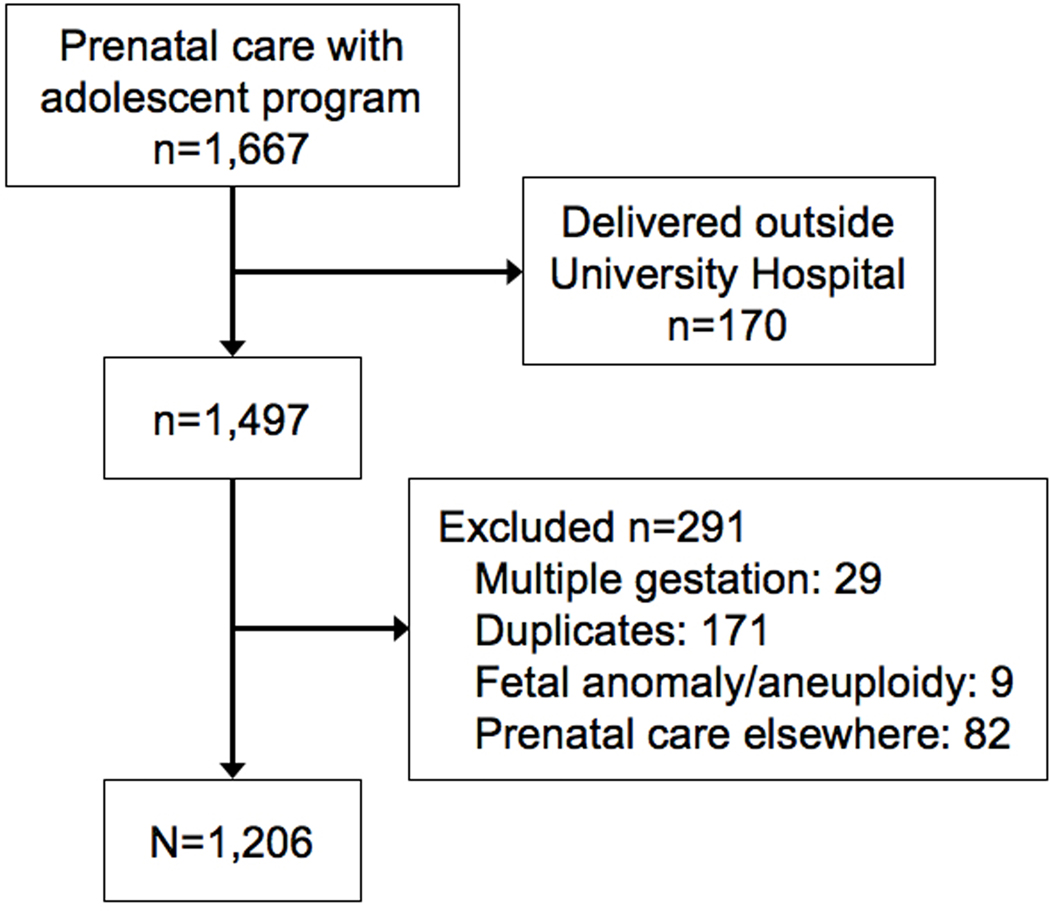
Young women (13-22 years old) with singleton, non-anomalous pregnancies delivered from September 2011 to May 2017.
Exposure was defined as marijuana detected on universal urine toxicology testing or by self-report. Multivariable logistic regression modelling was used to estimate the effect of any marijuana use on the primary composite outcome. The effect of marijuana exposure was also estimated for self-reported use, toxicology-detected use, and multiple use detected by toxicology.
The primary composite outcome included spontaneous preterm birth, hypertensive disorders of pregnancy, stillbirth, or small for gestational age.
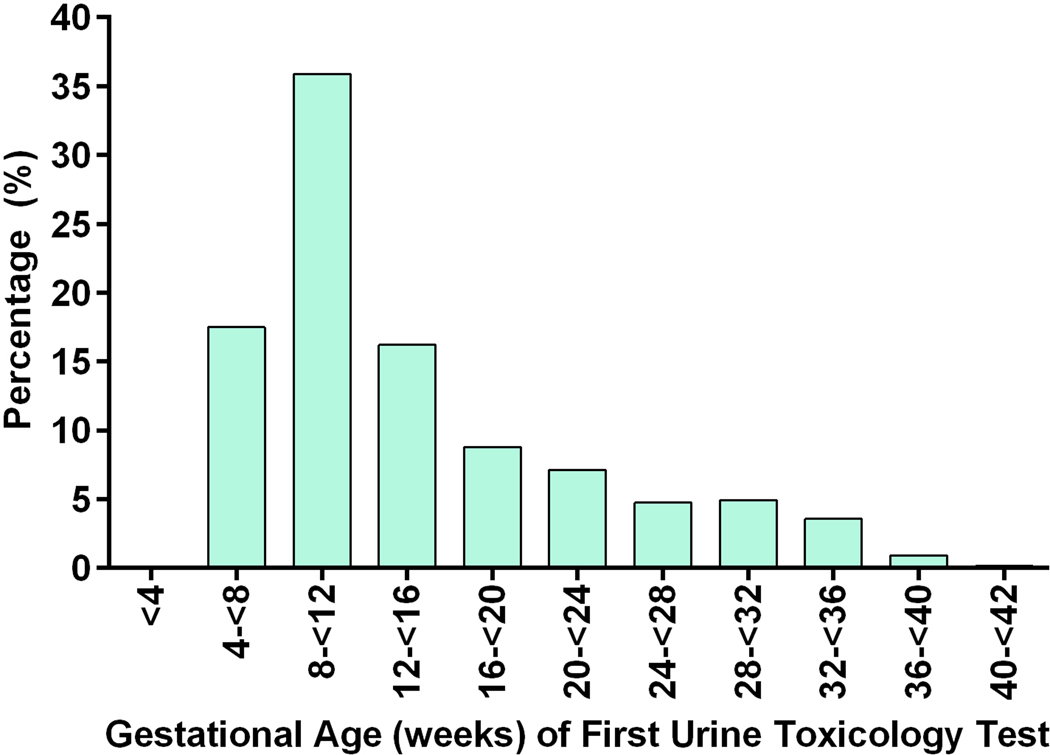
Of 1206 pregnant young women, 17.5% (n = 211) used marijuana. Among the women who used marijuana, 8.5% (n = 18) were identified by self-report alone, 63% (n = 133) by urine toxicology alone, and 28.4% (n = 60) by both. Urine toxicology testing results were available for 1092 (90.5%) births. The composite outcome occurred more frequently in pregnancies exposed to marijuana (46 versus 34%, P < 0.001). This remained significant after adjusting for race/ethnicity and tobacco in the multivariable model (adjusted OR 1.50, 95% CI 1.09-2.05). When marijuana exposure was defined by self-report only, the association with adverse pregnancy outcome became non-significant (adjusted OR 1.01, 95% CI 0.62-1.64).
In a population of young women with nearly universal biological sampling, marijuana exposure was associated with adverse pregnancy outcomes. The heterogeneity of findings in existing studies evaluating the impact of marijuana on mothers and neonates may result from the incomplete ascertainment of exposure.
Marijuana use, as detected by universal urine testing, was associated with a composite adverse pregnancy outcome among young mothers.
使用生物样本评估大麻使用与复合不良妊娠结局之间的关联。
回顾性队列研究。
单一大三中心。
2011 年 9 月至 2017 年 5 月期间分娩的 13-22 岁单胎、非畸形妊娠的年轻女性。
暴露定义为在通用尿液毒理学检测或自我报告中检测到大麻。多变量逻辑回归模型用于估计任何大麻使用对主要复合结局的影响。还估计了大麻暴露对自我报告使用、毒理学检测使用和毒理学检测到的多种使用的影响。
主要复合结局包括自发性早产、妊娠高血压疾病、死胎或小于胎龄儿。
在 1206 名怀孕的年轻女性中,17.5%(n=211)使用大麻。在使用大麻的女性中,8.5%(n=18)仅通过自我报告确定,63%(n=133)仅通过尿液毒理学确定,28.4%(n=60)两者均确定。尿液毒理学检测结果可用于 1092(90.5%)例分娩。暴露于大麻的妊娠中复合结局更为常见(46%比 34%,P<0.001)。在多变量模型中调整种族/民族和烟草因素后,这仍然具有统计学意义(调整后的 OR 1.50,95%CI 1.09-2.05)。当大麻暴露仅通过自我报告定义时,与不良妊娠结局的关联变得不显著(调整后的 OR 1.01,95%CI 0.62-1.64)。
在几乎普遍进行生物样本检测的年轻女性人群中,大麻暴露与不良妊娠结局相关。现有评估大麻对母亲和新生儿影响的研究结果存在差异,可能是由于暴露情况的不完全确定。
在年轻母亲中,通过通用尿液检测发现的大麻使用与复合不良妊娠结局相关。