Courant Institute of Mathematical Sciences, New York, New York, United States of America.
Center for Neural Science, New York University, New York, New York, United States of America.
PLoS Comput Biol. 2019 Jul 23;15(7):e1007198. doi: 10.1371/journal.pcbi.1007198. eCollection 2019 Jul.
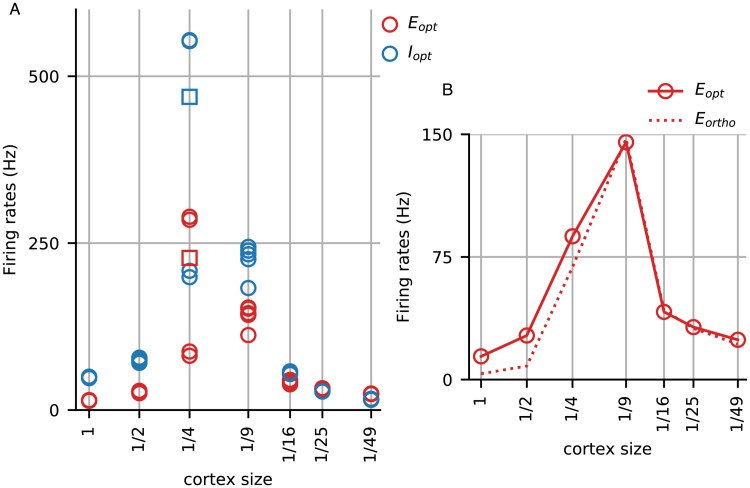
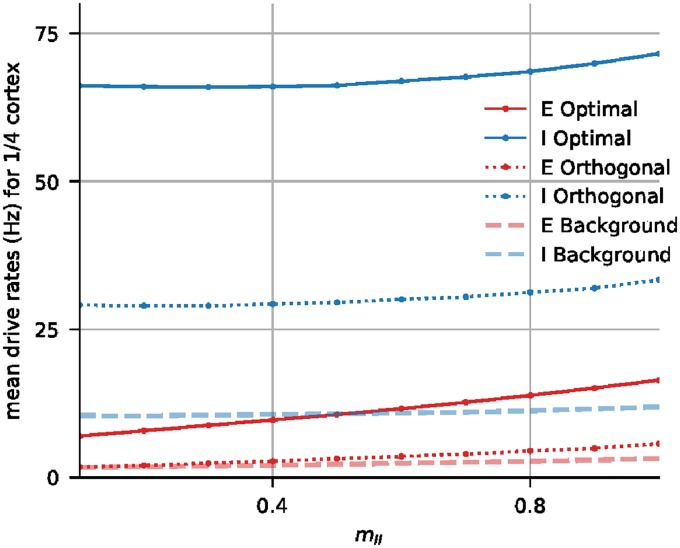
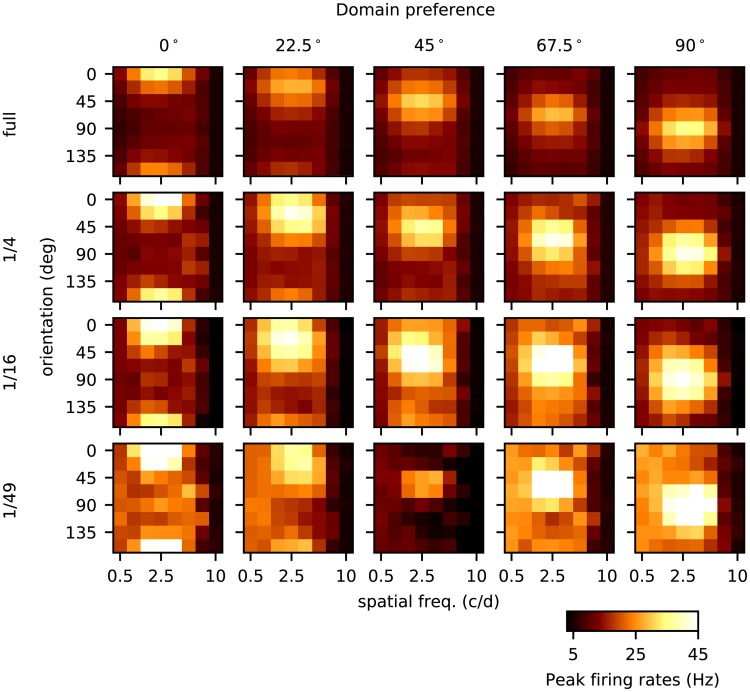
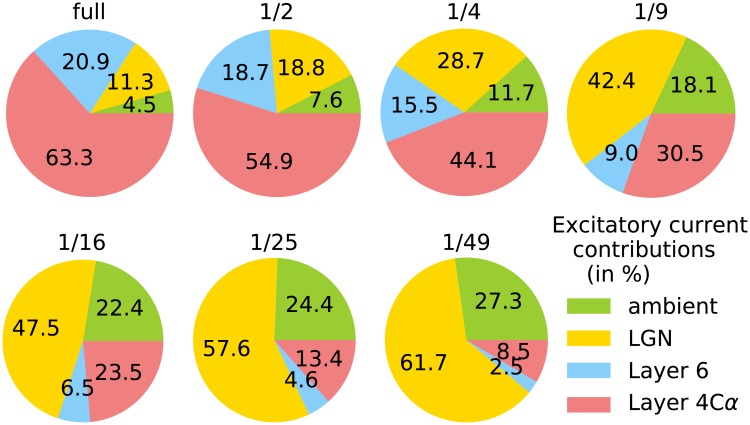
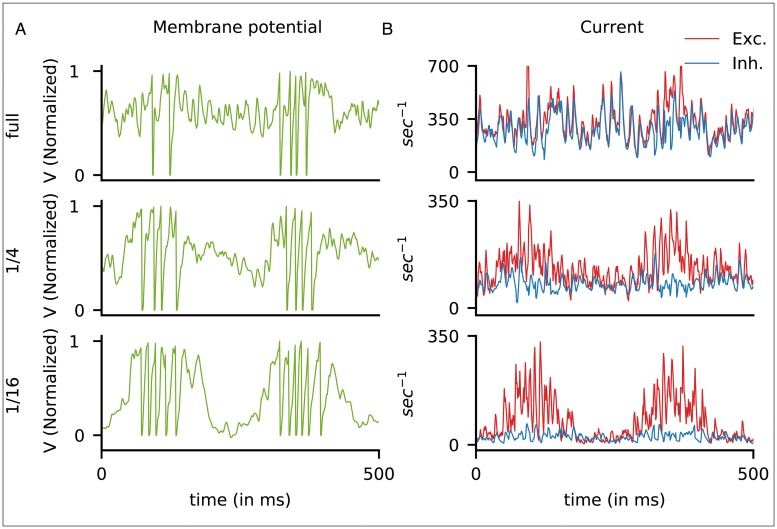
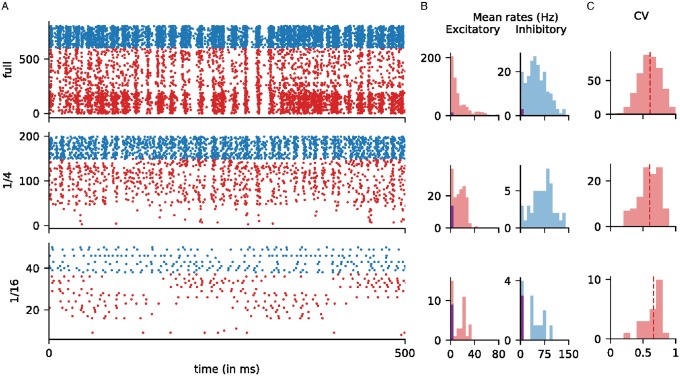
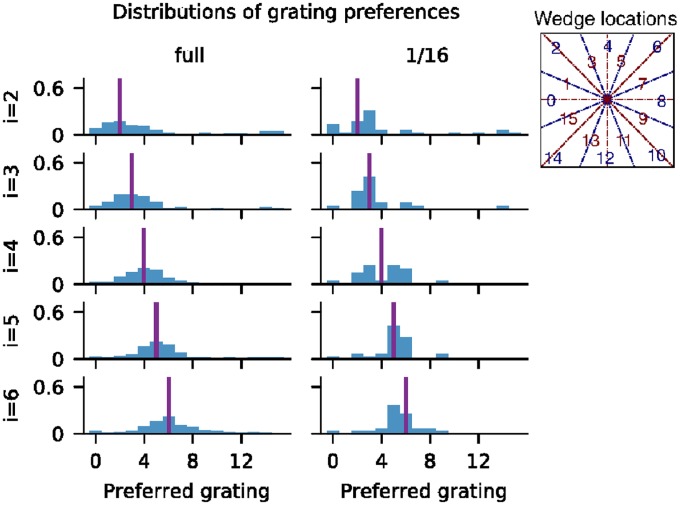
Neuroscience models come in a wide range of scales and specificity, from mean-field rate models to large-scale networks of spiking neurons. There are potential trade-offs between simplicity and realism, versatility and computational speed. This paper is about large-scale cortical network models, and the question we address is one of scalability: would scaling down cell density impact a network's ability to reproduce cortical dynamics and function? We investigated this problem using a previously constructed realistic model of the monkey visual cortex that is true to size. Reducing cell density gradually up to 50-fold, we studied changes in model behavior. Size reduction without parameter adjustment was catastrophic. Surprisingly, relatively minor compensation in synaptic weights guided by a theoretical algorithm restored mean firing rates and basic function such as orientation selectivity to models 10-20 times smaller than the real cortex. Not all was normal in the reduced model cortices: intracellular dynamics acquired a character different from that of real neurons, and while the ability to relay feedforward inputs remained intact, reduced models showed signs of deficiency in functions that required dynamical interaction among cortical neurons. These findings are not confined to models of the visual cortex, and modelers should be aware of potential issues that accompany size reduction. Broader implications of this study include the importance of homeostatic maintenance of firing rates, and the functional consequences of feedforward versus recurrent dynamics, ideas that may shed light on other species and on systems suffering cell loss.
神经科学模型的范围和特异性很广,从平均场率模型到尖峰神经元的大规模网络。在简单性和真实性、通用性和计算速度之间存在潜在的权衡。本文讨论的是大规模皮质网络模型,我们要解决的问题是可扩展性问题:降低细胞密度是否会影响网络复制皮质动力学和功能的能力?我们使用之前构建的、符合真实尺寸的猴子视觉皮层的真实模型来研究这个问题。我们逐渐将细胞密度降低 50 倍,研究模型行为的变化。没有参数调整的尺寸减小是灾难性的。令人惊讶的是,由理论算法指导的相对较小的突触权重补偿,将模型的平均放电率和基本功能(如方向选择性)恢复到比真实皮层小 10-20 倍的模型中。在减小的模型皮质中并非一切正常:细胞内动力学获得了与真实神经元不同的特征,虽然前馈输入的传递能力保持不变,但减小的模型显示出在需要皮质神经元之间动态相互作用的功能方面存在缺陷的迹象。这些发现不仅限于视觉皮层模型,建模者应该意识到尺寸减小伴随的潜在问题。这项研究的更广泛意义包括维持放电率的动态平衡的重要性,以及前馈与反馈动力学的功能后果,这些想法可能为其他物种和遭受细胞损失的系统提供启示。