Division of Neuroscience and Experimental Psychology, School of Biological Science, University of Manchester, Manchester, United Kingdom.
Autism Res. 2019 Oct;12(10):1440-1462. doi: 10.1002/aur.2170. Epub 2019 Jul 23.
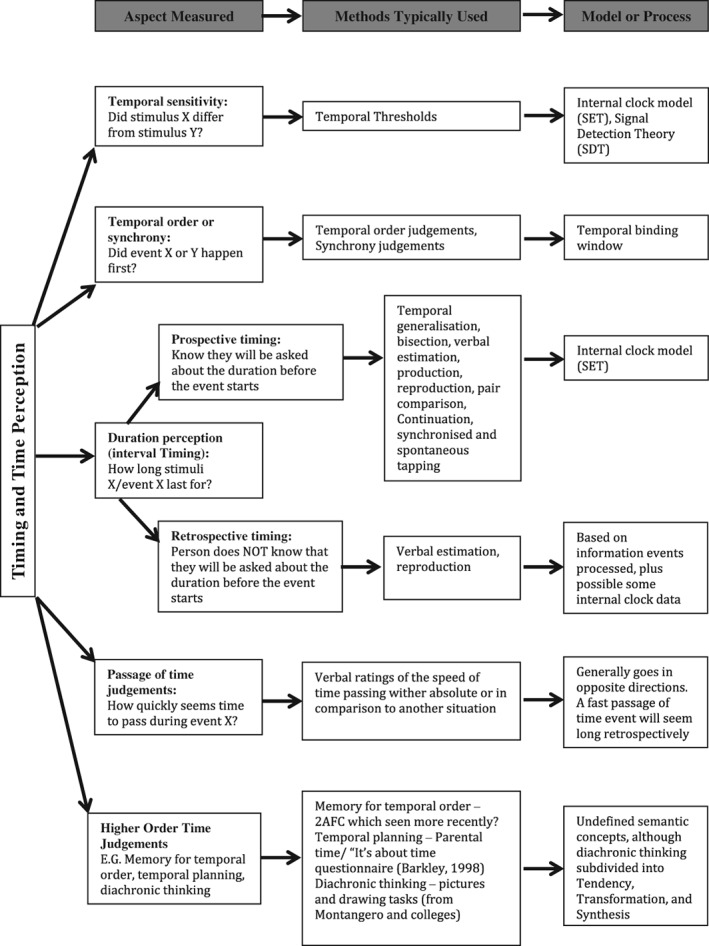
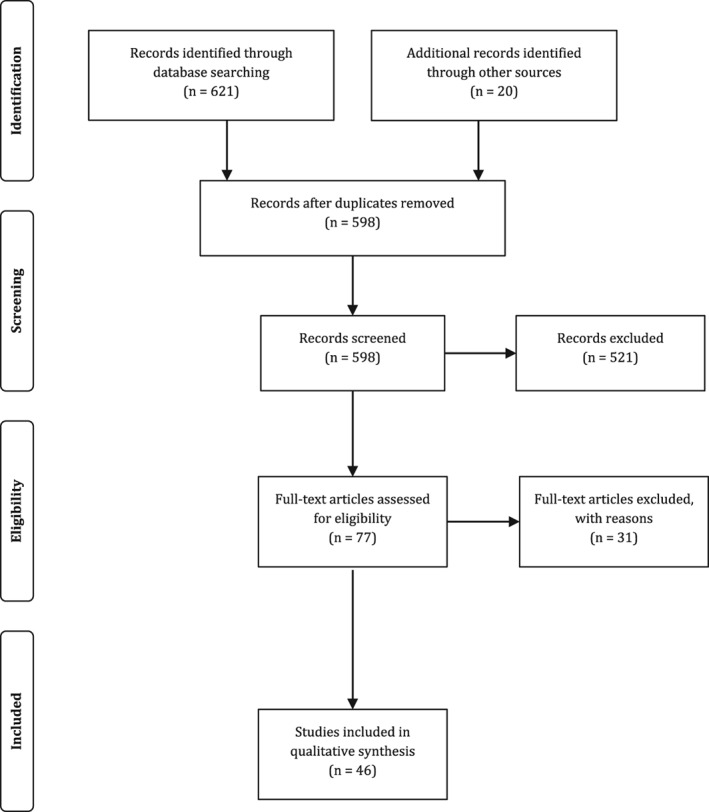
Problems with timing and time perception have been suggested as key characteristics of autism spectrum condition (ASC). Studies and personal accounts from clinicians, parents, caregivers, and self-reports from autistic people themselves often refer to problems with time. Although a number of empirical studies have examined aspects relating to time in autistic individuals, there remains no clear consensus on whether or how timing mechanisms may be affected in autism. A key reason for this lack of clarity is the wide range of timing processes that exist and subsequently the wide range of methodologies, research paradigms, and samples that time-based studies have used with autism populations. In order to summarize and organize the available literature on this issue, a systematic review was conducted. Five electronic databases were consulted. From an initial 597 records (after duplicates were removed), 45 papers were selected and reviewed. The studies are reviewed within different sections based on the different types of timing ability that have been explored in the neurotypical (NT) population: time sensitivity, interval timing, and higher-order time perception. Within each section cognitive models, methodologies, possible clinical implications, and research results are discussed. The results show different consistency across studies between the three types of timing ability. The highest consistency of results showing atypical time perception abilities is found in high-level time perception studies. It remains unclear if autism is characterized by a fundamental time perception impairment. Suggestions for future research are discussed. Autism Res 2019, 12: 1440-1462. © 2019 International Society for Autism Research, Wiley Periodicals, Inc. LAY SUMMARY: This systematic review examines the different types of timing and time perception behavior that have been investigated in autism. Overall, there are a number of studies that show differences between autistic and non-autistic individuals, but some studies do not find such differences. Group differences are more consistent across studies using complex tasks rather than simpler more fundamental timing tasks. We suggest that experiments across a range of timing tasks would be fruitful to address gaps in our knowledge.
时间感和时间知觉问题已被认为是自闭症谱系障碍(ASC)的关键特征。研究人员、临床医生、家长、照顾者以及自闭症患者自身的个人报告经常提到时间问题。尽管许多实证研究都考察了自闭症个体与时间相关的各个方面,但对于时间处理机制是否以及如何受到自闭症的影响,仍未达成明确共识。造成这种不明确性的一个关键原因是,现有的时间处理过程多种多样,因此,基于自闭症人群的时间研究使用了广泛的方法、研究范式和样本。为了总结和组织这个问题的现有文献,进行了系统的回顾。共查阅了五个电子数据库。在剔除重复项后,从最初的 597 条记录中,选择并回顾了 45 篇论文。这些研究根据在神经典型(NT)人群中探索过的不同类型的时间能力进行了不同部分的回顾:时间敏感性、时间间隔和高阶时间知觉。在每个部分中,讨论了认知模型、方法、可能的临床意义和研究结果。结果表明,在三种时间能力方面,不同研究之间的结果存在不同程度的一致性。在高级时间知觉研究中,发现非典型时间知觉能力的结果一致性最高。自闭症的特征是否是基本时间知觉损伤仍不清楚。讨论了对未来研究的建议。自闭症研究 2019, 12: 1440-1462. © 2019 国际自闭症研究协会,Wiley 期刊,公司。 概述:本系统回顾检查了自闭症中已研究过的不同类型的时间和时间知觉行为。总体而言,有许多研究表明自闭症个体和非自闭症个体之间存在差异,但有些研究并未发现这种差异。使用复杂任务而非更简单、更基本的时间任务进行的研究中,组间差异更为一致。我们建议,在一系列时间任务中进行实验将有助于填补我们知识中的空白。