Department of Orthopaedics, Southwest Hospital, Third Military Medical University, No.30, Gaotanyan Street, District of Shapingba, Chongqing, 400038, China.
J Orthop Surg Res. 2019 Jul 23;14(1):233. doi: 10.1186/s13018-019-1252-4.
The purpose of this multicentre, retrospective study was to evaluate the safety and efficacy of different surgical approaches for treating thoracolumbar tuberculosis.
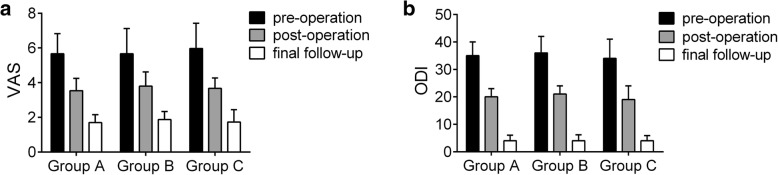
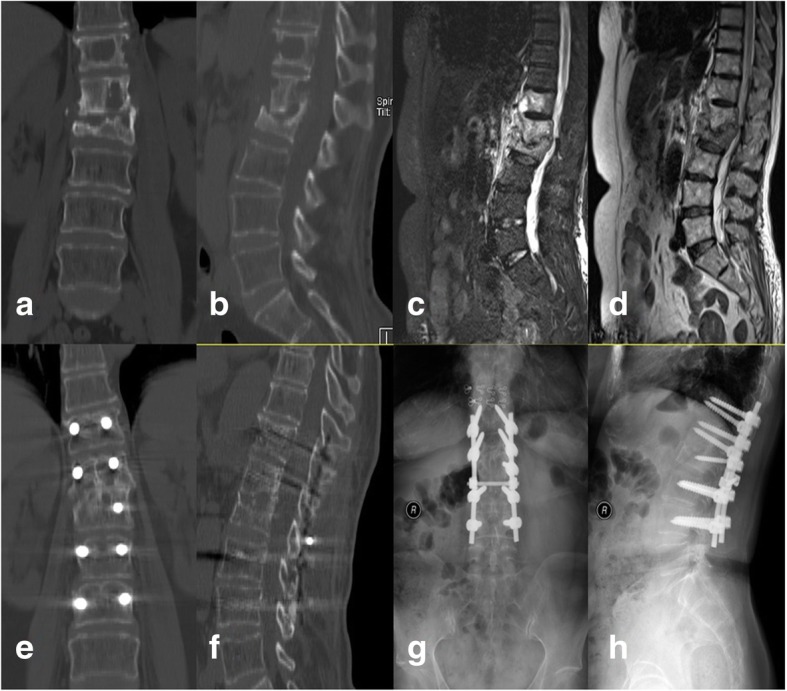
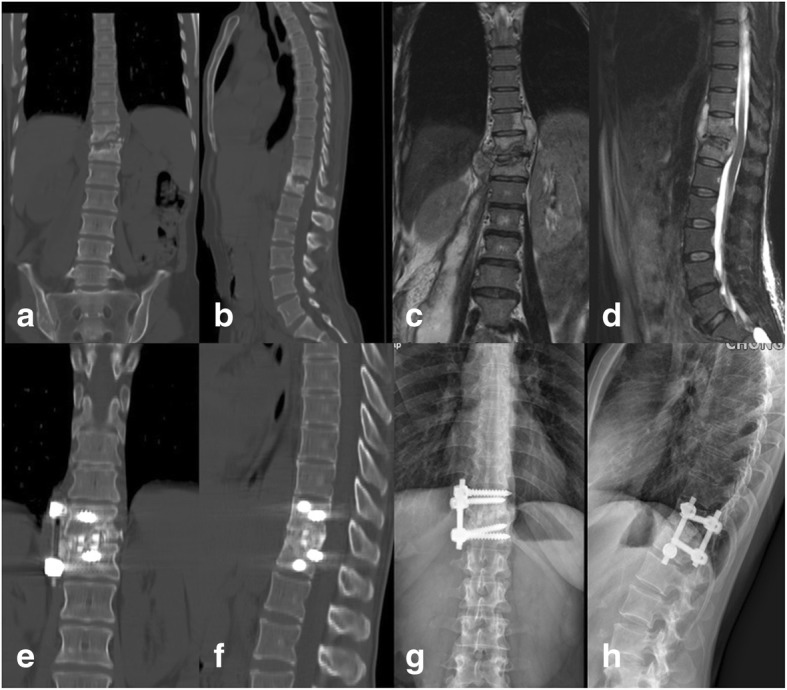
This study reviewed 132 patients with thoracolumbar tuberculosis in six institutions between January 1999 and January 2015 surgically treated by an anterior-only approach (n = 22, group A), an anterior combined with posterior approach (n = 79, group B), and a posterior-only approach (n = 31, group C). All patients were treated with standard antituberculosis drugs pre- and postoperatively and were followed regularly after surgery. Clinical symptoms, nerve function, and the erythrocyte sedimentation rate were observed, and kyphosis correction and bone fusion were evaluated by X-ray or computed tomography.
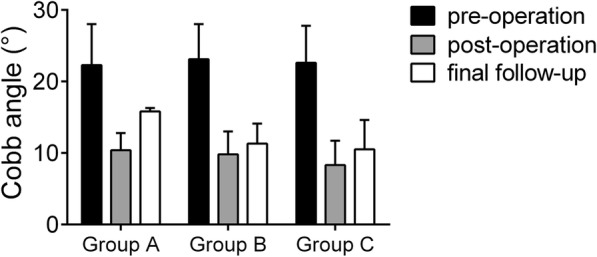
At the last follow-up, all patients had achieved bone fusion, relief from pain, and neurological recovery. The Cobb angle was improved; however, the Cobb angle showed a degree of loss at the final follow-up after all three surgical approaches. Further comparisons revealed a difference in angle loss at the final follow-up among the three groups; groups B and C were superior to group A in maintenance of the correction. The posterior-only approach was characterized by a shorter operative time and reduced blood loss.
Surgery by a posterior-only approach is superior to that by an anterior-only approach and anterior combined with posterior approach in terms of permanent kyphosis correction and spinal stability maintenance. Therefore, we recommend surgery by a posterior-only approach as the optimized treatment for thoracolumbar tuberculosis if the indications for this treatment are met.
本多中心回顾性研究旨在评估不同手术入路治疗胸腰椎结核的安全性和有效性。
本研究回顾了 1999 年 1 月至 2015 年 1 月期间六家机构采用单纯前路(n=22,A 组)、前路联合后路(n=79,B 组)和单纯后路(n=31,C 组)治疗的 132 例胸腰椎结核患者。所有患者术前、术后均采用标准抗结核药物治疗,并定期随访。观察临床症状、神经功能及红细胞沉降率,通过 X 线或 CT 评估后凸矫正和骨融合情况。
末次随访时,所有患者均获得骨融合、疼痛缓解和神经功能恢复。Cobb 角得到改善;但三种手术入路末次随访时 Cobb 角均有一定程度丢失。进一步比较发现,三组间末次随访时角度丢失存在差异,后路组优于前路联合后路组。后路组手术时间短,出血量少。
后路手术在维持永久后凸矫正和脊柱稳定性方面优于单纯前路和前路联合后路手术。因此,如果符合手术指征,我们建议采用后路手术作为胸腰椎结核的优化治疗方法。