Eye Center, Renmin Hospital of Wuhan University, Wuhan, Hubei, China (mainland).
West China Hospital/West China School of Medicine, Sichuan University, Chengdu, Sichuan, China (mainland).
Med Sci Monit. 2019 Jul 24;25:5501-5509. doi: 10.12659/MSM.915591.
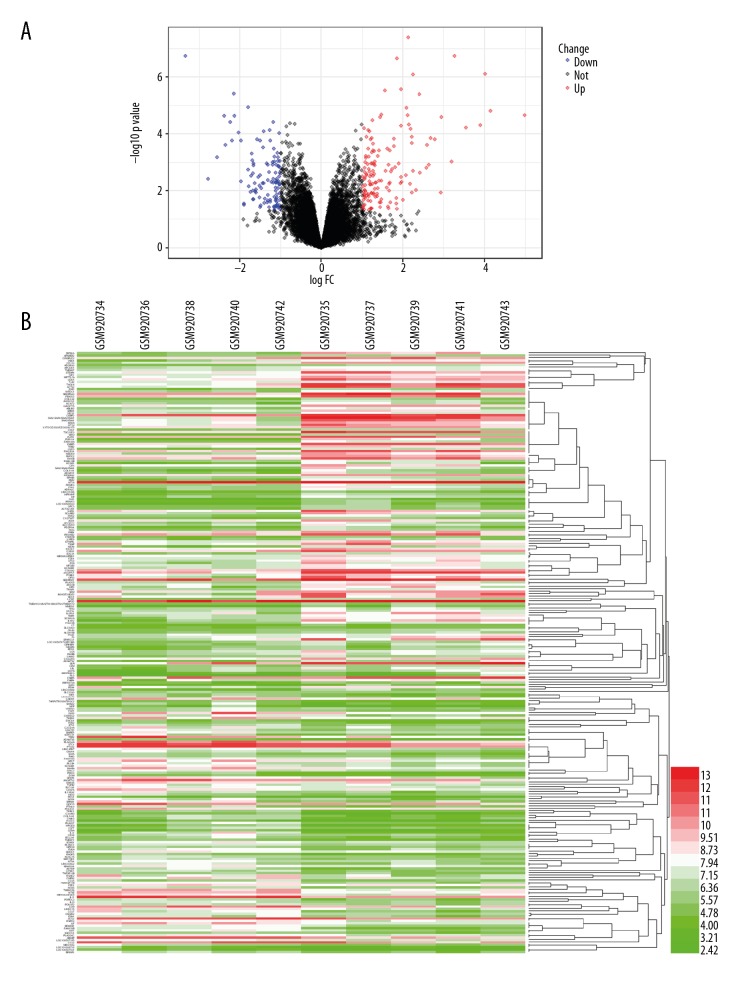
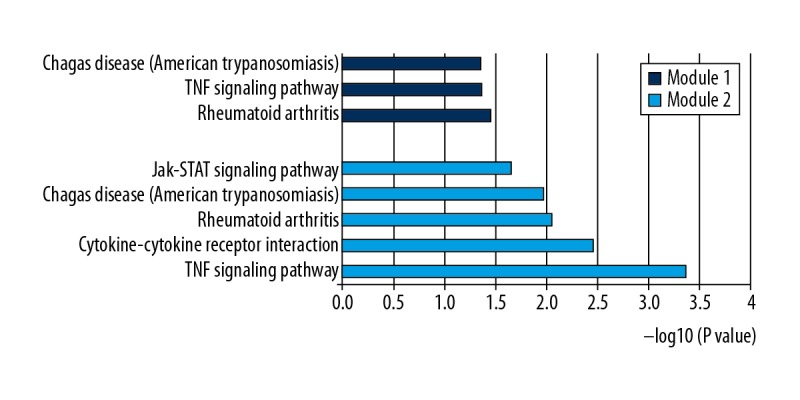
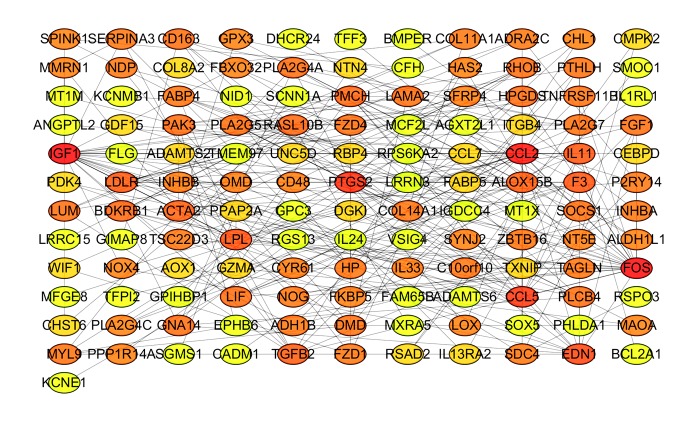
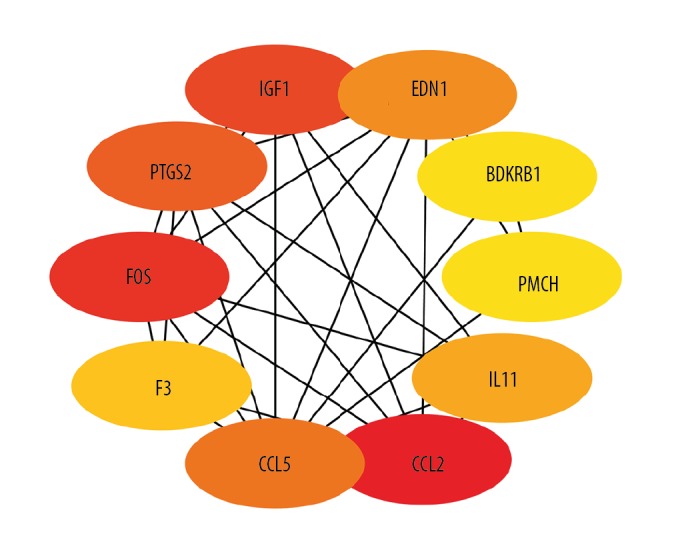
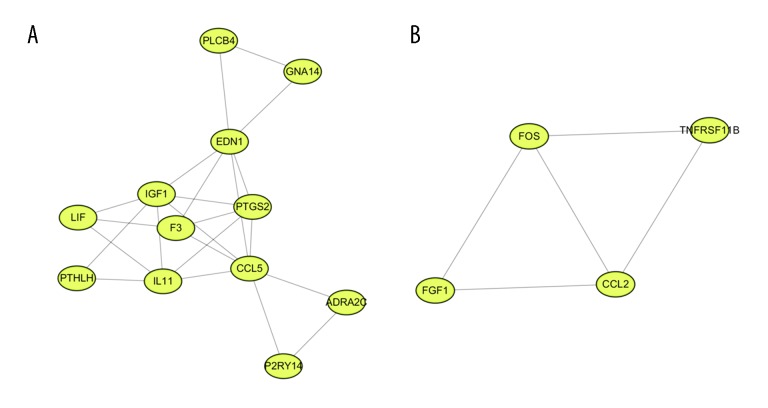
BACKGROUND Glucocorticoids (GCs)-induced glaucoma is a common adverse effect of prolonged GCs use. To better understand the effects of GCs on aqueous humor (AH) outflow, we analyzed the dataset GSE37474 using bioinformatics analysis to identify gene changes and pathways in the anterior segment of the human eye induced by dexamethasone (DEX). MATERIAL AND METHODS The GSE37474 dataset downloaded from the Gene Expression Omnibus (GEO) database was examined in this study. GEO2R was utilized to analyze data and identify differentially expressed genes (DEGs). Gene Ontology (GO) enrichment and the Kyoto Encyclopedia of Genes and Genomes (KEGG) pathway were constructed using the DAVID database followed by construction of a protein-protein interaction (PPI) network performed using Cytoscape software. Finally, modules and hub genes were screened out using MCODE and cytoHubba plugin, respectively. RESULTS A set of 252 DEGs were screened. Among the DEGs, 143 genes were upregulated and 109 were downregulated. GO analysis indicated that some of the DEGs participated in extracellular matrix (ECM) organization and cholesterol homeostasis. Additionally, KEGG pathways were predominantly enriched in tyrosine metabolism and ECM-receptor interaction. From the PPI network, 2 modules were identified, and 10 hub genes were screened out, including CCL2, FOS, IGF1, PTGS2, CCL5, EDN1, IL11, F3, PMCH, and BDKRB1. The 2 module genes primarily participate in the TNF signaling pathway, cytokine-cytokine receptor interaction, and the Jak-STAT signaling pathway. CONCLUSIONS The present study identified some significant DEGs, hub genes, pathways, and modules in the human anterior segment induced by DEX. These results demonstrate that DEX changes the expression of certain genes and pathways to resist aqueous humor outflow, which could be new targets for developing novel and more effective approaches of diagnosis and therapy for GCs-induced glaucoma.
糖皮质激素(GCs)诱导性青光眼是长期使用 GCs 的常见不良反应。为了更好地了解 GCs 对房水(AH)流出的影响,我们使用生物信息学分析方法分析了从基因表达综合数据库(GEO)下载的 GSE37474 数据集,以鉴定地塞米松(DEX)诱导的人眼前节的基因变化和途径。
本研究中检查了从基因表达综合数据库(GEO)数据库下载的 GSE37474 数据集。使用 GEO2R 分析数据并识别差异表达基因(DEGs)。使用 DAVID 数据库进行基因本体论(GO)富集和京都基因与基因组百科全书(KEGG)途径构建,然后使用 Cytoscape 软件构建蛋白质-蛋白质相互作用(PPI)网络。最后,使用 MCODE 和 cytoHubba 插件分别筛选模块和枢纽基因。
筛选出一组 252 个 DEGs。在 DEGs 中,143 个基因上调,109 个基因下调。GO 分析表明,一些 DEGs 参与细胞外基质(ECM)组织和胆固醇稳态。此外,KEGG 途径主要富集在酪氨酸代谢和 ECM-受体相互作用中。从 PPI 网络中鉴定出 2 个模块,并筛选出 10 个枢纽基因,包括 CCL2、FOS、IGF1、PTGS2、CCL5、EDN1、IL11、F3、PMCH 和 BDKRB1。这 2 个模块基因主要参与 TNF 信号通路、细胞因子-细胞因子受体相互作用和 Jak-STAT 信号通路。
本研究鉴定出 DEX 诱导的人眼前节中一些重要的 DEGs、枢纽基因、途径和模块。这些结果表明,DEX 改变了某些基因和途径的表达,以抵抗房水流出,这可能是开发新型、更有效的 GCs 诱导性青光眼诊断和治疗方法的新靶点。