Increnovo LLC, 2138 East Lafayette Place, Milwaukee, WI 53202, USA.
Exercise and Performance Nutrition Laboratory, Lindenwood University, St. Charles, MO 63301, USA.
Nutrients. 2019 Jul 23;11(7):1692. doi: 10.3390/nu11071692.
It is known that unaccustomed exercise-especially when it has an eccentric component-causes muscle damage and subsequent performance decrements. Attenuating muscle damage may improve performance and recovery, allowing for improved training quality and adaptations. Therefore, the current study sought to examine the effect of two doses of curcumin supplementation on performance decrements following downhill running.
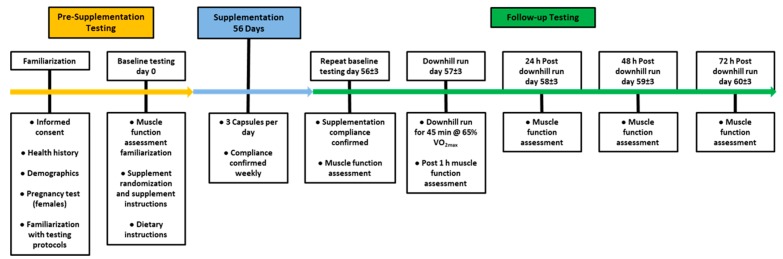
Sixty-three physically active men and women (21 ± 2 y; 70.0 ± 13.7 kg; 169.3 ± 15.2 cm; 25.6 ± 14.3 body mass index (BMI), 32 women, 31 men) were randomly assigned to ingest 250 mg of CurcuWIN® (50 mg of curcuminoids), 1000 mg of CurcuWIN® (200 mg of curcuminoids), or a corn starch placebo (PLA) for eight weeks in a double-blind, randomized, placebo-controlled parallel design. At the end of the supplementation period, subjects completed a downhill running protocol intended to induce muscle damage. Muscle function using isokinetic dynamometry and perceived soreness was assessed prior to and at 1 h, 24 h, 48 h, and 72 h post-downhill run.
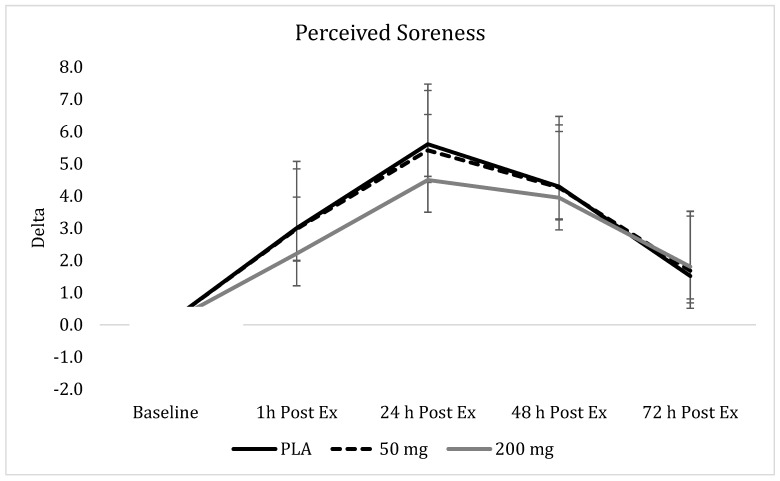
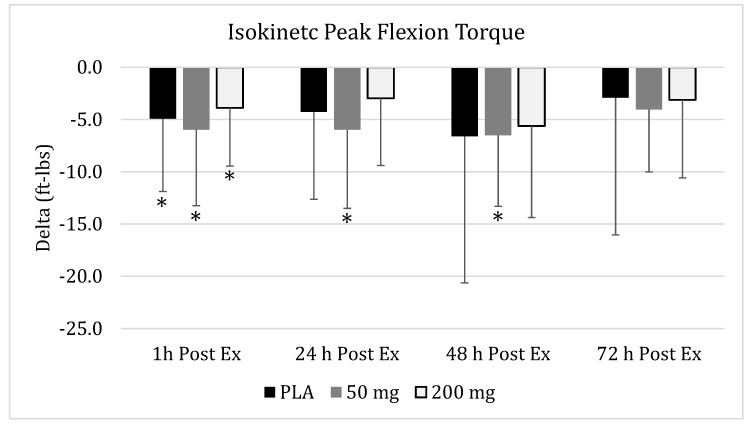
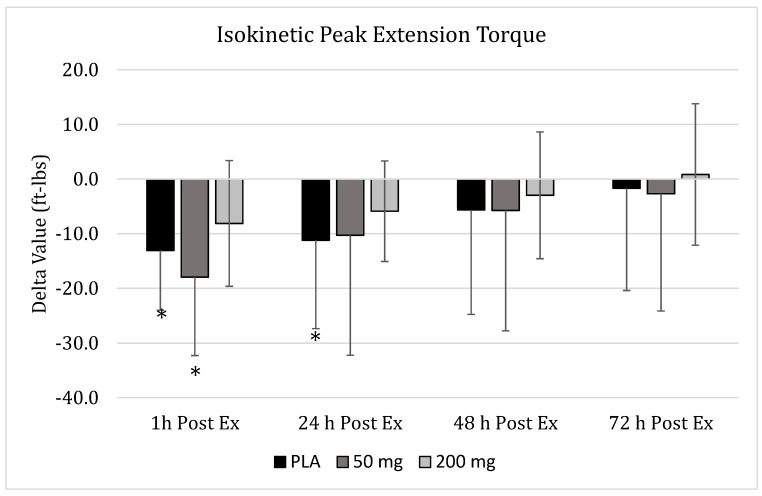
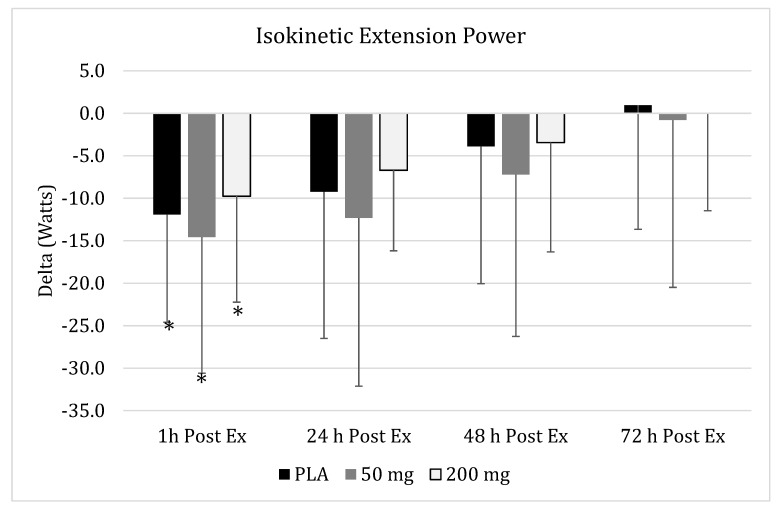
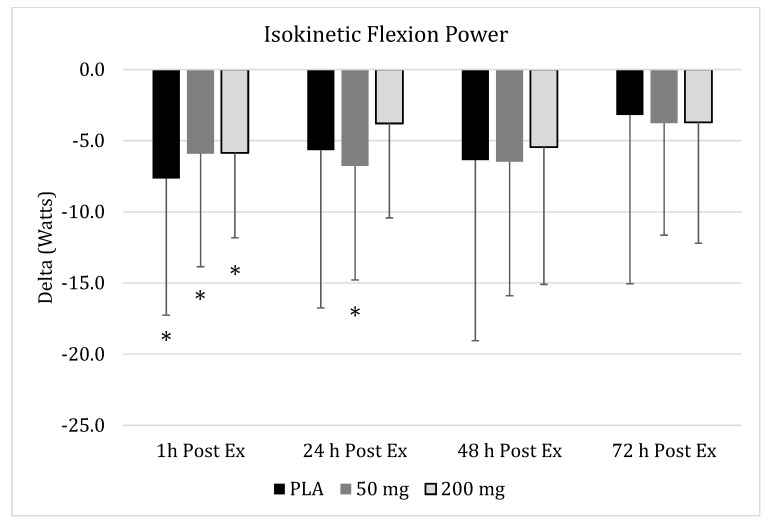
Isokinetic peak extension torque did not change in the 200-mg dose, while significant reductions occurred in the PLA and 50-mg groups through the first 24 h of recovery. Isokinetic peak flexion torque and power both decreased in the 50-mg group, while no change was observed in the PLA or 200-mg groups. All the groups experienced no changes in isokinetic extension power and isometric average peak torque. Soreness was significantly increased in all the groups compared to the baseline. Non-significant improvements in total soreness were observed for the 200-mg group, but these changes failed to reach statistical significance.
When compared to changes observed against PLA, a 200-mg dose of curcumin attenuated reductions in some but not all observed changes in performance and soreness after completion of a downhill running bout. Additionally, a 50-mg dose appears to offer no advantage to changes observed in the PLA and 200-mg groups.
众所周知,不习惯的运动——尤其是当它有偏心成分时——会导致肌肉损伤和随后的表现下降。减轻肌肉损伤可能会提高表现和恢复能力,从而提高训练质量和适应性。因此,本研究旨在探讨两种剂量姜黄素补充对下坡跑后表现下降的影响。
63 名有运动能力的男性和女性(21±2 岁;70.0±13.7kg;169.3±15.2cm;25.6±14.3 体重指数(BMI),32 名女性,31 名男性)被随机分配在 8 周的双盲、随机、安慰剂对照平行设计中服用 250mg CurcuWIN®(50mg 姜黄素类)、1000mg CurcuWIN®(200mg 姜黄素类)或玉米淀粉安慰剂(PLA)。在补充期结束时,受试者完成了一个旨在诱导肌肉损伤的下坡跑协议。在跑下坡前、跑下坡后 1 小时、24 小时、48 小时和 72 小时,使用等速测力法评估肌肉功能和感知酸痛程度。
200mg 剂量的等速伸展扭矩没有变化,而 PLA 和 50mg 组在恢复的前 24 小时显著下降。50mg 组的等速屈曲扭矩和功率均下降,而 PLA 组和 200mg 组没有变化。所有组的等速伸展功率和等长平均峰值扭矩均无变化。与基线相比,所有组的酸痛程度均显著增加。200mg 组的总酸痛程度有显著改善,但这些变化未达到统计学意义。
与 PLA 相比,200mg 剂量的姜黄素减轻了下坡跑后一些但不是所有观察到的运动和酸痛表现下降,但对 PLA 和 200mg 组观察到的变化没有优势。