Department of Behavioral Neuroscience, Oregon Health and Science University, Portland, OR, USA.
Department of Neuroscience, University of Pittsburgh, Pittsburgh, PA, USA.
Cogn Affect Behav Neurosci. 2019 Dec;19(6):1404-1417. doi: 10.3758/s13415-019-00736-w.
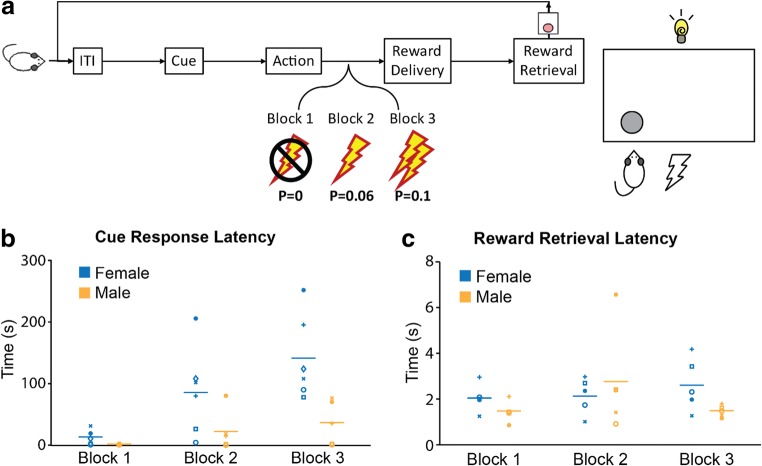
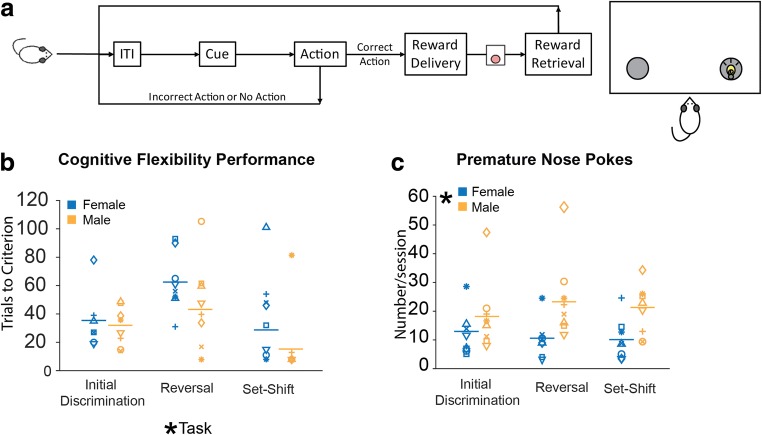
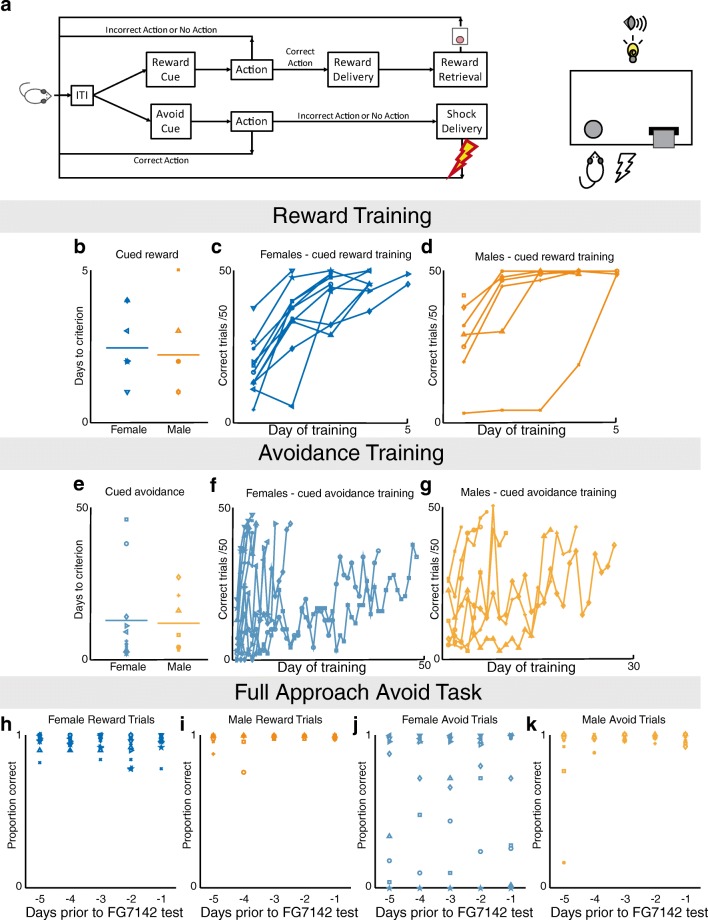
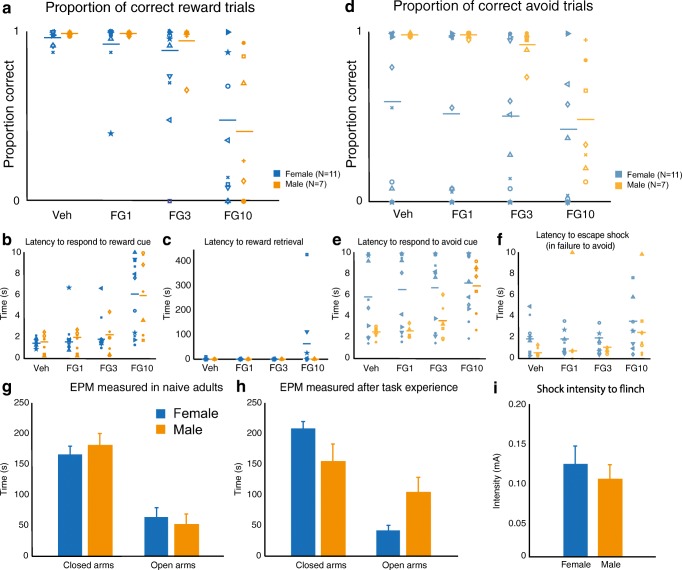
Differences in the prevalence and presentation of psychiatric illnesses in men and women suggest that neurobiological sex differences confer vulnerability or resilience in these disorders. Rodent behavioral models are critical for understanding the mechanisms of these differences. Reward processing and punishment avoidance are fundamental dimensions of the symptoms of psychiatric disorders. Here we explored sex differences along these dimensions using multiple and distinct behavioral paradigms. We found no sex difference in reward-guided associative learning but a faster punishment-avoidance learning in females. After learning, females were more sensitive than males to probabilistic punishment but less sensitive when punishment could be avoided with certainty. No sex differences were found in reward-guided cognitive flexibility. Thus, sex differences in goal-directed behaviors emerged selectively when there was an aversive context. These differences were critically sensitive to whether the punishment was certain or unpredictable. Our findings with these new paradigms provide conceptual and practical tools for investigating brain mechanisms that account for sex differences in susceptibility to anxiety and impulsivity. They may also provide insight for understanding the evolution of sex-specific optimal behavioral strategies in dynamic environments.
男性和女性中精神疾病的患病率和表现存在差异,这表明神经生物学性别差异使这些疾病具有易感性或弹性。啮齿动物行为模型对于理解这些差异的机制至关重要。奖励处理和惩罚回避是精神疾病症状的基本维度。在这里,我们使用多种不同的行为范式探索了这些维度上的性别差异。我们没有发现奖励指导的联想学习存在性别差异,但女性的惩罚回避学习更快。学习后,女性对概率性惩罚比男性更敏感,但当惩罚可以确定避免时,她们的敏感性较低。在奖励指导的认知灵活性方面没有发现性别差异。因此,当存在厌恶环境时,目标导向行为的性别差异才会选择性地出现。这些差异对惩罚是确定的还是不可预测的极为敏感。我们使用这些新范式的发现为研究大脑机制提供了概念和实践工具,这些大脑机制解释了对焦虑和冲动易感性的性别差异。它们也可能为理解在动态环境中性别特定的最佳行为策略的进化提供了一些见解。