Huang Wen-Chien, Kuo Kuang-Tai, Bamodu Oluwaseun Adebayo, Lin Yen-Kuang, Wang Chun-Hua, Lee Kang-Yun, Wang Liang-Shun, Yeh Chi-Tai, Tsai Jo-Ting
Department of Medicine, MacKay Medical College, Taipei 110, Taiwan.
Division of Thoracic Surgery, Department of Surgery, MacKay Memorial Hospital, Taipei 110, Taiwan.
Cancers (Basel). 2019 Jul 25;11(8):1054. doi: 10.3390/cancers11081054.
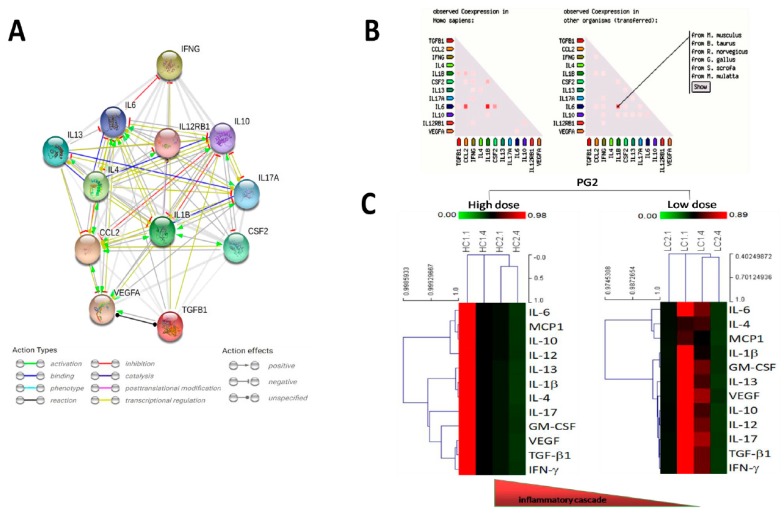
: Improving patients' quality of life (QoL) is a principal objective of all treatment in any clinical setting, including oncology practices. Cancer-associated inflammation is implicated in disease progression and worsening of patients' QoL. Conventional anticancer therapeutics while selectively eliminating cancerous cells, are evaded by stem cell-like cells, and associated with varying degrees of adverse effects, thus reducing patients' QoL. This necessitates novel therapeutic approaches with enhanced efficacy, minimal or no treatment-related adverse effects, and improved QoL in patients with cancer, especially those with metastatic/advance stage disease. : Sequel to our team's previous publication, the present study explores probable effects of (PG2) on cancer-related inflammatory landscape and known determinants of QoL, as well as the probable link between the two to provide mechanistic insight. In an exploratory double blind randomized controlled trial using patients with metastatic disease ( = 23), we comparatively evaluated the therapeutic efficacy of high (500 mg) or low (250 mg) dose PG2 administered intravenously (i.v.), with particular focus on its suggested anti-inflammatory function and the probable effect of same on QoL indices at baseline, then at weeks 4 and 8 post-PG2 treatment. : All 23 patients with metastatic disease treated with either low or high PG2 experienced reduced pain, nausea, vomiting, and fatigue, as well as better appetite and sleep, culminating in improved global QoL. This was most apparent in the high dose group, with significant co-suppression of pro-inflammatory interleukin (IL)-1β, IL-4, IL-6, IL-13, IL-17, monocytes chemotactic protein (MCP)1, granulocyte-macrophage colony-stimulating factor (GM-CSF), vascular endothelial growth factor (VEGF), tumor growth factor (TGF)-β1, interferon (IFN)-γ, and immune suppressors IL-10 and IL-12. Univariate and multivariate analyses revealed that IL-1β, IL-13 and GM-CSF are independent prognosticators of improved QoL. Conclusion: This proof-of-concept study provides premier evidence of functional association between PG2 anti-inflammatory effects and improved QoL in patients with advanced stage cancers, laying the groundwork for future larger cohort blinded controlled trials to establish the efficacy of PG2 as adjuvant anticancer therapy in metastatic or advanced stage clinical settings.
提高患者的生活质量(QoL)是任何临床环境中所有治疗的主要目标,包括肿瘤学实践。癌症相关炎症与疾病进展和患者生活质量恶化有关。传统的抗癌疗法虽然能选择性地消除癌细胞,但会被干细胞样细胞逃避,并且伴有不同程度的副作用,从而降低患者的生活质量。这就需要新的治疗方法,具有更高的疗效、最小或无治疗相关副作用,并改善癌症患者,尤其是转移性/晚期疾病患者的生活质量。
继我们团队之前的发表文章之后,本研究探讨了(PG2)对癌症相关炎症格局和已知生活质量决定因素的可能影响,以及两者之间的可能联系,以提供机制性见解。在一项针对转移性疾病患者(n = 23)的探索性双盲随机对照试验中,我们比较评估了静脉注射(i.v.)高剂量(500 mg)或低剂量(250 mg)PG2的治疗效果,特别关注其抗炎功能以及在基线时、PG2治疗后第4周和第8周对生活质量指标的可能影响。
所有23例接受低剂量或高剂量PG2治疗的转移性疾病患者的疼痛、恶心、呕吐和疲劳均减轻,食欲和睡眠改善,最终总体生活质量提高。这在高剂量组最为明显,促炎白细胞介素(IL)-1β、IL-4、IL-6、IL-13、IL-17、单核细胞趋化蛋白(MCP)1、粒细胞-巨噬细胞集落刺激因子(GM-CSF)、血管内皮生长因子(VEGF)、肿瘤生长因子(TGF)-β1、干扰素(IFN)-γ以及免疫抑制因子IL-10和IL-12均受到显著协同抑制。单变量和多变量分析显示,IL-1β、IL-13和GM-CSF是生活质量改善的独立预后指标。结论:这项概念验证研究提供了首要证据,证明PG2的抗炎作用与晚期癌症患者生活质量改善之间存在功能关联,为未来更大规模的队列双盲对照试验奠定了基础,以确定PG2作为转移性或晚期临床环境中辅助抗癌治疗的疗效。