Division of Hematology & Oncology, Department of Medicine, Shuang Ho Hospital, Taipei Medical University, New Taipei City 235, Taiwan.
Department of Medical Research and Education, Shuang Ho Hospital, Taipei Medical University, New Taipei City 235, Taiwan.
Nutrients. 2019 Sep 20;11(10):2264. doi: 10.3390/nu11102264.
Recently, we demonstrated that (PG2), the active ingredient in dried roots of ameliorates cancer symptom clusters and improves quality of life (QoL) in patients with metastatic disease by modulating inflammatory cascade against the background roles of inflammatory cells, including macrophages, dendritic cells (DCs), and cytotoxic T lymphocytes (CTLs) in tumor initiation, metastasis, and progression. Nevertheless, the role of PG2 in the modulation of anticancer immunogenicity and therapeutic response remains relatively underexplored and unclear.
The present study investigates how and to what extent PG2 modulates cellular and biochemical components of the inflammatory cascade and enhances anticancer immunity, as well as the therapeutic implication of these bio-events in patients with lung cancer.
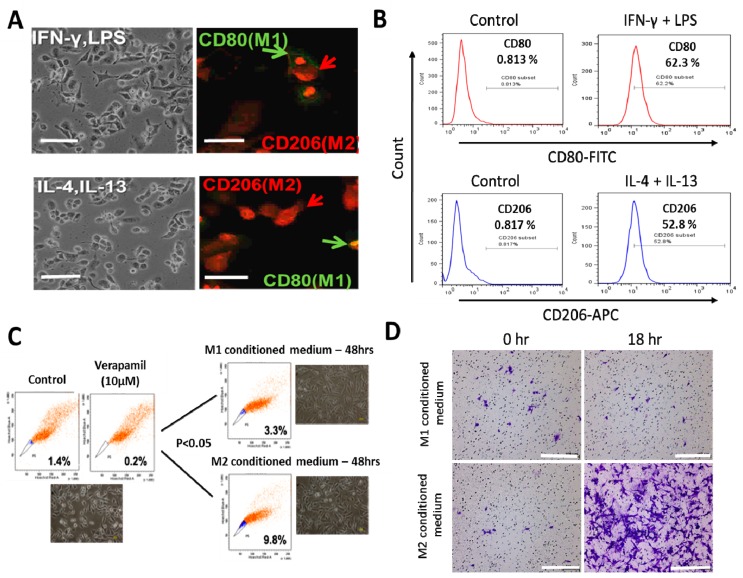
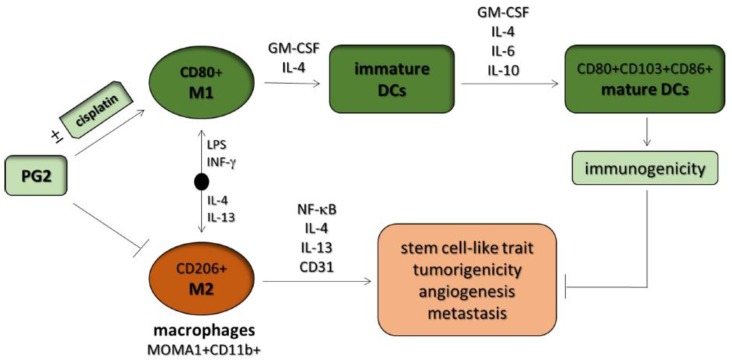
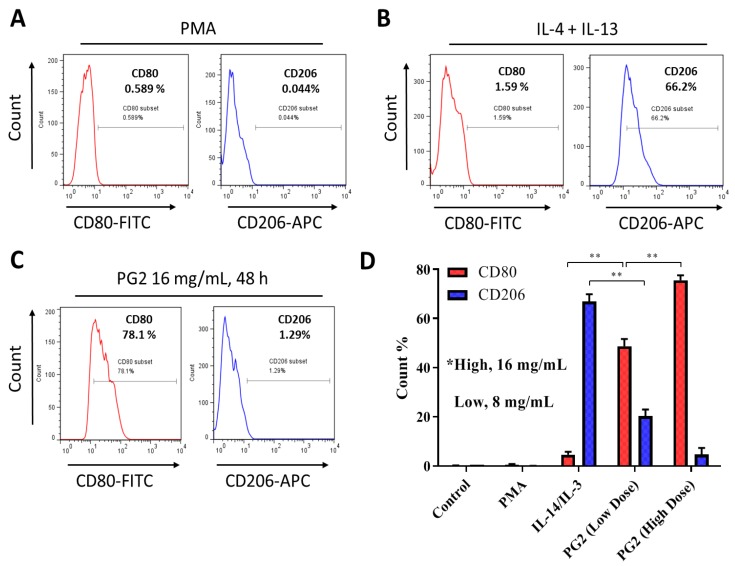
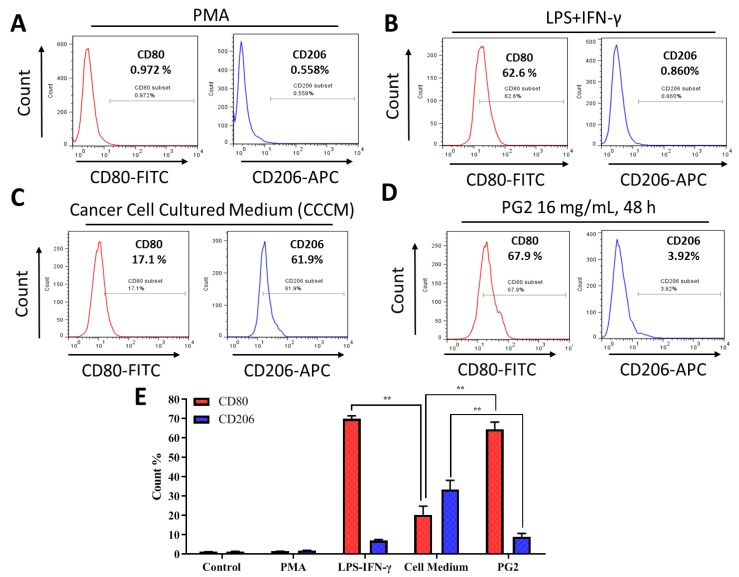
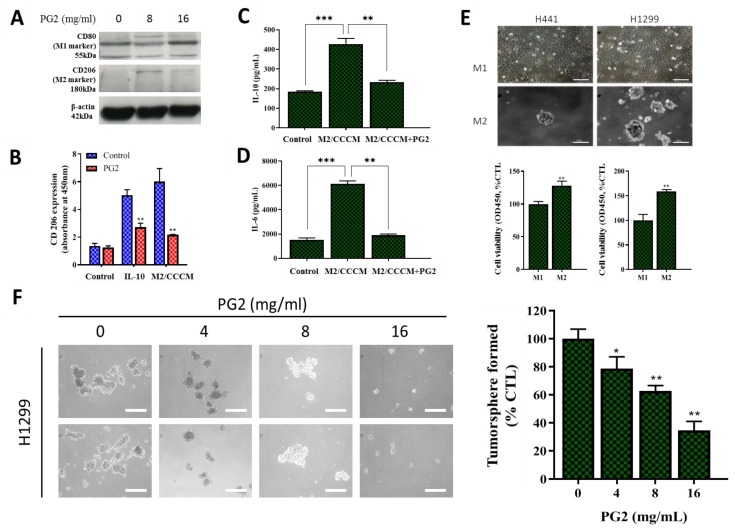
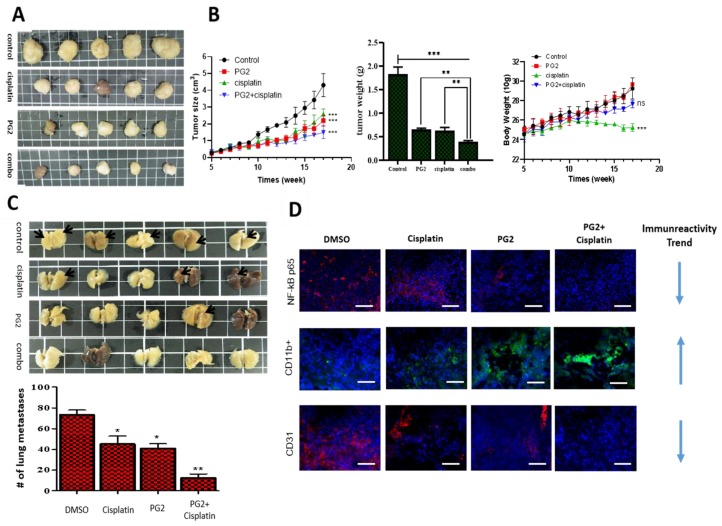
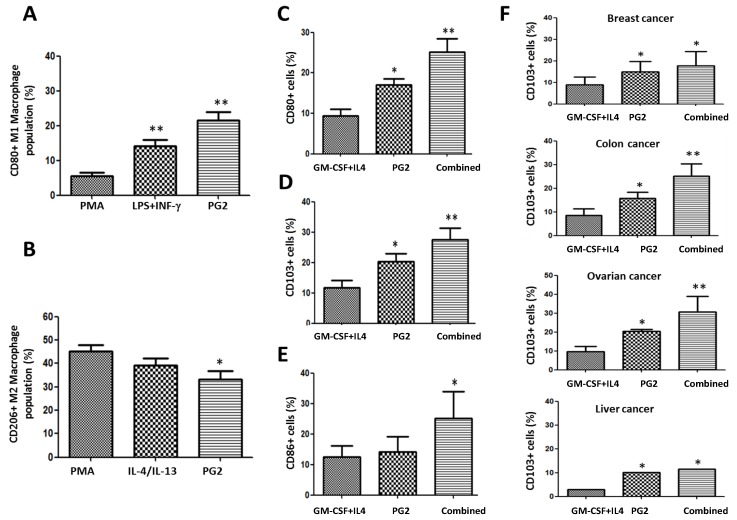
Herein, we demonstrated that PG2 significantly increased the M1/M2 macrophage polarization ratio in non-small cell carcinoma (NSCLC) H441 and H1299 cells. This PG2-induced preferential pharmacologic up-regulation of tumoral M1 population in vitro positively correlated with the downregulation of tumor-promoting IL-6 and IL-10 expression in NSCLC cell-conditioned medium, with concomitant marked inhibition of cell proliferation, clonogenicity, and tumorsphere formation. Our ex vivo results, using clinical sample from our NSCLC cohort, demonstrated that PG2 also promoted the functional maturation of DCs with consequent enhancement of T cell-mediated anticancer immune responses. Consistent with the in vitro and ex vivo results, our in vivo studies showed that treatment with PG2 elicited significant time-dependent depletion of the tumor-associated M2 population, synergistically enhanced the anti-M2-based anticancer effect of cisplatin, and inhibited xenograft tumor growth in the NSCLC mice models. Moreover, in the presence of PG2, cisplatin-associated dyscrasia and weight-loss was markedly suppressed.
These results do indicate a therapeutically-relevant role for PG2 in modulating the M1/M2 macrophage pool, facilitating DC maturation and synergistically enhancing the anticancer effect of conventional chemotherapeutic agent, cisplatin, thus laying the foundation for further exploration of the curative relevance of PG2 as surrogate immunotherapy and/or clinical feasibility of its use for maintenance therapy in patients with lung cancer.
最近,我们证明了[PG2],即干根中的有效成分,通过调节炎症级联反应,减轻转移性疾病患者的癌症症状群并改善其生活质量(QoL),其背景作用是调节炎症细胞,包括巨噬细胞、树突状细胞(DCs)和细胞毒性 T 淋巴细胞(CTLs),从而抑制肿瘤的发生、转移和进展。然而,PG2 在调节抗癌免疫原性和治疗反应方面的作用仍相对未得到充分探索和阐明。
本研究旨在探讨 PG2 如何以及在何种程度上调节炎症级联反应的细胞和生化成分,并增强抗癌免疫,以及这些生物事件对肺癌患者的治疗意义。
在这里,我们证明 PG2 显著增加了非小细胞癌(NSCLC)H441 和 H1299 细胞中的 M1/M2 巨噬细胞极化比例。这种 PG2 诱导的体外肿瘤 M1 群体的药理上调与 NSCLC 细胞条件培养基中促肿瘤 IL-6 和 IL-10 表达的下调呈正相关,同时显著抑制细胞增殖、集落形成和肿瘤球形成。我们使用来自 NSCLC 队列的临床样本进行的离体结果表明,PG2 还促进了 DC 的功能成熟,从而增强了 T 细胞介导的抗癌免疫反应。与体外和离体结果一致,我们的体内研究表明,PG2 治疗可引起肿瘤相关 M2 群体的时间依赖性耗竭,协同增强顺铂的抗 M2 作用,并抑制 NSCLC 小鼠模型中的异种移植肿瘤生长。此外,在 PG2 存在的情况下,顺铂相关的血液学异常和体重减轻明显受到抑制。
这些结果确实表明 PG2 在调节 M1/M2 巨噬细胞池、促进 DC 成熟和协同增强传统化疗药物顺铂的抗癌作用方面具有治疗相关性,从而为进一步探索 PG2 作为替代免疫疗法的治疗相关性以及其在肺癌患者维持治疗中的临床可行性奠定了基础。