Department of Immunology, Max Planck Institute for Infection Biology, Charitéplatz 1, D-10117, Berlin, Germany.
Nuffield Department of Clinical Medicine, Ludwig Institute for Cancer Research, University of Oxford, Oxford, UK.
Sci Rep. 2019 Jul 26;9(1):10878. doi: 10.1038/s41598-019-47350-x.
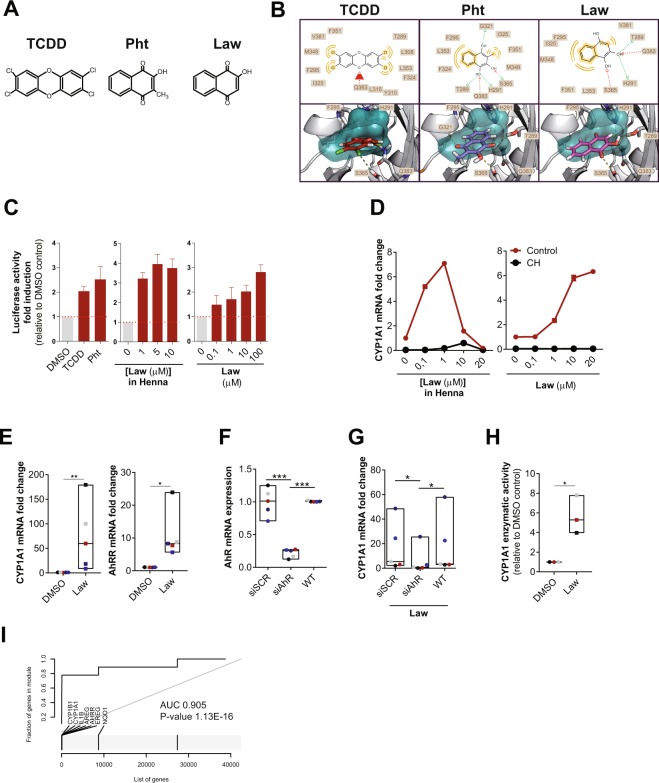
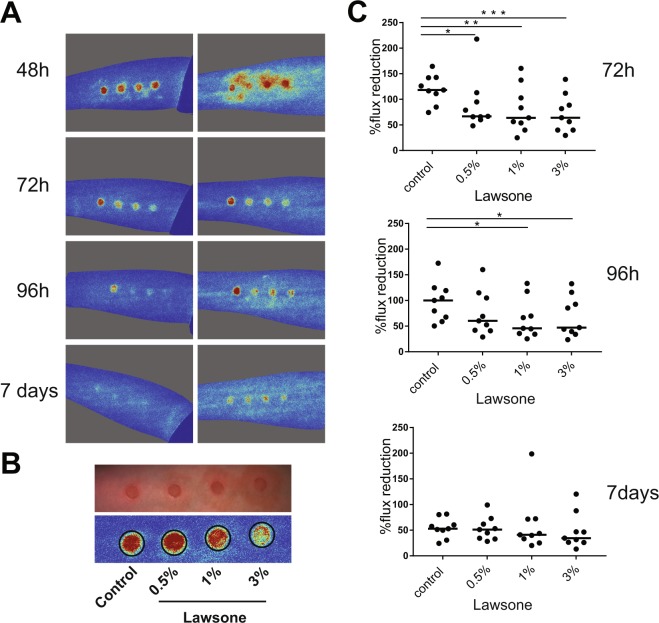
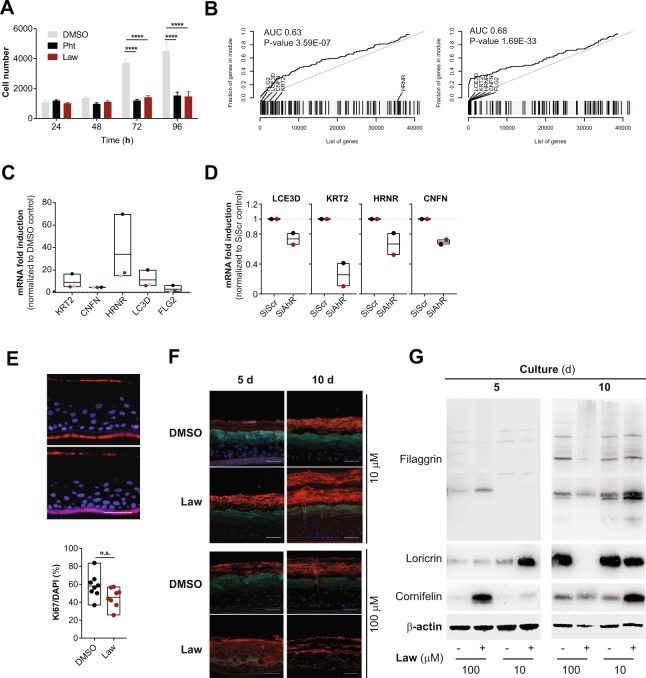
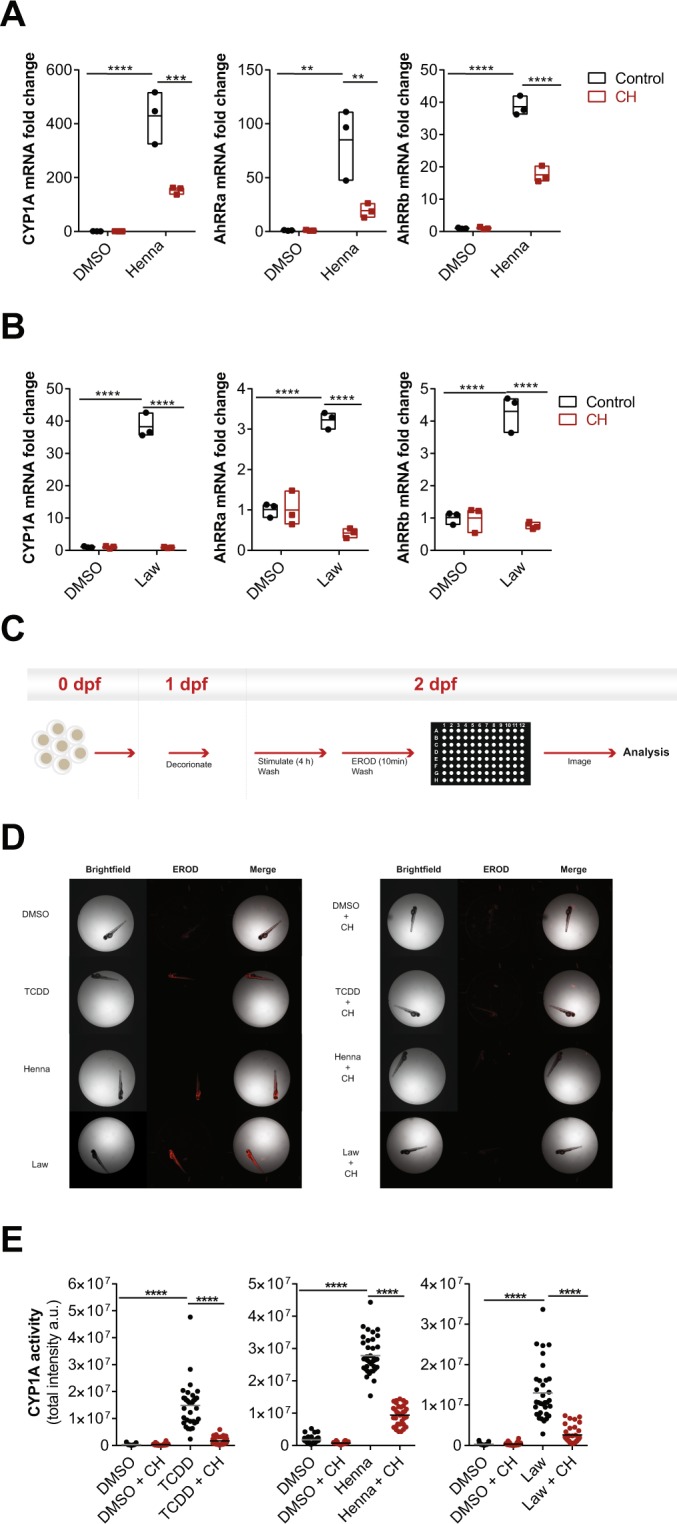
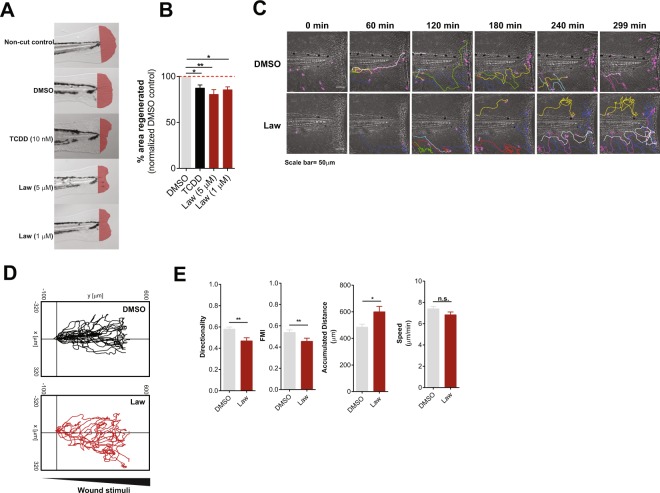
As a first host barrier, the skin is constantly exposed to environmental insults that perturb its integrity. Tight regulation of skin homeostasis is largely controlled by the aryl hydrocarbon receptor (AhR). Here, we demonstrate that Henna and its major pigment, the naphthoquinone Lawsone activate AhR, both in vitro and in vivo. In human keratinocytes and epidermis equivalents, Lawsone exposure enhances the production of late epidermal proteins, impacts keratinocyte differentiation and proliferation, and regulates skin inflammation. To determine the potential use of Lawsone for therapeutic application, we harnessed human, murine and zebrafish models. In skin regeneration models, Lawsone interferes with physiological tissue regeneration and inhibits wound healing. Conversely, in a human acute dermatitis model, topical application of a Lawsone-containing cream ameliorates skin irritation. Altogether, our study reveals how a widely used natural plant pigment is sensed by the host receptor AhR, and how the physiopathological context determines beneficial and detrimental outcomes.
作为第一道宿主屏障,皮肤不断暴露于环境侵害中,其完整性受到干扰。皮肤内稳态的严格调控主要由芳香烃受体(AhR)控制。在这里,我们证明指甲花及其主要色素萘醌龙葵素在体外和体内均可激活 AhR。在人角质形成细胞和表皮等效物中,龙葵素暴露会增强晚期表皮蛋白的产生,影响角质形成细胞分化和增殖,并调节皮肤炎症。为了确定龙葵素在治疗中的潜在用途,我们利用了人类、鼠类和斑马鱼模型。在皮肤再生模型中,龙葵素干扰生理组织再生并抑制伤口愈合。相反,在人类急性皮炎模型中,局部应用含龙葵素的乳膏可改善皮肤刺激。总的来说,我们的研究揭示了一种广泛使用的天然植物色素如何被宿主受体 AhR 感知,以及生理病理环境如何决定有益和有害的结果。