Department of Orthopaedics, UHealth Sports Medicine Institute, University of Miami, Miller School of Medicine, Miami, FL, USA.
Diabetes Research Institute & Cell Transplant Center, University of Miami, Miller School of Medicine, Miami, FL, USA.
Sci Rep. 2019 Jul 26;9(1):10864. doi: 10.1038/s41598-019-47391-2.
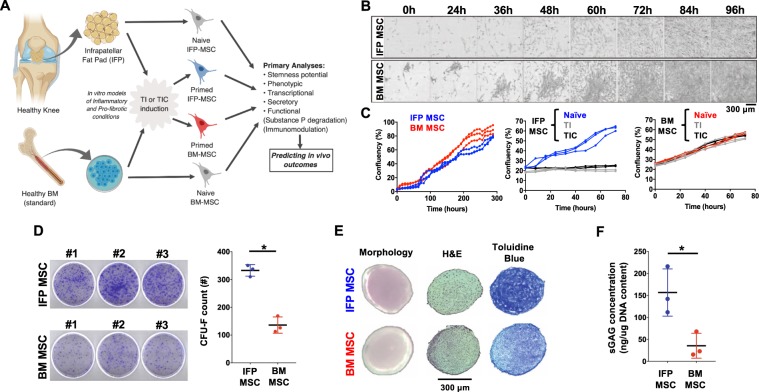
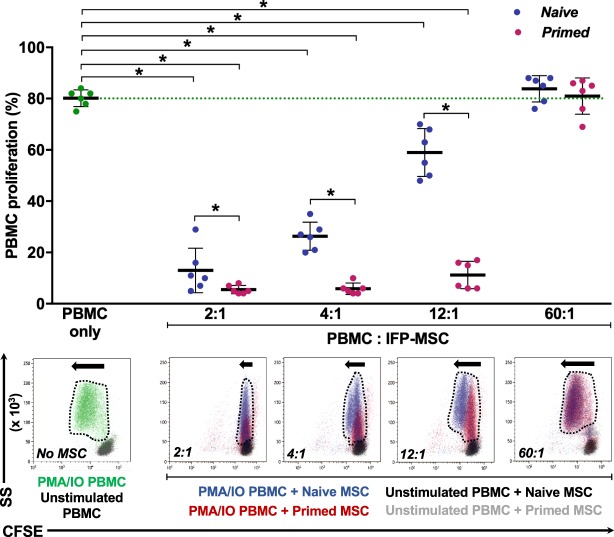
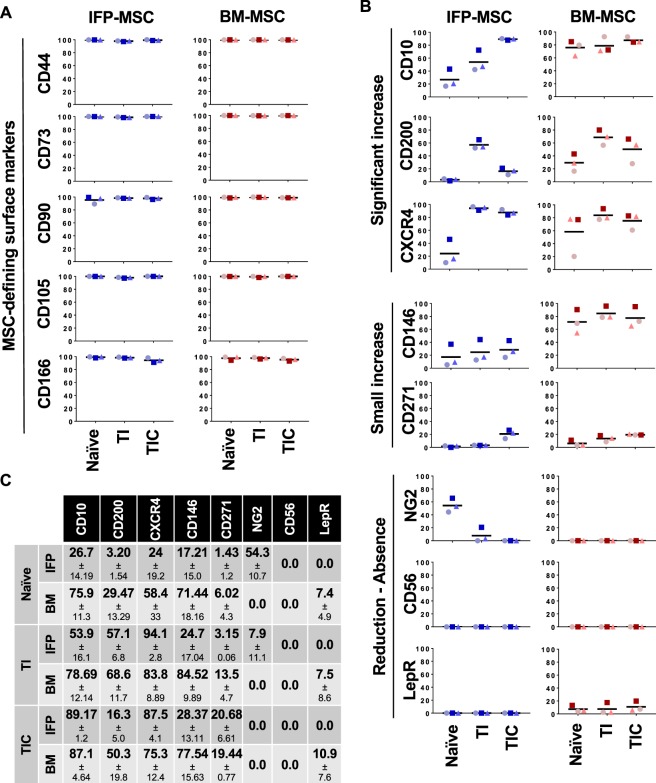
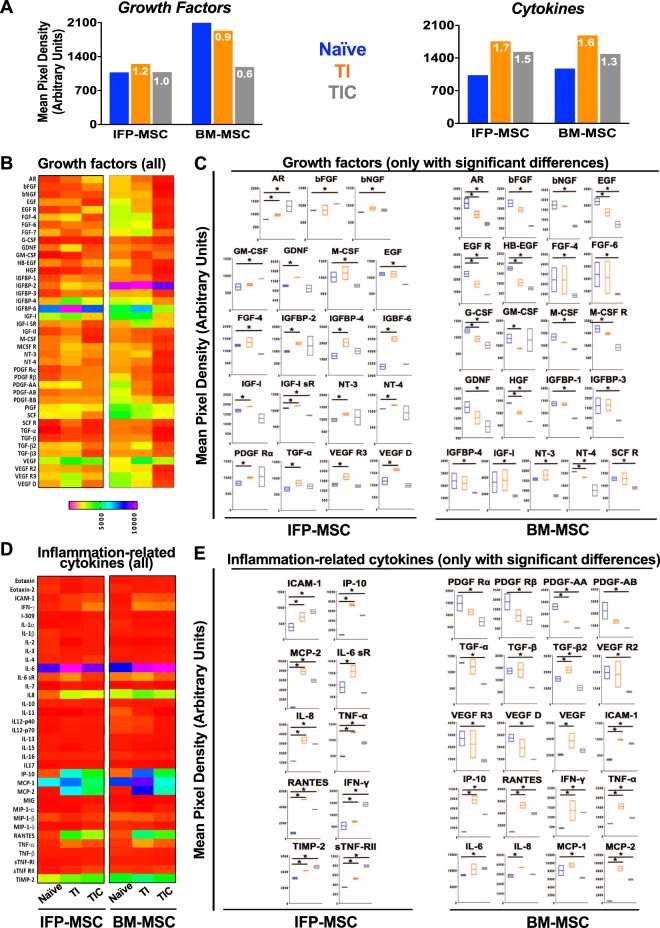
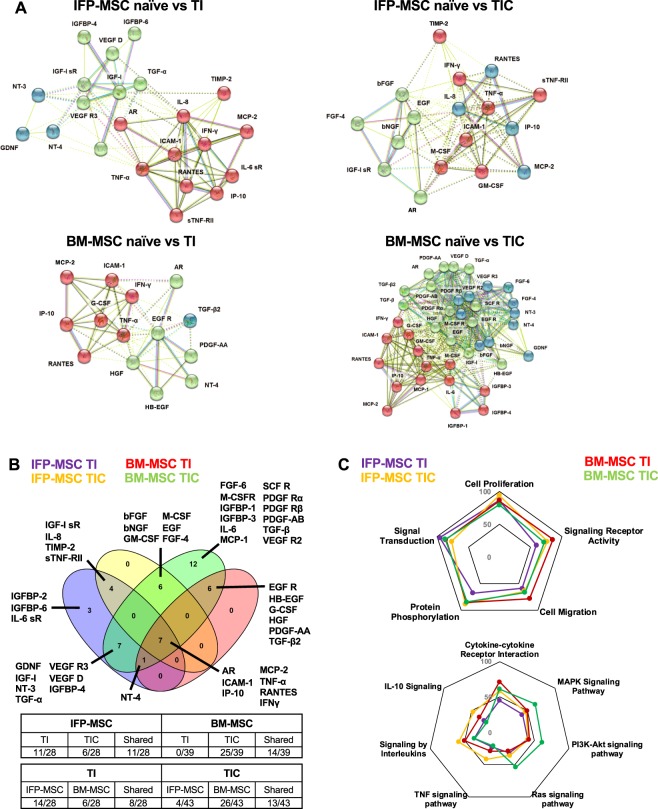
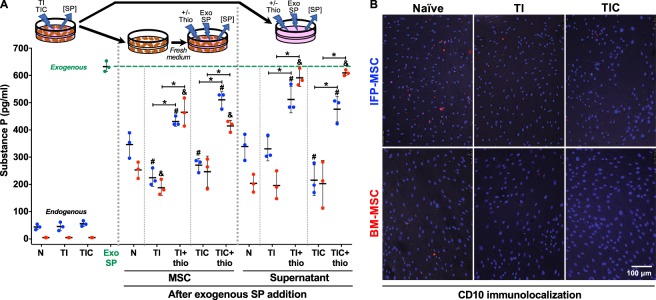
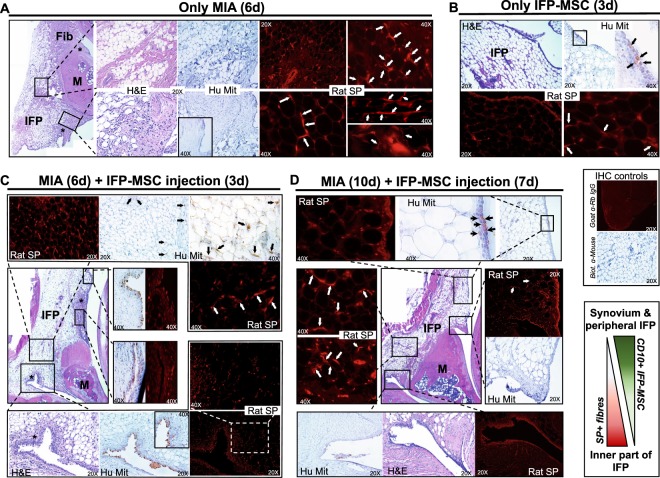
The infrapatellar fat pad (IFP) serves as a reservoir of Mesenchymal Stem Cells (MSC), and with adjacent synovium plays key roles in joint disease including the production of Substance P (SP) affecting local inflammatory responses and transmitting nociceptive signals. Here, we interrogate human IFP-derived MSC (IFP-MSC) reaction to inflammatory and pro-fibrotic environments (cell priming by TNFα/IFNγ and TNFα/IFNγ/CTGF exposure respectively), compared with bone marrow-derived MSC (BM-MSC). Naïve IFP-MSC exhibit increased clonogenicity and chondrogenic potential compared with BM-MSC. Primed cells experienced dramatic phenotypic changes, including a sharp increase in CD10, upregulation of key immunomodulatory transcripts, and secreted growth factors/cytokines affecting key pathways (IL-10, TNF-α, MAPK, Ras and PI3K-Akt). Naïve, and more so primed MSC (both) induced SP degradation in vitro, reproduced with their supernatants and abrogated with thiorphan, a CD10 inhibitor. These findings were reproduced in vivo in a rat model of acute synovitis, where transiently engrafted human IFP-MSC induced local SP reduction. Functionally, primed IFP-MSC demonstrated sustained antagonism of activated human peripheral blood mononuclear cells (PBMC) proliferation, significantly outperforming a declining dose-dependent effect with naïve cohorts. Collectively, our in vitro and in vivo data supports cell priming as a way to enhance the immunoregulatory properties of IFP-MSC, which selectively engraft in areas of active synovitis/IFP fibrosis inducing SP degradation, resulting in a cell-based product alternative to BM-MSC to potentially treat degenerative/inflammatory joint diseases.
髌下脂肪垫 (IFP) 作为间充质干细胞 (MSC) 的储存库,与相邻的滑膜一起在关节疾病中发挥关键作用,包括产生 P 物质 (SP),影响局部炎症反应并传递伤害性信号。在这里,我们研究了人类 IFP 来源的 MSC (IFP-MSC) 对炎症和促纤维化环境的反应(分别通过 TNFα/IFNγ 和 TNFα/IFNγ/CTGF 暴露进行细胞预刺激),并与骨髓来源的 MSC (BM-MSC) 进行了比较。与 BM-MSC 相比,幼稚 IFP-MSC 表现出更高的集落形成能力和软骨生成潜力。预刺激细胞经历了明显的表型变化,包括 CD10 急剧增加、关键免疫调节转录本的上调以及影响关键途径的分泌生长因子/细胞因子(IL-10、TNF-α、MAPK、Ras 和 PI3K-Akt)。幼稚和更预刺激的 MSC(两者)在体外诱导 SP 降解,其上清液可再现该作用,且 CD10 抑制剂硫脯肽可阻断该作用。这些发现可在急性滑膜炎大鼠模型中体内再现,其中瞬时移植的人 IFP-MSC 诱导局部 SP 减少。在功能上,预刺激的 IFP-MSC 表现出对激活的人外周血单核细胞 (PBMC) 增殖的持续拮抗作用,明显优于幼稚细胞的剂量依赖性效应。总之,我们的体外和体内数据支持细胞预刺激作为增强 IFP-MSC 免疫调节特性的一种方法,IFP-MSC 选择性地植入活跃的滑膜炎/IFP 纤维化区域,诱导 SP 降解,从而产生一种基于细胞的产品,替代 BM-MSC 治疗退行性/炎症性关节疾病。