Pan Li, Yan Gaoshu, Chen Wenli, Sun Lei, Wang Jichuan, Yang Jialin
Radiotherapy Department, Sichuan Cancer Hospital & Institute, School of Medicine, University of Electronic Science and Technology of China, Chengdu, 610041, People's Republic of China.
Cancer Manag Res. 2019 Jun 17;11:5531-5536. doi: 10.2147/CMAR.S198391. eCollection 2019.
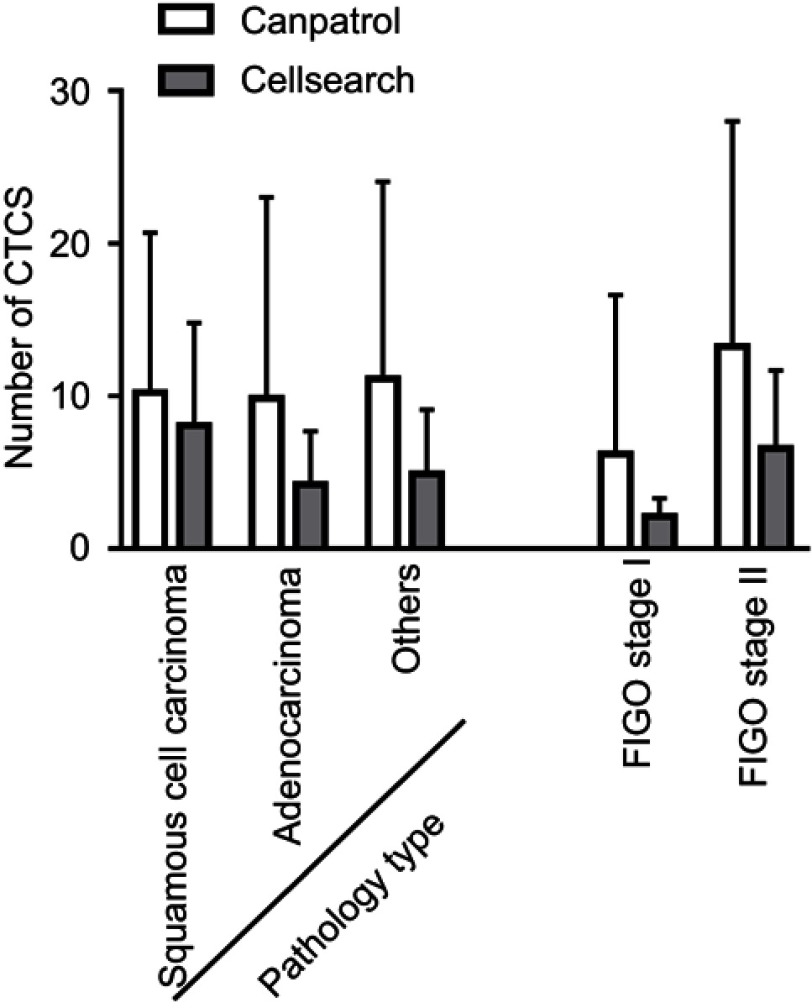
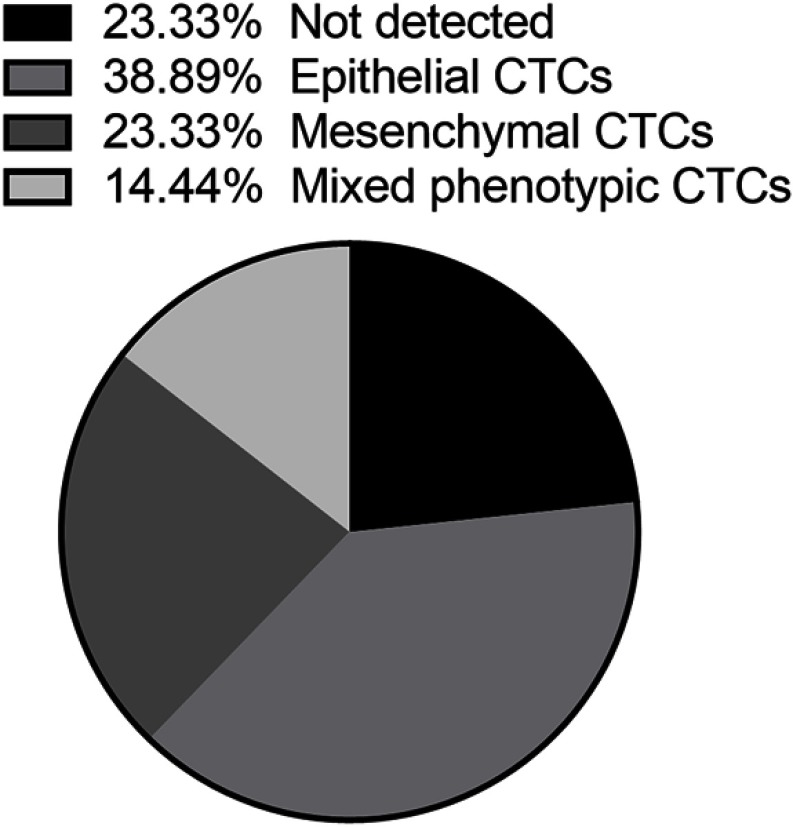
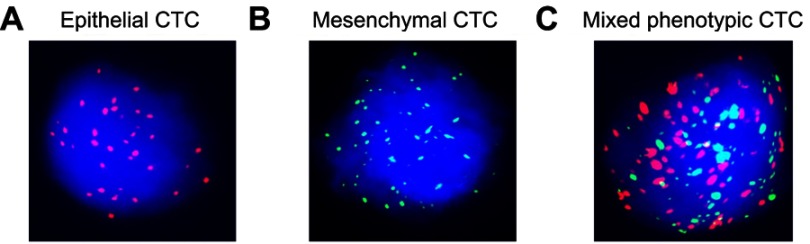
Circulating tumor cells (CTCs) can be classified into three phenotypes based on epithelial-to-mesenchymal transition (EMT) markers, including epithelial CTCs, mesenchymal CTCs, and mixed phenotypic CTCs. This study is aimed to analyze the correlation between CTC phenotypes and the clinicopathological features of patients with early cervical cancer. Peripheral blood samples were obtained from 90 patients with early cervical cancer. CTCs were isolated and classified. The correlations of CTC counts and CTC phenotypes with clinicopathological features of patients were analyzed. The positivity rate for CTCs in patients with stage I-IIA cervical cancer was 90%. An increased CTC number was observed in patients with FIGO stage II, pelvic lymph node metastasis, and lymphovascular involvement. There were 38.89% epithelial CTCs, 23.33% mesenchymal CTCs, and 14.44% mixed phenotypic CTCs, Mesenchymal CTCs were more common in patients with FIGO stage II, pelvic lymph node metastasis, lymphovascular involvement, and deep stromal invasion. CTCs with mesenchymal phenotypes are closely related to pelvic lymph node metastasis and lymphatic vascular invasion in stage I-IIA cervical cancer. Detection of circulating tumor cell phenotypes is helpful for the early diagnosis of cervical cancer micro-metastasis and for the assessment of disease status.
循环肿瘤细胞(CTCs)可根据上皮-间质转化(EMT)标志物分为三种表型,包括上皮型CTCs、间质型CTCs和混合表型CTCs。本研究旨在分析CTCs表型与早期宫颈癌患者临床病理特征之间的相关性。从90例早期宫颈癌患者中采集外周血样本。分离并分类CTCs。分析CTCs计数和CTCs表型与患者临床病理特征的相关性。I-IIA期宫颈癌患者的CTCs阳性率为90%。在国际妇产科联盟(FIGO)II期、盆腔淋巴结转移和淋巴管浸润患者中观察到CTCs数量增加。上皮型CTCs占38.89%,间质型CTCs占23.33%,混合表型CTCs占14.44%,间质型CTCs在FIGO II期、盆腔淋巴结转移、淋巴管浸润和深层间质浸润患者中更为常见。间质表型的CTCs与I-IIA期宫颈癌的盆腔淋巴结转移和淋巴管浸润密切相关。检测循环肿瘤细胞表型有助于早期诊断宫颈癌微转移和评估疾病状态。