Wei Di, Zhang Geng, Zhu Zheng, Zheng Yu, Yan Fei, Pan Chongxian, Wang Zhiyong, Li Xian, Wang Fuli, Meng Ping, Zheng Wanxiang, Yan Zhao, Zhai Dongsheng, Lu Zifan, Yuan Jianlin
Department of Urology, Xijing Hospital, Fourth Military Medical University, Xi'an, China.
Division of Hematology and Oncology, Department of Internal Medicine, School of Medicine, University of California, Davis, Sacramento, CA, United States.
Front Pharmacol. 2019 Jul 9;10:690. doi: 10.3389/fphar.2019.00690. eCollection 2019.
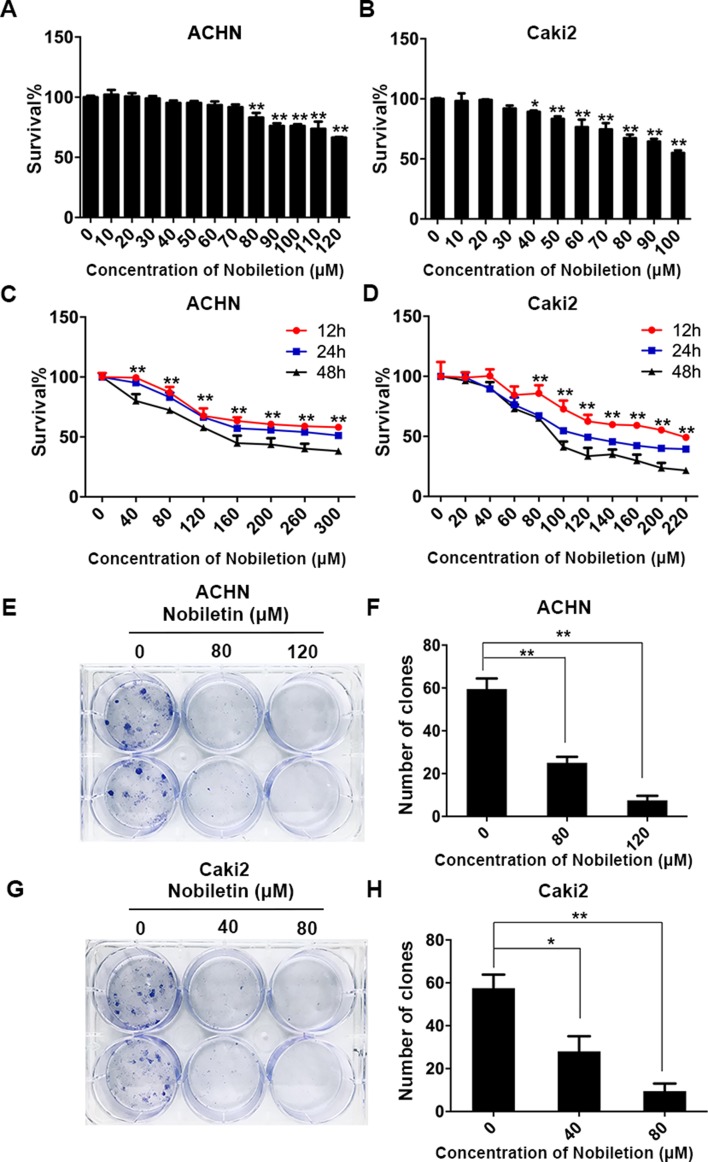
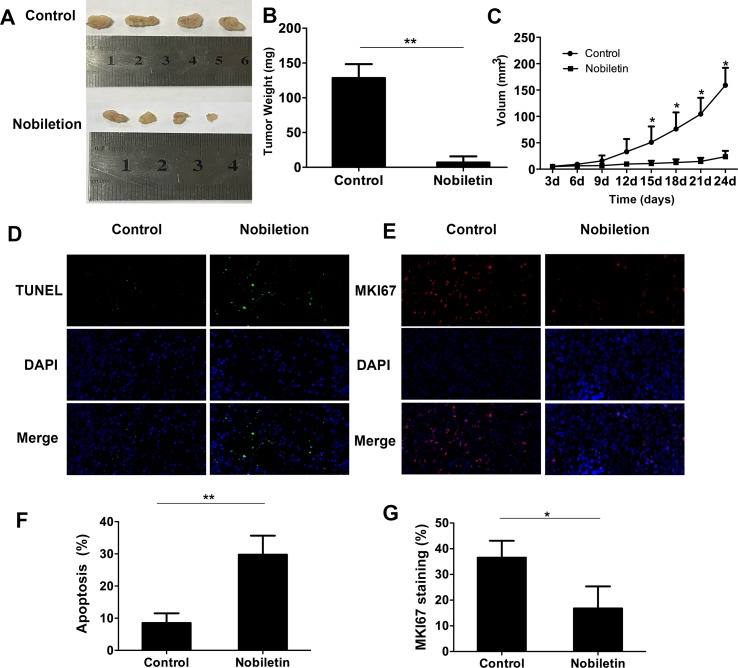
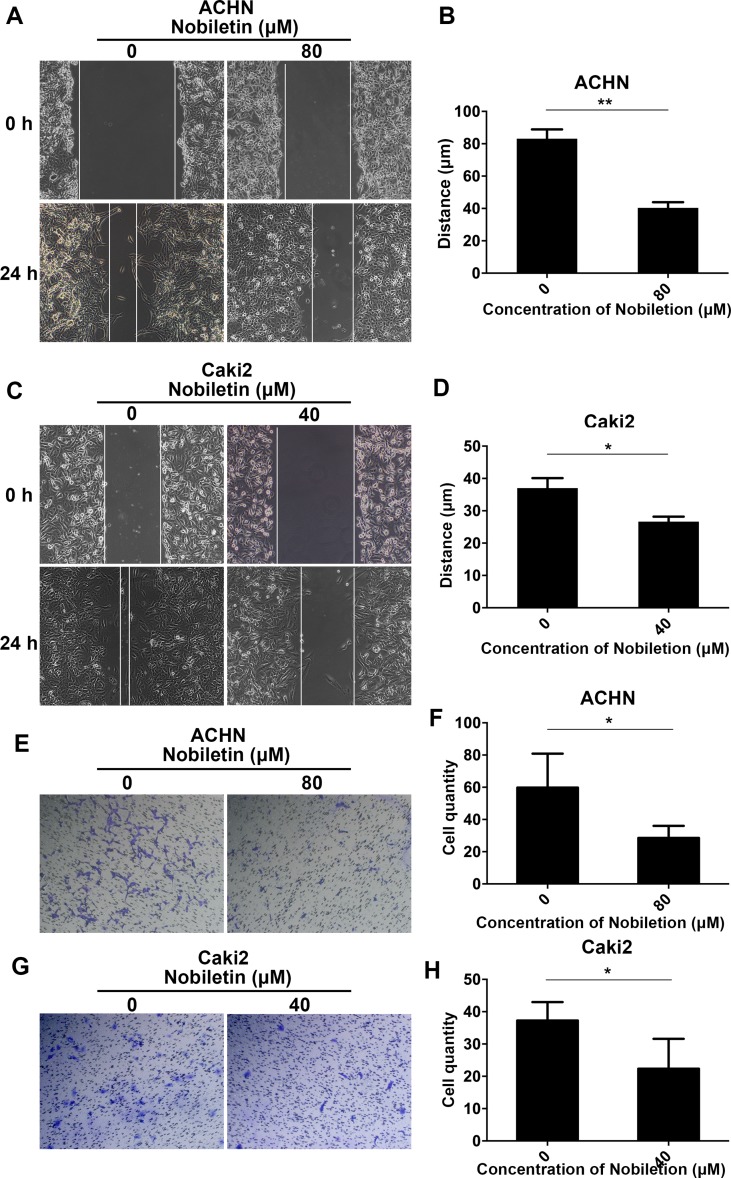
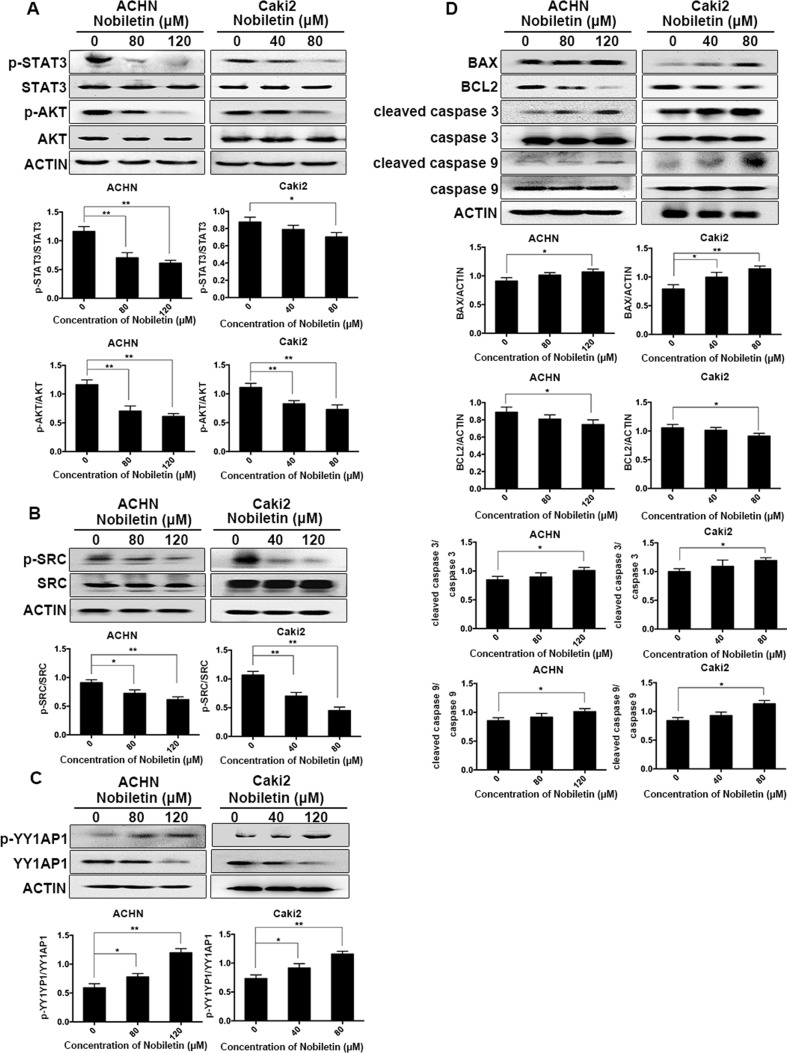
Nobiletin is a polymethoxy flavonoid isolated from and . It has been reported that nobiletin can suppress tumors. We primarily explored the antitumor effects of nobiletin and the associated potential mechanisms in ACHN and Caki-2 renal carcinoma cells. A CCK-8 assay and cloning experiments were used to assess cell viability, and a transwell assay and scratch test were used to assess metastatic ability. The cell cycle was analyzed by flow cytometry, whereas apoptosis was analyzed using flow cytometry and a terminal dexynucleotidyl transferase (TdT)-mediated dUTP nick end labeling (TUNEL) assay. Protein expression was examined by Western blot and immunofluorescence. Renal cancer cells were subcutaneously transplanted into nude mice for studies. The data showed that nobiletin administration significantly dose- and time-dependently suppressed renal cancer cell proliferation; moreover, nobiletin treatment induced cell cycle arrest in the G0/G1 phase and promoted apoptosis. Immunofluorescence analysis indicated that nobiletin decreased the nuclear localization of signal transducer and activator of transcription 3 (STAT3) and YY1-associated protein 1 (YY1AP1). Western blot showed that the levels of phosphorylated SRC, phosphorylated AKT serine/threonine kinase (AKT), and phosphorylated STAT3 were decreased, whereas that of phosphorylated YY1AP1 was increased. The results further showed that application of insulin-like growth factor 1 (IGF1) was able to reverse the nobiletin-induced changes in the levels of phosphorylated AKT, phosphorylated STAT3, and phosphorylated YY1AP1, and could also reverse the antitumor effects of nobiletin. The results of experiments showed that, compared to the control, tumor volume and weight were both reduced following nobiletin treatment. In conclusion, our study demonstrated that nobiletin can inhibit renal carcinoma cell viability and provides a novel therapeutic approach for the treatment of kidney cancer.
橙皮素是一种从[具体植物]中分离出的多甲氧基黄酮。据报道,橙皮素可抑制肿瘤。我们主要探讨了橙皮素对ACHN和Caki - 2肾癌细胞的抗肿瘤作用及相关潜在机制。采用CCK - 8法和克隆实验评估细胞活力,采用Transwell实验和划痕实验评估转移能力。通过流式细胞术分析细胞周期,同时使用流式细胞术和末端脱氧核苷酸转移酶介导的dUTP缺口末端标记(TUNEL)法分析细胞凋亡。通过蛋白质印迹法和免疫荧光法检测蛋白质表达。将肾癌细胞皮下移植到裸鼠体内进行研究。数据显示,给予橙皮素能显著剂量和时间依赖性地抑制肾癌细胞增殖;此外,橙皮素处理可诱导细胞周期停滞于G0/G1期并促进细胞凋亡。免疫荧光分析表明,橙皮素降低了信号转导子和转录激活子3(STAT3)及YY1相关蛋白1(YY1AP1)的核定位。蛋白质印迹法显示,磷酸化的SRC、磷酸化的AKT丝氨酸/苏氨酸激酶(AKT)和磷酸化的STAT3水平降低,而磷酸化的YY1AP1水平升高。结果还表明,应用胰岛素样生长因子1(IGF1)能够逆转橙皮素诱导的磷酸化AKT、磷酸化STAT3和磷酸化YY1AP1水平的变化,并且还能逆转橙皮素的抗肿瘤作用。体内实验结果显示,与对照组相比,橙皮素处理后肿瘤体积和重量均减小。总之,我们的研究表明橙皮素可抑制肾癌细胞活力,并为肾癌治疗提供了一种新的治疗方法。