Zhang Wentao, Mao Shiyu, Shi Donghui, Zhang Junfeng, Zhang Ziwei, Guo Yadong, Wu Yuan, Wang Ruiliang, Wang Longsheng, Huang Yong, Yao Xudong
Department of Urology, Shanghai Tenth People's Hospital, Tongji University, Shanghai, China.
Anhui Medical University, Shanghai Clinical College, Hefei, China.
Front Oncol. 2019 Jul 10;9:619. doi: 10.3389/fonc.2019.00619. eCollection 2019.
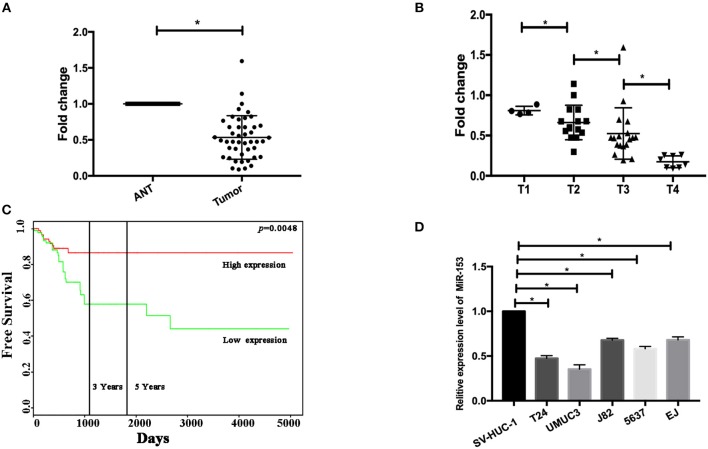
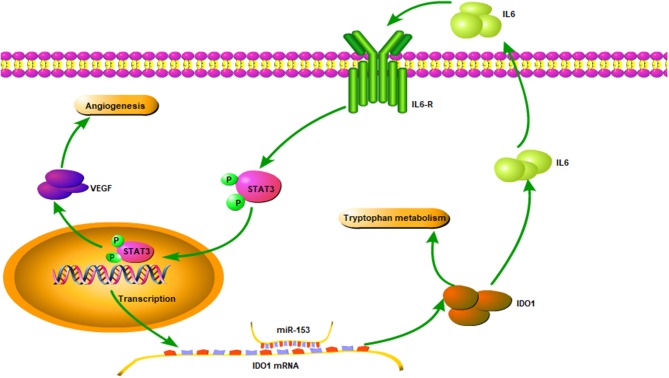
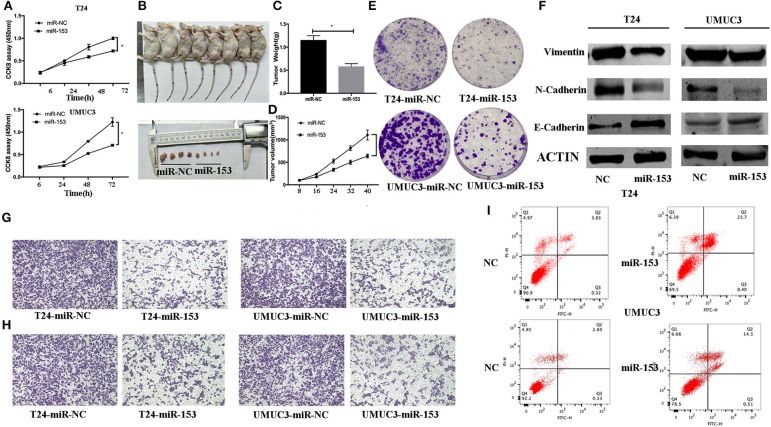
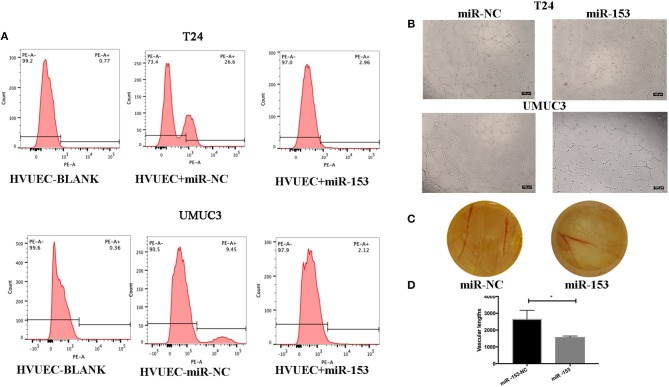
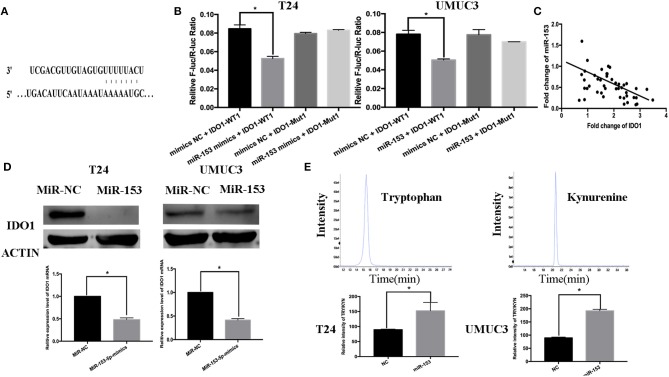
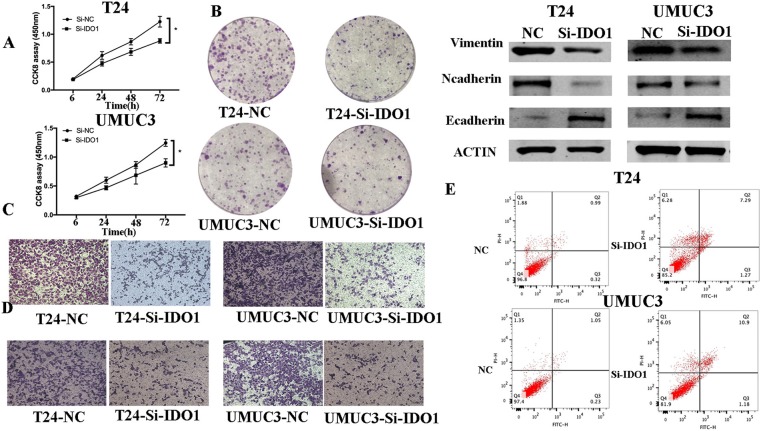
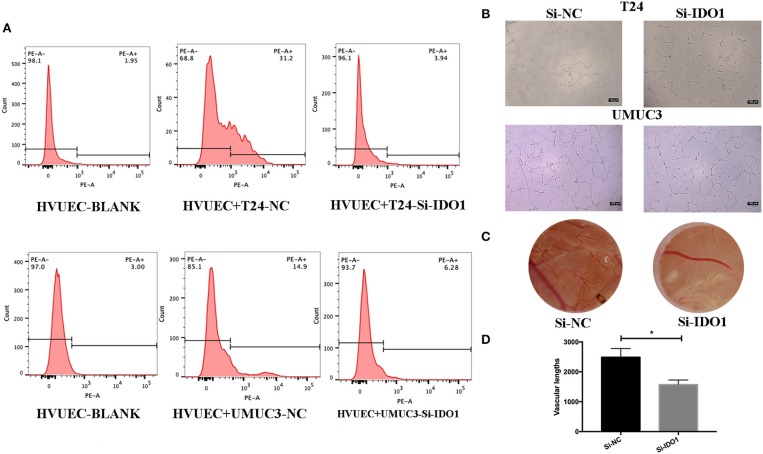
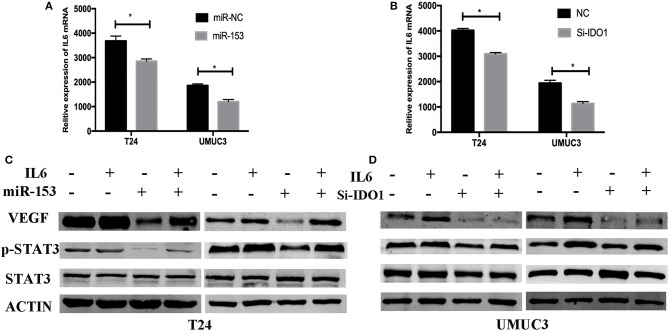
Metastasis is the primary cause of cancer deaths, warranting further investigation. This study assessed microRNA-153 (miR-153) expression in bladder cancer tissues and investigated the underlying molecular mechanism of miR-153-mediated regulation of bladder cancer cells. Paired tissue specimens from 45 bladder cancer patients were collected for qRT-PCR. The Cancer Genome Atlas (TCGA) dataset was used to identify associations of miR-153 with bladder cancer prognosis. Bladder cancer tissues and immortalized cell lines were used for the following experiments: miR-153 mimics and indoleamine 2,3-dioxygenase 1 (IDO1) siRNA transfection; Western blot, cell viability, colony formation, and Transwell analyses; nude mouse xenograft; and chicken embryo chorioallantoic membrane angiogenesis (CAM) assays. Human umbilical vein endothelial cells (HUVECs) were co-cultured with bladder cancer cells for the tube formation assay. The luciferase reporter assay was used to confirm miR-153-targeting genes. miR-153 expression was downregulated in bladder cancer tissues and cell lines, and reduced miR-153 expression was associated with advanced tumor stage and poor overall survival of patients. Moreover, miR-153 expression inhibited bladder cancer cell growth by promoting tumor cell apoptosis, migration, invasion, and endothelial mesenchymal transition (EMT) and tumor xenograft growth , while miR-153 expression suppressed HUVEC and CAM angiogenesis. At the gene level, miR-153 targeted IDO1 expression and inhibited bladder cancer cell tryptophan metabolism through inhibiting IL6/STAT3/VEGF signaling. Collectively, our data demonstrate that miR-153 exerts anti-tumor activity in bladder cancer by targeting IDO1 expression. Future studies will investigate miR-153 as a novel therapeutic target for bladder cancer patients.
转移是癌症死亡的主要原因,值得进一步研究。本研究评估了膀胱癌组织中微小RNA-153(miR-153)的表达,并探讨了miR-153介导的膀胱癌细胞调控的潜在分子机制。收集了45例膀胱癌患者的配对组织标本用于qRT-PCR。利用癌症基因组图谱(TCGA)数据集确定miR-153与膀胱癌预后的关联。将膀胱癌组织和永生化细胞系用于以下实验:miR-153模拟物和吲哚胺2,3-双加氧酶1(IDO1)siRNA转染;蛋白质免疫印迹、细胞活力、集落形成和Transwell分析;裸鼠异种移植;以及鸡胚绒毛尿囊膜血管生成(CAM)试验。将人脐静脉内皮细胞(HUVECs)与膀胱癌细胞共培养用于管形成试验。荧光素酶报告基因试验用于确认miR-153靶向基因。miR-153在膀胱癌组织和细胞系中表达下调,miR-153表达降低与患者肿瘤分期进展和总生存期差相关。此外,miR-153表达通过促进肿瘤细胞凋亡、迁移、侵袭和内皮间质转化(EMT)以及肿瘤异种移植生长来抑制膀胱癌细胞生长,而miR-153表达抑制HUVEC和CAM血管生成。在基因水平上,miR-153靶向IDO1表达并通过抑制IL6/STAT3/VEGF信号通路抑制膀胱癌细胞色氨酸代谢。总体而言,我们的数据表明miR-153通过靶向IDO1表达在膀胱癌中发挥抗肿瘤活性。未来的研究将探讨miR-153作为膀胱癌患者的新型治疗靶点。