Zhuang Yu, Lin Kaili, Yu Hongbo
Department of Oral and Cranio-Maxillofacial Surgery, Shanghai Ninth People's Hospital, College of Stomatology, Shanghai Jiao Tong University School of Medicine, Shanghai, China.
Shanghai Key Laboratory of Stomatology, National Clinical Research Center for Oral Diseases, Shanghai Research Institute of Stomatology, Shanghai, China.
Front Chem. 2019 Jul 10;7:495. doi: 10.3389/fchem.2019.00495. eCollection 2019.
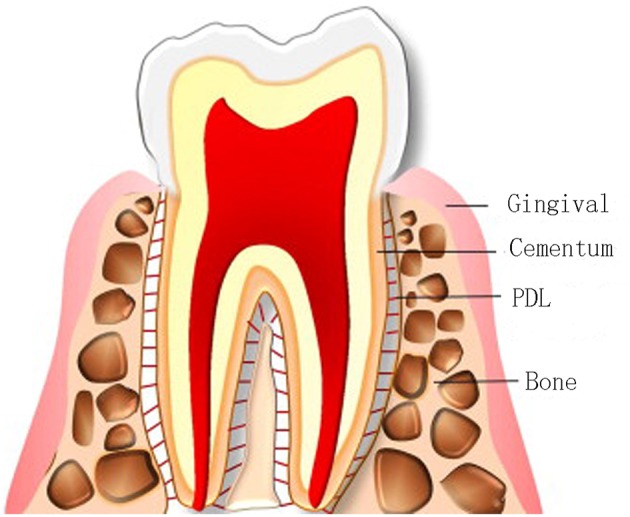
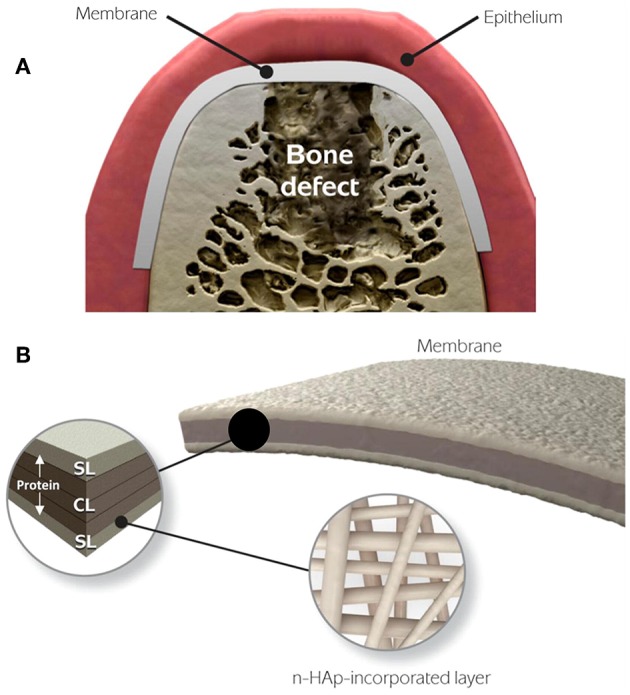
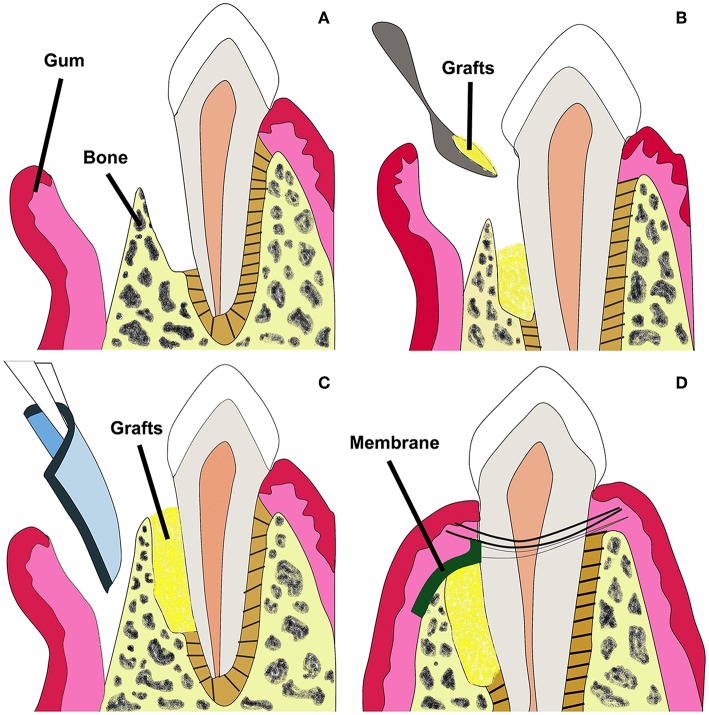
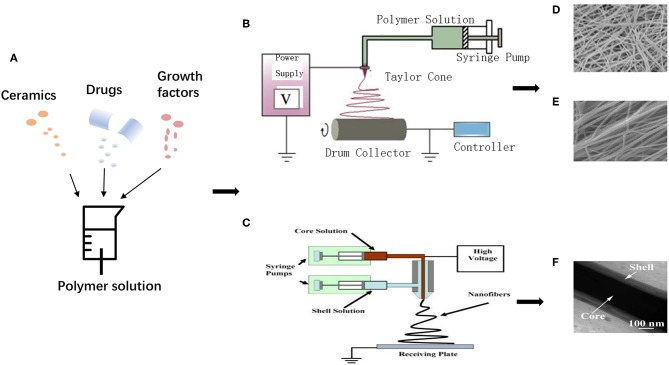
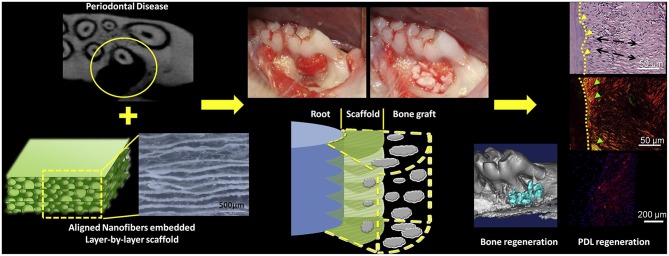
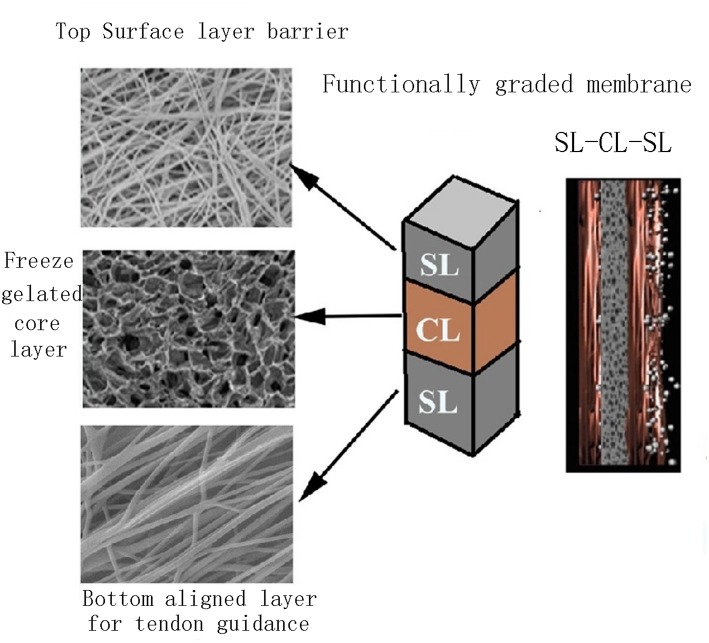
Periodontitis is considered to be the main cause of tooth loss, which affects about 15% of the adult population around the world. Scaling and root-planning are the conventional treatments utilized to remove the contaminated tissue and bacteria, but eventually lead to the formation of a poor connection-long junctional epithelium. Therefore, regenerative therapies, such as guided tissue/bone regeneration (GTR/GBR) for periodontal regeneration have been attempted. GTR membranes, acting as scaffolds, create three-dimensional (3D) environment for the guiding of cell attachment, proliferation and differentiation, and play a significant role in periodontal regeneration. Nano-composite scaffolds based on electrospun nanofibers have gained great attention due to their ability to emulate natural extracellular matrix (ECM) that affects cell survival, attachment and reorganization. Promoted protein absorption, cellular reactions, activation of specific gene expression and intracellular signaling, and high surface area to volume ratio are also important properties of nanofibrous scaffolds. Moreover, several bioactive components, such as bioceramics and functional polymers can be easily blended into nanofibrous matrixes to regulate the physical-chemical-biological properties and regeneration abilities. Simultaneously, functional growth factors, proteins and drugs are also incorporated to regulate cellular reactions and even modify the local inflammatory microenvironment, which benefit periodontal regeneration and functional restoration. Herein, the progress of nano-composite electrospun fibers for periodontal regeneration is reviewed, including fabrication methods, compound types and processes, and surface modifications, etc. Significant proof-of-concept examples are utilized to illustrate the results of material characteristics, cellular interactions and periodontal regenerations. Finally, the existing limitations of nano-composite electrospun fibers and the development tendencies in future are also discussed.
牙周炎被认为是牙齿缺失的主要原因,全球约15%的成年人受其影响。龈上洁治术和根面平整术是用于去除受污染组织和细菌的传统治疗方法,但最终会导致形成连接不良的长结合上皮。因此,人们尝试了再生疗法,如用于牙周再生的引导组织/骨再生(GTR/GBR)。GTR膜作为支架,为细胞附着、增殖和分化创造三维(3D)环境,并在牙周再生中发挥重要作用。基于电纺纳米纤维的纳米复合支架因其能够模拟影响细胞存活、附着和重组的天然细胞外基质(ECM)而备受关注。促进蛋白质吸收、细胞反应、特定基因表达和细胞内信号的激活以及高比表面积也是纳米纤维支架的重要特性。此外,几种生物活性成分,如生物陶瓷和功能聚合物,可以很容易地混入纳米纤维基质中,以调节其物理化学和生物学性质以及再生能力。同时,还引入了功能性生长因子、蛋白质和药物来调节细胞反应,甚至改变局部炎症微环境,这有利于牙周再生和功能恢复。在此,综述了用于牙周再生的纳米复合电纺纤维的研究进展,包括制备方法、复合类型和过程以及表面改性等。利用重要的概念验证实例来说明材料特性、细胞相互作用和牙周再生的结果。最后,还讨论了纳米复合电纺纤维目前存在的局限性以及未来的发展趋势。