Bagchi Devika P, MacDougald Ormond A
Department of Molecular & Integrative Physiology, University of Michigan Medical School;
Department of Molecular & Integrative Physiology, University of Michigan Medical School.
J Vis Exp. 2019 Jul 11(149). doi: 10.3791/59499.
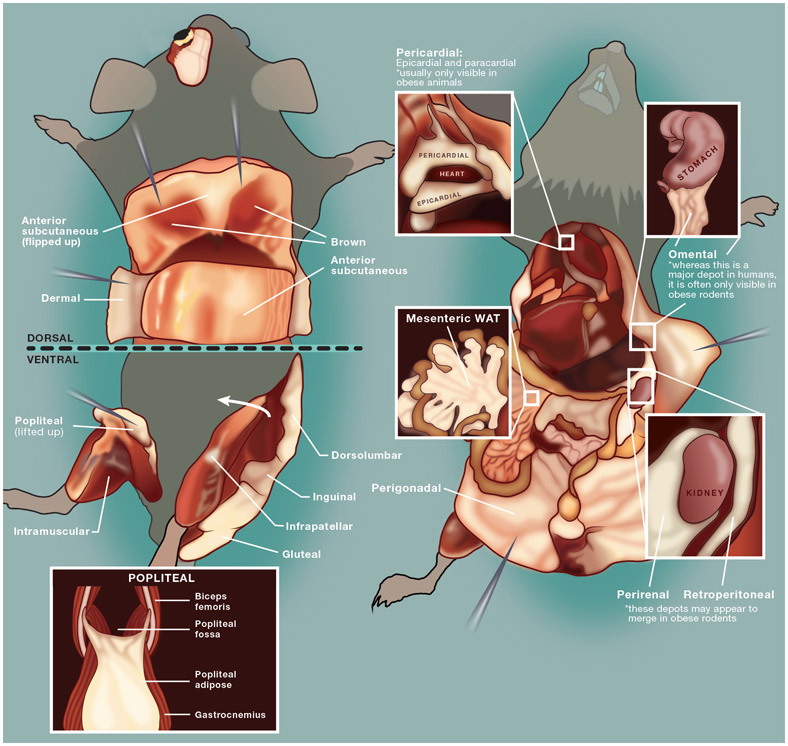
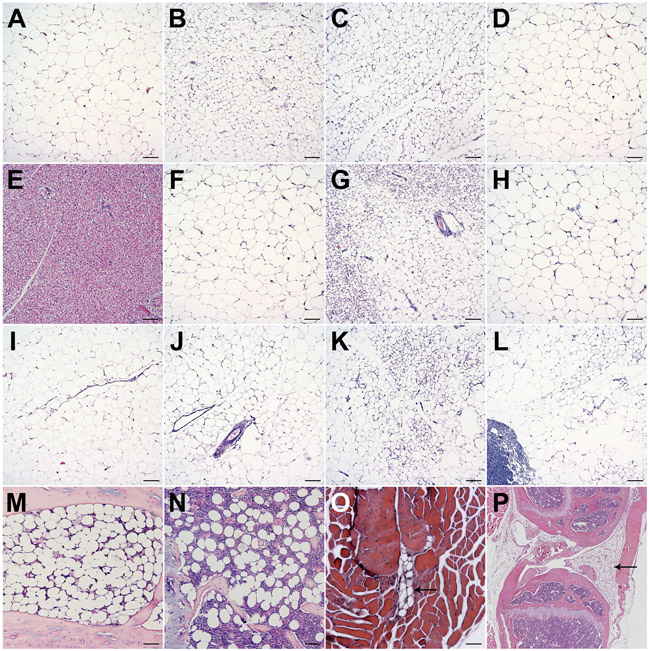
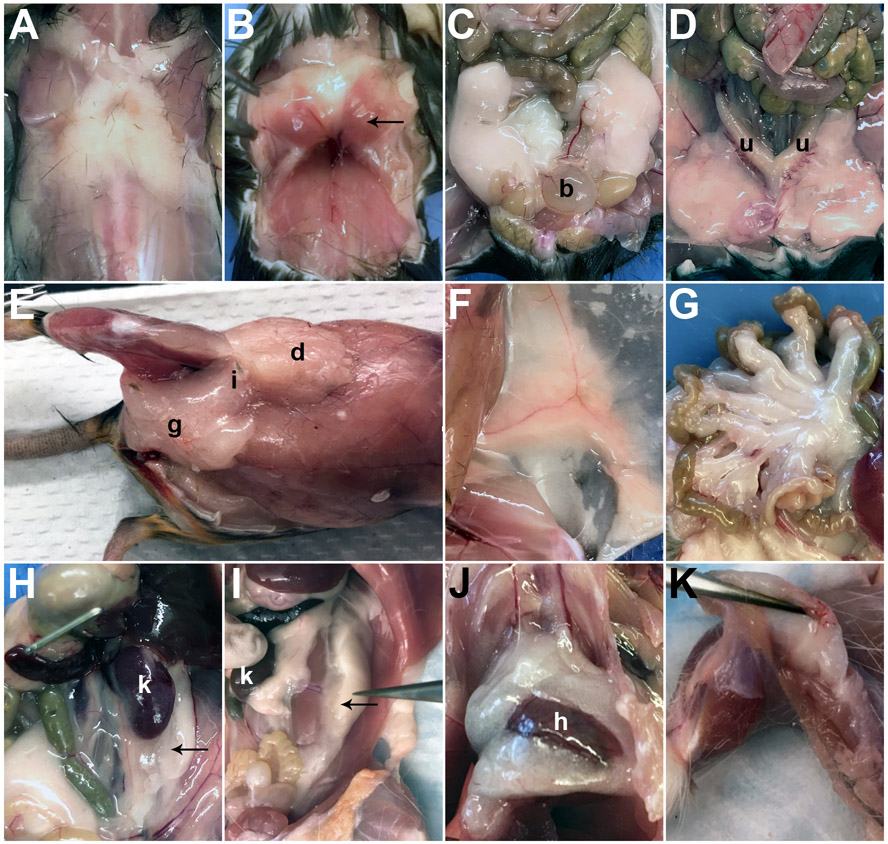
Adipose tissues are complex organs with a wide array of functions, including storage and mobilization of energy in response to local and global needs, uncoupling of metabolism to generate heat, and secretion of adipokines to regulate whole-body homeostasis and immune responses. Emerging research is identifying important regional differences in the developmental, molecular, and functional profiles of adipocytes located in discrete depots throughout the body. Different properties of the depots are medically relevant since metabolic diseases often demonstrate depot-specific effects. This protocol will provide investigators with a detailed anatomic atlas and dissection guide for the reproducible and accurate identification and excision of diverse mouse adipose tissues. Standardized dissection of discrete adipose depots will allow detailed comparisons of their molecular and metabolic characteristics and contributions to local and systemic pathologic states under various nutritional and environmental conditions.
脂肪组织是具有多种功能的复杂器官,包括根据局部和整体需求储存和动员能量、使新陈代谢解偶联以产生热量,以及分泌脂肪因子以调节全身稳态和免疫反应。新出现的研究正在确定位于全身不同脂肪储存部位的脂肪细胞在发育、分子和功能特征方面的重要区域差异。由于代谢性疾病通常表现出特定储存部位的效应,因此这些储存部位的不同特性具有医学相关性。本方案将为研究人员提供一份详细的解剖图谱和解剖指南,用于可重复且准确地识别和切除不同的小鼠脂肪组织。对离散脂肪储存部位进行标准化解剖将有助于详细比较它们在各种营养和环境条件下的分子和代谢特征,以及它们对局部和全身病理状态的影响。