Department of Pharmaceutical Sciences, University at Buffalo, State University of New York, Buffalo, New York.
Department of Physiology and Biophysics, University at Buffalo, State University of New York, Buffalo, New York.
Mol Cancer Ther. 2019 Nov;18(11):2074-2084. doi: 10.1158/1535-7163.MCT-18-0354. Epub 2019 Jul 30.
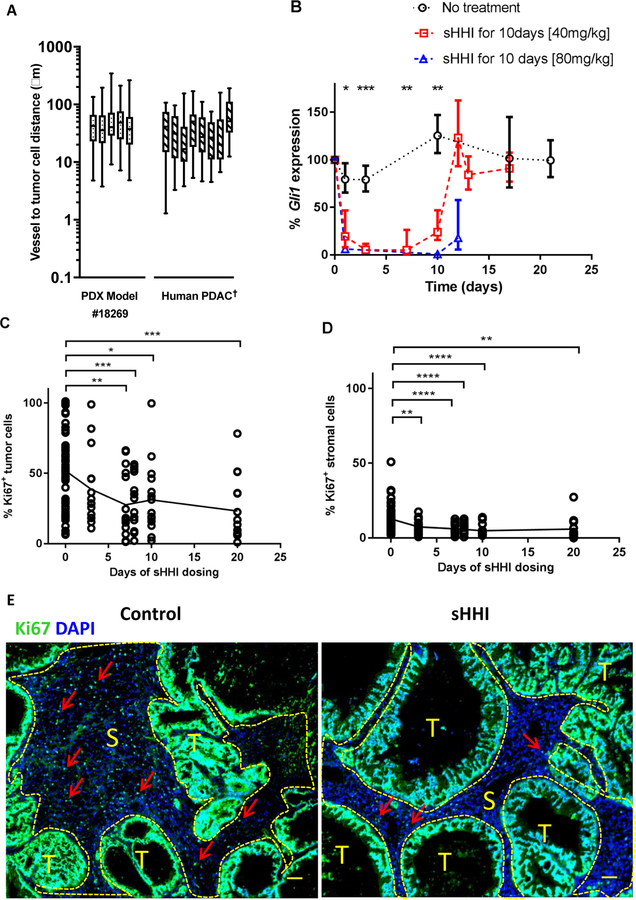
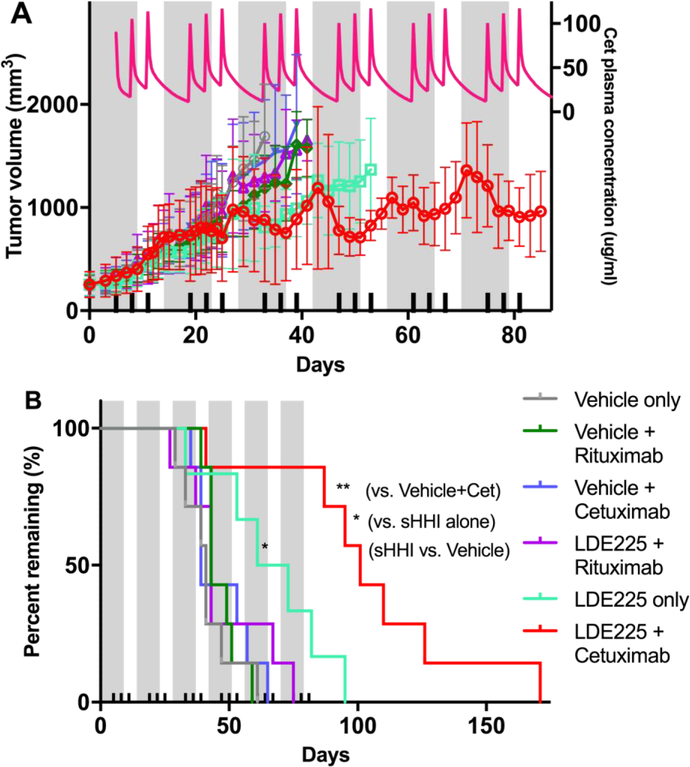
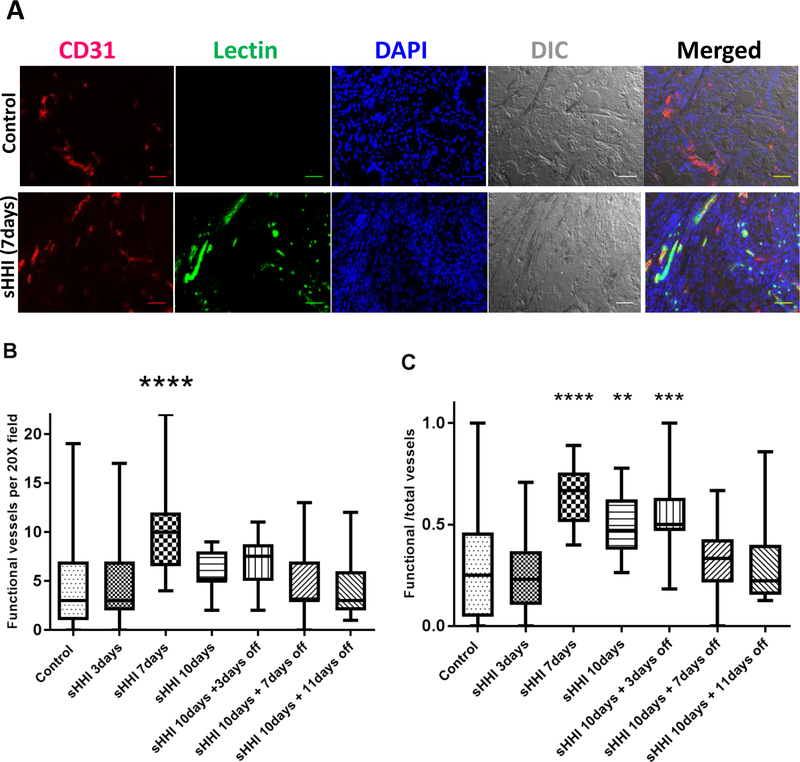
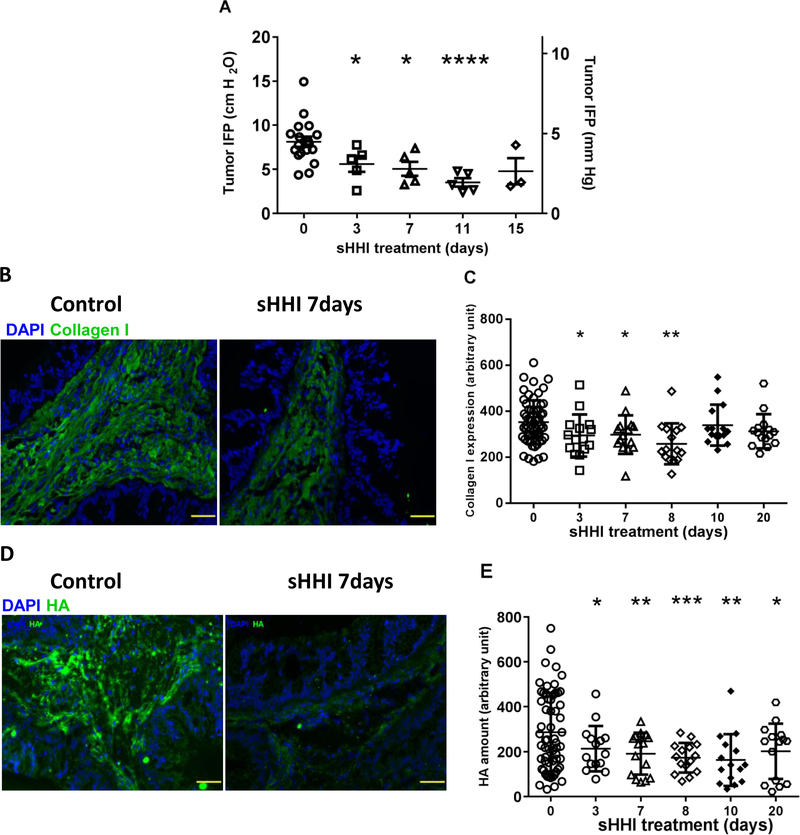
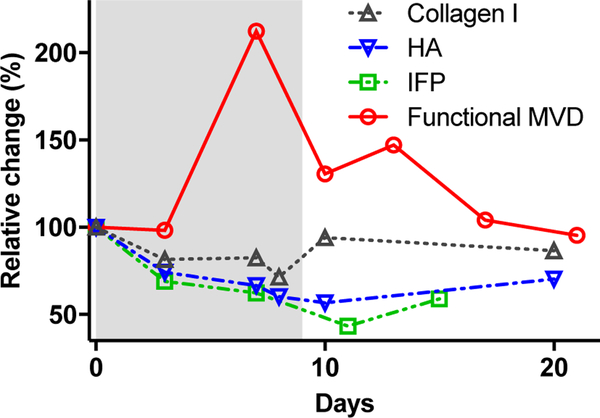
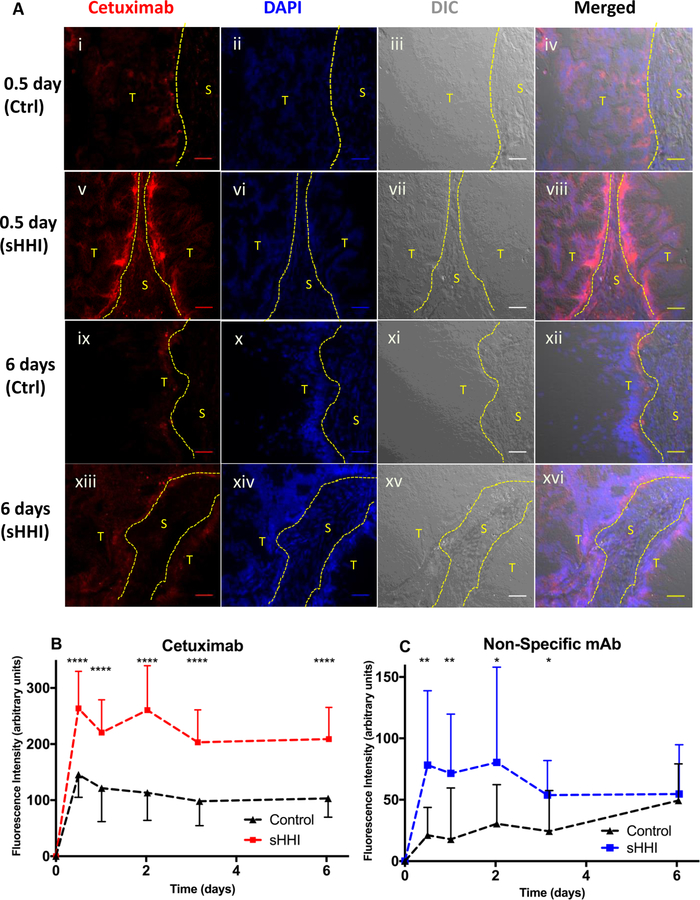
Despite frequent overexpression of numerous growth factor receptors by pancreatic ductal adenocarcinomas (PDAC), such as EGFR, therapeutic antibodies have not proven effective. Desmoplasia, hypovascularity, and hypoperfusion create a functional drug delivery barrier that contributes to treatment resistance. Drug combinations that target tumor/stroma interactions could enhance tumor deposition of therapeutic antibodies, although clinical trials have yet to support this strategy. We hypothesize that macromolecular or nanoparticulate therapeutic agents may best exploit stroma-targeting "tumor priming" strategies, based on the fundamental principles of the Enhanced Permeability and Retention phenomenon. Therefore, we investigated the molecular and pharmacologic tumor responses to NVP-LDE225, an SMO inhibitor of sonic hedgehog signaling (sHHI), of patient-derived xenograft models that recapitulate the desmoplasia and drug delivery barrier properties of PDAC. Short-term sHHI exposure mediated dose- and time-dependent changes in tumor microvessel patency, extracellular matrix architecture, and interstitial pressure, which waned with prolonged sHHI exposure, and increased nanoparticulate permeability probe deposition in multiple PDAC patient-derived xenograft isolates. During sHHI-mediated priming, deposition and intratumor distribution of both a nontargeted mAb and a mAb targeting EGFR, cetuximab, were enhanced. Sequencing the sHH inhibitor with cetuximab administration resulted in marked tumor growth inhibition compared with cetuximab alone. These studies suggest that PDAC drug delivery barriers confound efforts to employ mAb against targets in PDAC, and that short-term, intermittent exposure to stromal modulators can increase tumor cell exposure to therapeutic antibodies, improving their efficacy, and potentially minimize adverse effects that may accompany longer-term, continuous sHHI treatment.
尽管胰腺导管腺癌 (PDAC) 经常过度表达多种生长因子受体,如 EGFR,但治疗性抗体并未被证明有效。间质增生、血管生成不足和灌注不足形成了一种功能性药物输送屏障,导致治疗耐药。针对肿瘤/基质相互作用的药物组合可能会增强治疗性抗体在肿瘤中的沉积,尽管临床试验尚未支持这一策略。我们假设,基于增强的渗透性和保留现象的基本原理,大分子或纳米颗粒治疗剂可能最好地利用基质靶向的“肿瘤启动”策略。因此,我们研究了 NVP-LDE225(一种 sonic hedgehog 信号通路 SMO 抑制剂)对患者衍生异种移植模型的分子和药理肿瘤反应,这些模型再现了 PDAC 的间质增生和药物输送屏障特性。短期 SMO 暴露介导了肿瘤微血管通透性、细胞外基质结构和间质压力的剂量和时间依赖性变化,这些变化随着 SMO 暴露的延长而减弱,并增加了多个 PDAC 患者衍生异种移植分离物中纳米颗粒通透性探针的沉积。在 SMO 介导的启动过程中,非靶向 mAb 和靶向 EGFR 的 mAb(西妥昔单抗)的沉积和肿瘤内分布都得到了增强。与单独使用西妥昔单抗相比,在 SMO 抑制剂与西妥昔单抗联合使用时,肿瘤生长抑制更为显著。这些研究表明,PDAC 药物输送屏障阻碍了使用针对 PDAC 靶点的 mAb 的努力,而短期、间歇性暴露于基质调节剂可以增加肿瘤细胞对治疗性抗体的暴露,提高其疗效,并可能最大限度地减少可能伴随更长时间、连续 SMOI 治疗而来的不良反应。