Charité - Universitätsmedizin Berlin, corporate member of Freie Universität Berlin, Humboldt - Universität zu Berlin, and Berlin Institute of Health, Institute for Theoretical Biology, Berlin, Germany.
Charité - Universitätsmedizin Berlin, corporate member of Freie Universität Berlin, Humboldt - Universität zu Berlin, and Berlin Institute of Health, Medical Department of Hematology, Oncology, and Tumor Immunology, Molecular Cancer Research Center, Berlin, Germany.
Sci Rep. 2018 Jul 31;8(1):11474. doi: 10.1038/s41598-018-29847-z.
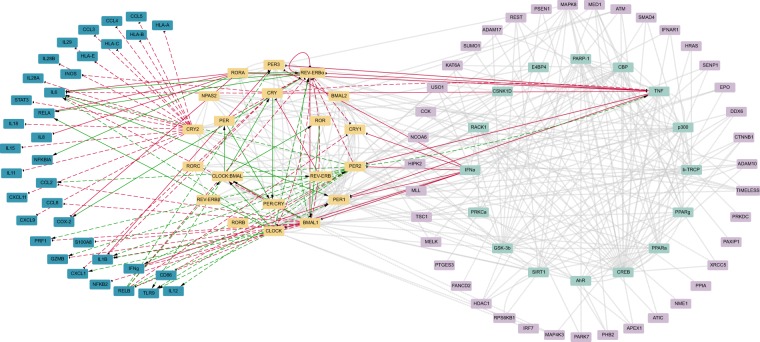
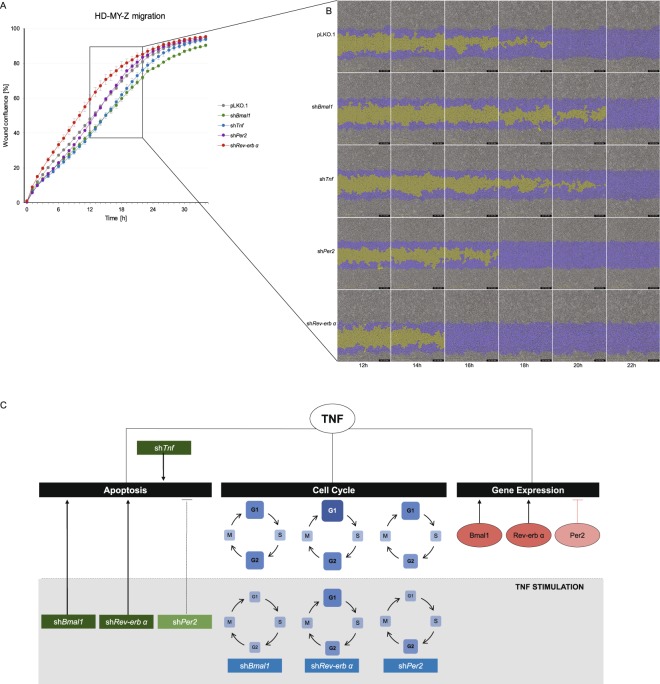
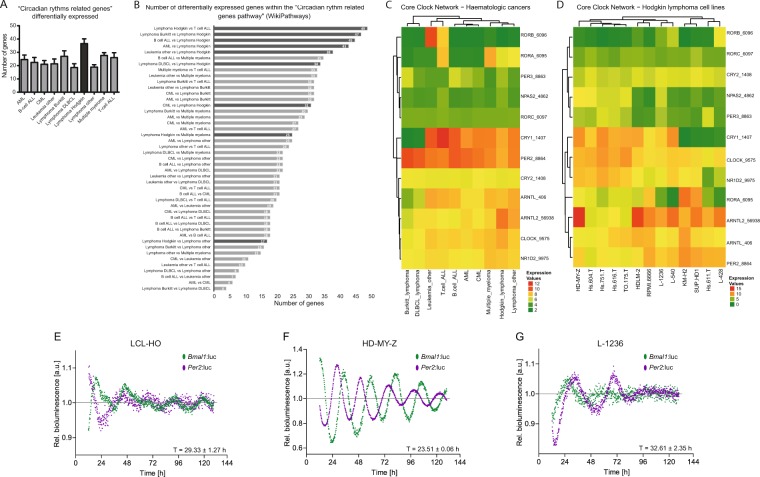
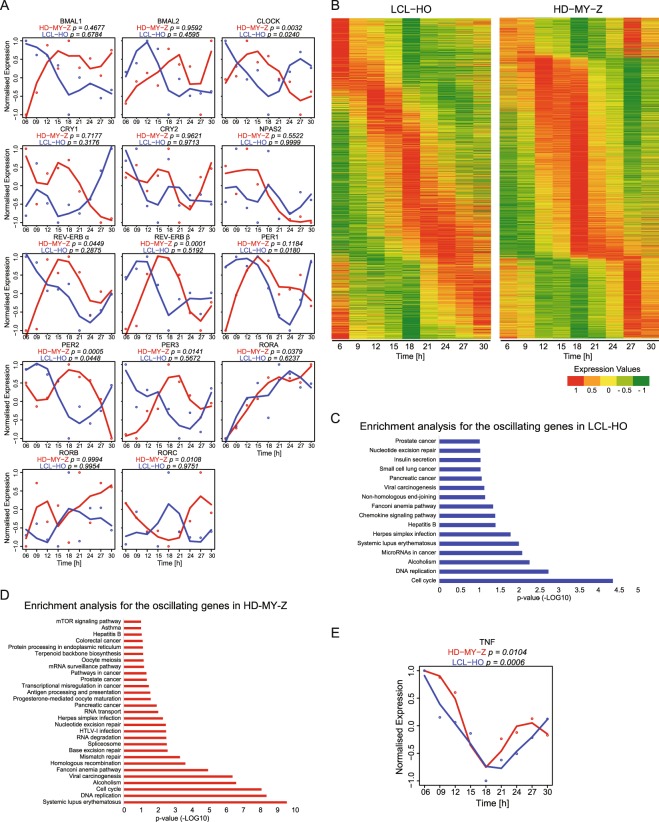
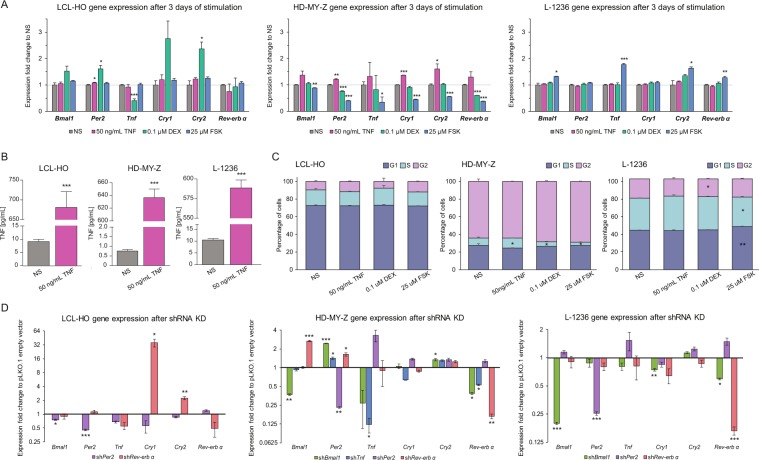
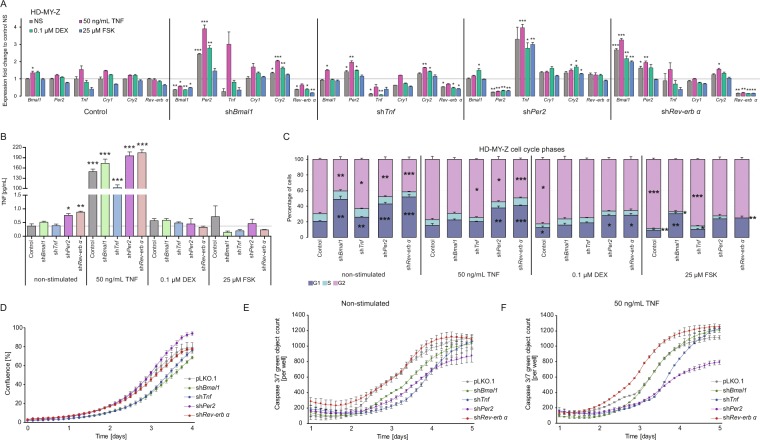
A bidirectional interaction between the circadian network and effector mechanisms of immunity brings on a proper working of both systems. In the present study, we used Hodgkin lymphoma (HL) as an experimental model for a type of cancer involving cells of the immune system. We identified this cancer type among haematological malignancies has having a strong differential expression of core-clock elements. Taking advantage of bioinformatics analyses and experimental procedures carried out in III- and IV-stage HL cells, and lymphoblastoid B cells, we explored this interplay and bear out diverse interacting partners of both systems. In particular, we assembled a wide-ranging network of clock-immune-related genes and pinpointed TNF as a crucial intermediary player. A robust circadian clock hallmarked III-stage lymphoma cells, differently from IV-stage HL cells, which do not harbour a properly functioning clockwork. TNF and circadian gene modulation impacted on clock genes expression and triggered phenotypic changes in lymphoma cells, suggesting a crucial involvement of core-clock elements and TNF in the physiopathological mechanisms hastening malignancy. Our results move forward our understanding of the putative role of the core-clock and TNF in the pathobiology of Hodgkin lymphoma, and highlight their influence in cellular proliferation and migration in lymphatic cancers.
生物钟网络与免疫效应机制的双向相互作用使两个系统都能正常工作。在本研究中,我们使用霍奇金淋巴瘤(HL)作为涉及免疫系统细胞的癌症类型的实验模型。我们发现这种癌症类型在血液系统恶性肿瘤中具有核心时钟元件的强烈差异表达。利用生物信息学分析和 III 期和 IV 期 HL 细胞以及淋巴母细胞系中进行的实验程序,我们探讨了这种相互作用,并证实了两个系统的不同相互作用伙伴。特别是,我们组装了一个广泛的生物钟-免疫相关基因网络,并确定 TNF 是一个关键的中介因子。一个强大的生物钟标志着 III 期淋巴瘤细胞,与不具有正常功能的时钟机制的 IV 期 HL 细胞不同。TNF 和生物钟基因的调节影响时钟基因的表达,并触发淋巴瘤细胞的表型变化,表明核心时钟元件和 TNF 在内加速恶性肿瘤发生的生理病理机制中起着至关重要的作用。我们的研究结果推动了我们对核心时钟和 TNF 在霍奇金淋巴瘤发病机制中的潜在作用的理解,并强调了它们在淋巴癌中细胞增殖和迁移中的影响。