Department of Pharmaceutics, College of Pharmacy, University of Florida, Gainesville, FL, USA.
National Center for Toxicological Research, Food and Drug Administration, Jefferson, AR, USA.
Sci Rep. 2019 Jul 31;9(1):11147. doi: 10.1038/s41598-019-47566-x.
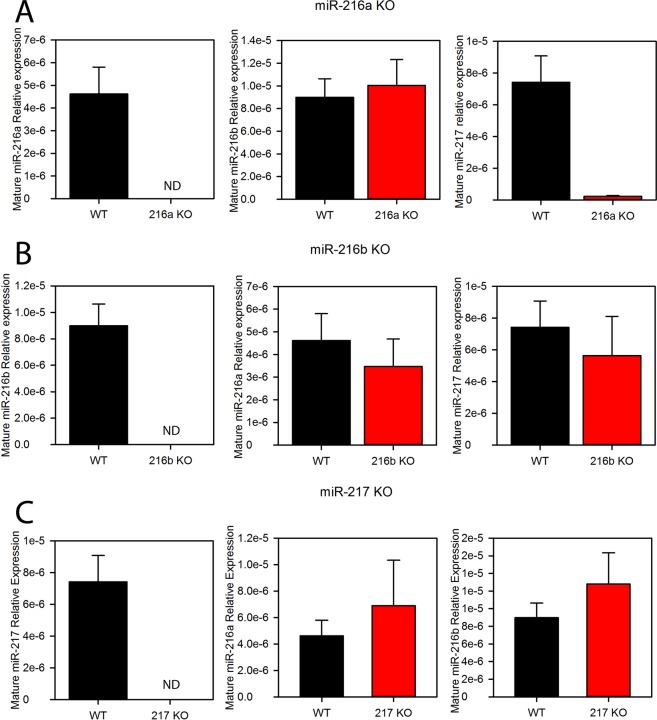
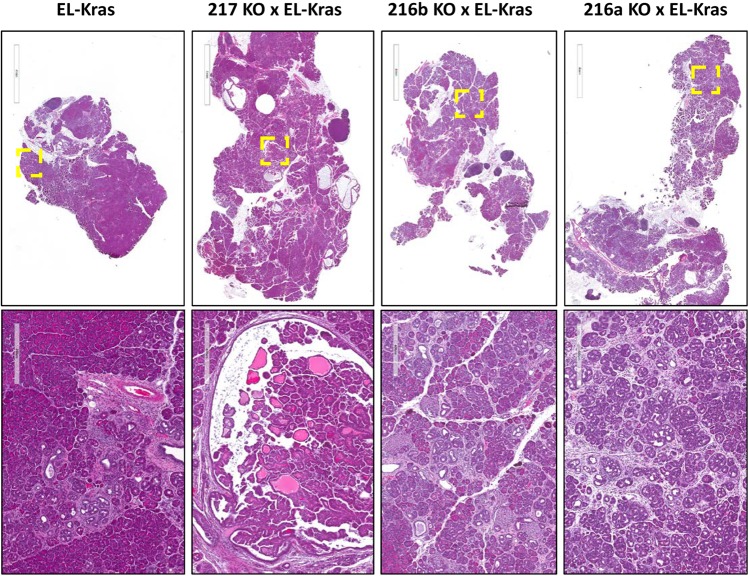
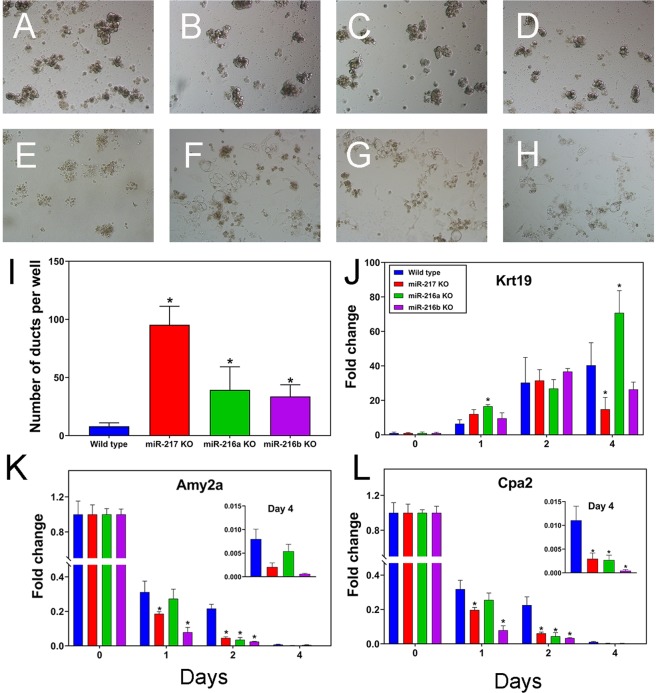
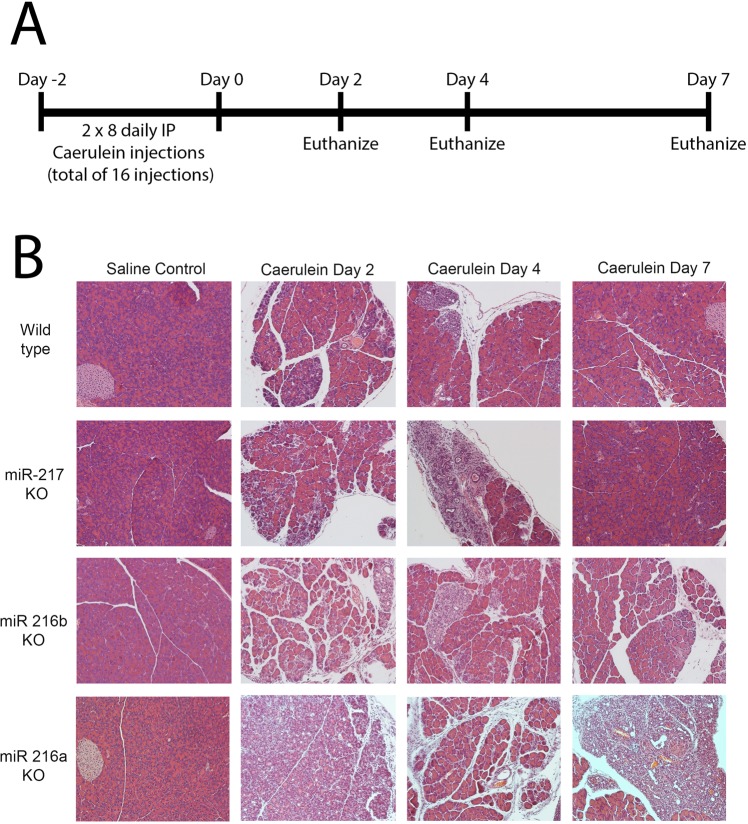
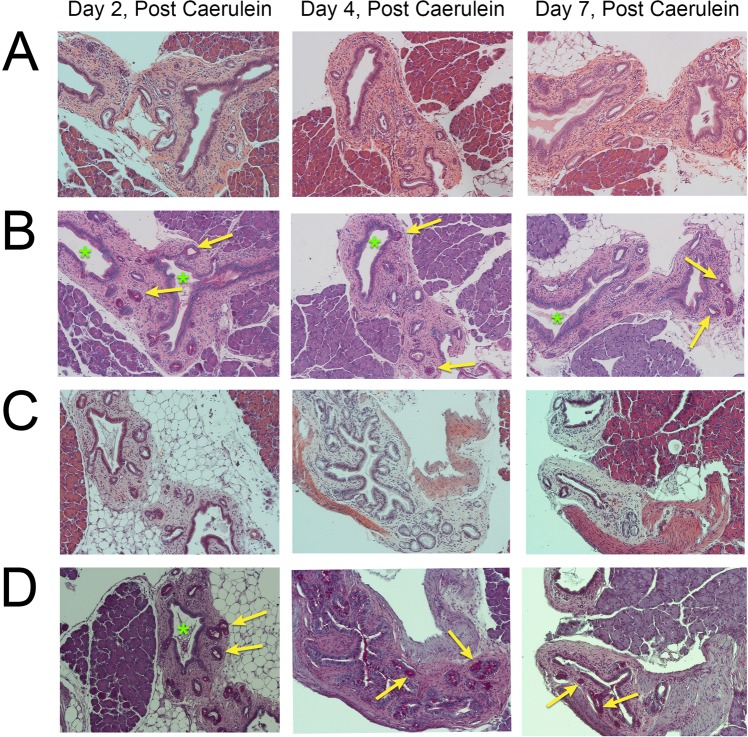
The pancreatic acinar-enriched miR-216a, miR-216b and miR-217 are encoded within the miR217HG. These miRNAs have been purported to play a tumor suppressive role as their expression is reduced in both human and mouse pancreatic ductal adenocarcinoma (PDAC). To examine this possibility, we generated individual, germline knockout (KO) mice of miR-216a, miR-216b or miR-217. Unlike our previous study showing germline deletion of the miR217HG was embryonic lethal, CRISPR-Cas9 deleted portions of the 5' seed region of the miRNAs produced live births. To investigate possible phenotypes during pancreatic acinar ductal metaplasia (ADM), pancreatic acini from wild type and KO mice were plated on collagen and allowed to transdifferentiate over 4 days. Acini from each of the three miRNA KO mice produced greater numbers of ducts compared to controls. Evaluation of the gene expression during in vitro ADM demonstrated an increase in Krt19 and a reduction in acinar genes (Carboxypeptidase A1, Amylase2a) on day 4 of the transdifferentiation. Recovery was delayed for the miR-216a and miR-216b KOs following caerulein-induced acute pancreatitis. Also predominate in the caerulein treated miR-216a and miR-216b KO mice was the presence of pancreatic duct glands (PDGs). To further establish a phenotype, miRNA KO mice were crossed with EL-KRAS (EK) mice and followed up to 13 months of age. While all mice developed severe dysplasia and cystic papillary neoplasms, there existed no apparent phenotypic difference in the miRNA KO/EK mice compared to EK mice. Our data does not support a tumor suppressor role for miR-216a, miR-216b or miR-217 in PDAC and emphasizes the need for phenotypic evaluation of miRNAs in complex in vivo models beyond that performed using cell culture.
胰腺腺泡丰富的 miR-216a、miR-216b 和 miR-217 编码在 miR217HG 内。这些 miRNA 被认为具有肿瘤抑制作用,因为它们在人和小鼠胰腺导管腺癌 (PDAC) 中的表达都降低了。为了检验这种可能性,我们生成了 miR-216a、miR-216b 或 miR-217 的个体、种系敲除 (KO) 小鼠。与我们之前的研究显示 miR217HG 的种系缺失是胚胎致死性的不同,CRISPR-Cas9 缺失了 miRNA 的 5' 种子区域的部分产生了活产。为了研究胰腺腺泡导管化生 (ADM) 期间的可能表型,将野生型和 KO 小鼠的胰腺腺泡铺在胶原上,并允许它们在 4 天内转分化。与对照相比,来自这三种 miRNA KO 小鼠的每个胰腺腺泡产生的导管数量都更多。在体外 ADM 过程中,基因表达的评估表明,在转分化的第 4 天,Krt19 增加,而胰腺基因 (Carboxypeptidase A1、Amylase2a) 减少。在胰酶诱导的急性胰腺炎后,miR-216a 和 miR-216b KO 的恢复延迟。在接受 caerulein 治疗的 miR-216a 和 miR-216b KO 小鼠中,也主要存在胰腺导管腺 (PDG)。为了进一步建立表型,将 miRNA KO 小鼠与 EL-KRAS (EK) 小鼠杂交,并进行了长达 13 个月的随访。虽然所有小鼠都发展出严重的发育不良和囊性乳头瘤,但在 miRNA KO/EK 小鼠与 EK 小鼠之间没有明显的表型差异。我们的数据不支持 miR-216a、miR-216b 或 miR-217 在 PDAC 中的肿瘤抑制作用,并强调需要在复杂的体内模型中对 miRNA 进行表型评估,而不仅仅是在细胞培养中进行。