Graduate School of Health, University of Technology Sydney, Sydney, Australia.
Emeritus Professor, University of Sydney, Sydney, Australia.
PLoS One. 2019 Aug 1;14(8):e0220116. doi: 10.1371/journal.pone.0220116. eCollection 2019.
Primary health professionals are well positioned to support the delivery of patient self-management in an evidence-based, structured capacity. A need exists to better understand the active components required for effective self-management support, how these might be delivered within primary care, and the training and system changes that would subsequently be needed.
(1) To examine self-management support interventions in primary care on health outcomes for a wide range of diseases compared to usual standard of care; and (2) To identify the effective strategies that facilitate positive clinical and humanistic outcomes in this setting.
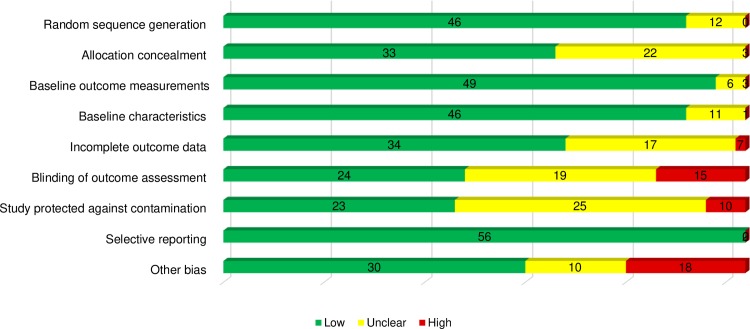
A systematic review of randomized controlled trials evaluating self-management support interventions was conducted following the Cochrane handbook & PRISMA guidelines. Published literature was systematically searched from inception to June 2019 in PubMed, Scopus and Web of Science. Eligible studies assessed the effectiveness of individualized interventions with follow-up, delivered face-to-face to adult patients with any condition in primary care, compared with usual standard of care. Matrices were developed that mapped the evidence and components for each intervention. The methodological quality of included studies were appraised.
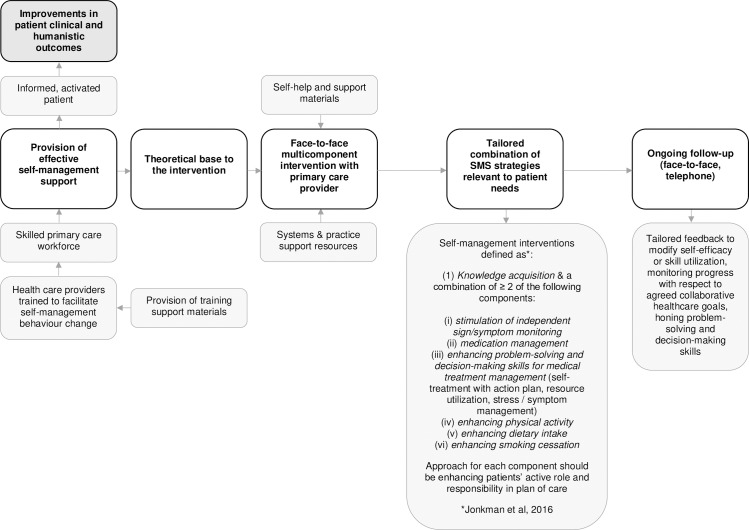
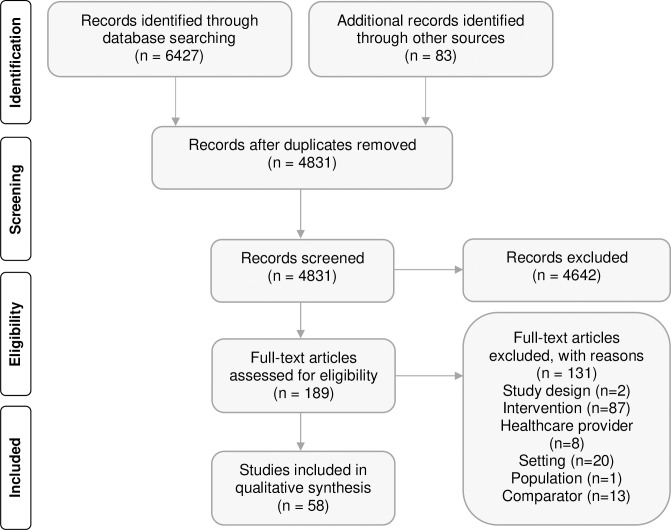
6,510 records were retrieved. 58 studies were included in the final qualitative synthesis. Findings reveal a structured patient-provider exchange is required in primary care (including a one-on-one patient-provider consultation, ongoing follow up and provision of self-help materials). Interventions should be tailored to patient needs and may include combinations of strategies to improve a patient's disease or treatment knowledge; independent monitoring of symptoms, encouraging self-treatment through a personalized action plan in response worsening symptoms or exacerbations, psychological coping and stress management strategies, and enhancing responsibility in medication adherence and lifestyle choices. Follow-up may include tailored feedback, monitoring of progress with respect to patient set healthcare goals, or honing problem-solving and decision-making skills. Theoretical models provided a strong base for effective SMS interventions. Positive outcomes for effective SMS included improvements in clinical indicators, health-related quality of life, self-efficacy (confidence to self-manage), disease knowledge or control. An SMS model has been developed which sets the foundation for the design and evaluation of practical strategies for the construct of self-management support interventions in primary healthcare practice.
These findings provide primary care professionals with evidence-based strategies and structure to deliver SMS in practice. For this collaborative partnership approach to be more widely applied, future research should build on these findings for optimal SMS service design and upskilling healthcare providers to effectively support patients in this collaborative process.
初级卫生保健专业人员在提供基于证据、结构化的患者自我管理方面具有得天独厚的优势。需要更好地了解有效自我管理支持所需的积极组成部分,了解如何在初级保健中提供这些支持,以及随后需要进行哪些培训和系统更改。
(1)比较常规标准护理,调查初级保健中针对各种疾病的自我管理支持干预对健康结果的影响;(2)确定在这种情况下促进积极临床和人文结果的有效策略。
根据 Cochrane 手册和 PRISMA 指南,对评估自我管理支持干预的随机对照试验进行了系统回顾。从成立到 2019 年 6 月,在 PubMed、Scopus 和 Web of Science 中系统地搜索了已发表的文献。符合条件的研究评估了与常规标准护理相比,在初级保健中为成年患者提供的个体化干预措施的有效性,这些患者具有任何条件且有随访。制定了映射每个干预措施的证据和组成部分的矩阵。评估了纳入研究的方法学质量。
共检索到 6510 条记录。最终定性综合分析纳入了 58 项研究。研究结果表明,在初级保健中需要进行结构化的医患交流(包括医患一对一咨询、持续随访和提供自助材料)。干预措施应根据患者的需求进行定制,并且可能包括多种策略的组合,以提高患者对疾病或治疗的认识;独立监测症状,根据症状恶化或加重、心理应对和压力管理策略制定个性化行动计划,鼓励自我治疗,并增强对药物治疗和生活方式选择的责任感。随访可能包括个性化反馈、监测患者设定的医疗目标的进展,或磨练解决问题和决策的技能。理论模型为有效的 SMS 干预提供了坚实的基础。有效的 SMS 干预的积极结果包括临床指标、健康相关生活质量、自我效能(自我管理的信心)、疾病知识或控制的改善。已经开发了一种 SMS 模型,为初级保健实践中自我管理支持干预的设计和评估奠定了基础。
这些发现为初级保健专业人员提供了在实践中提供 SMS 的循证策略和结构。为了更广泛地应用这种合作关系方法,未来的研究应在此基础上构建最佳的 SMS 服务设计,并提高医疗保健提供者的技能,以有效地支持患者在这一合作过程中的需求。