Jalovaara Marika, Neyer Gerda, Andersson Gunnar, Dahlberg Johan, Dommermuth Lars, Fallesen Peter, Lappegård Trude
1Department of Social Research, University of Turku, 20014 Turku, Finland.
2Stockholm University, Stockholm, Sweden.
Eur J Popul. 2018 Jun 19;35(3):563-586. doi: 10.1007/s10680-018-9492-2. eCollection 2019 Jul.
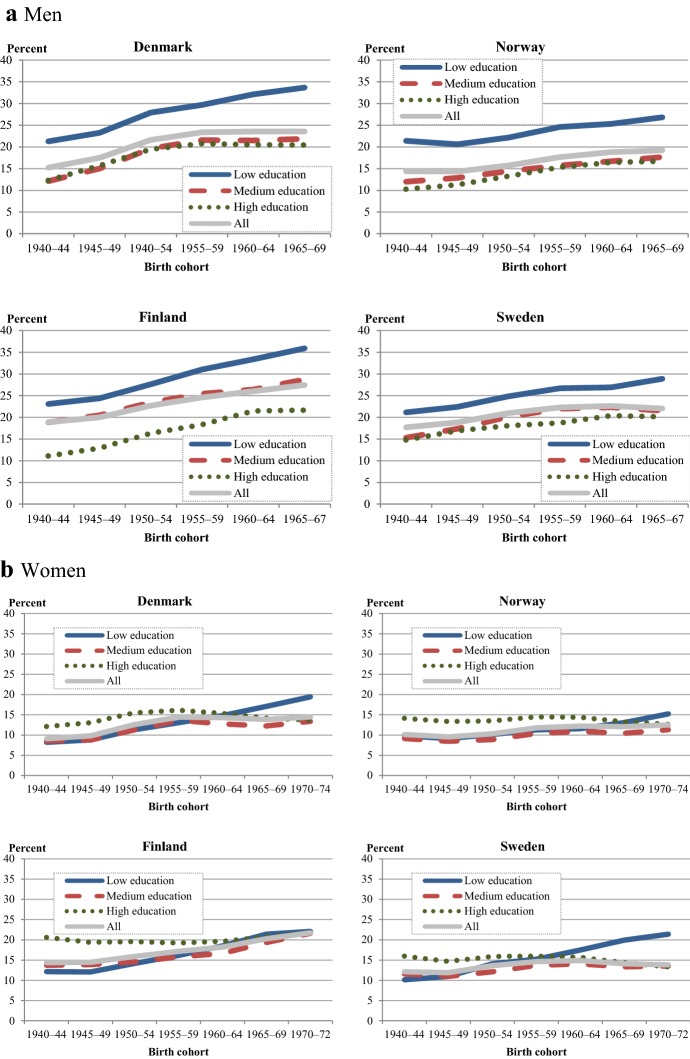
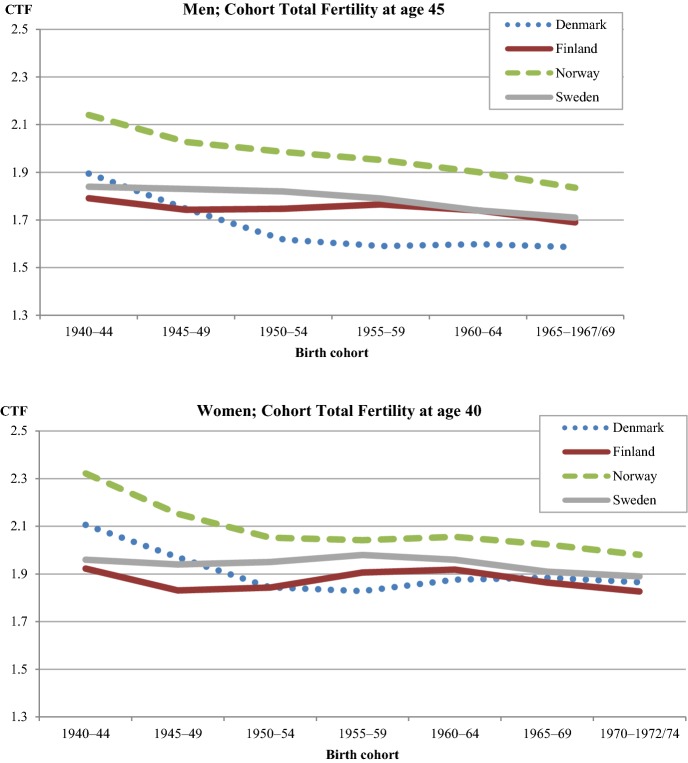
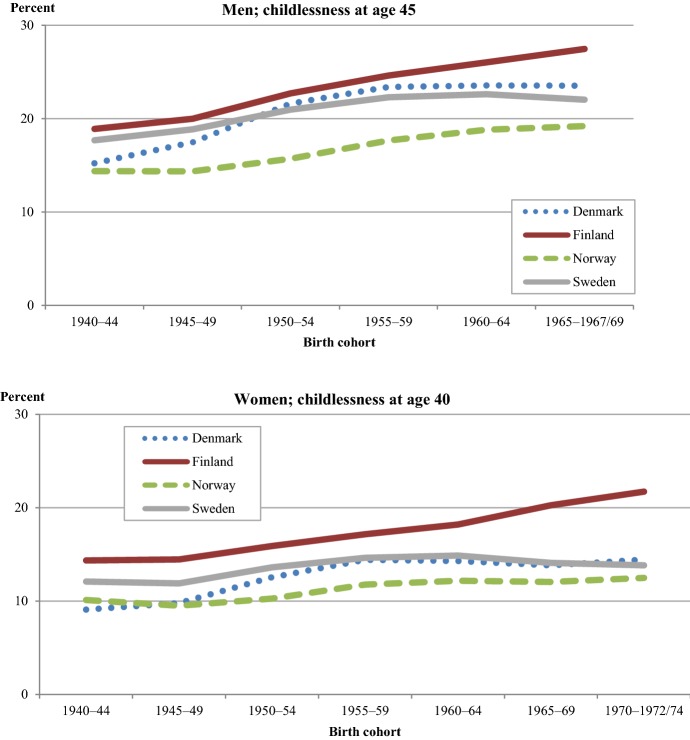
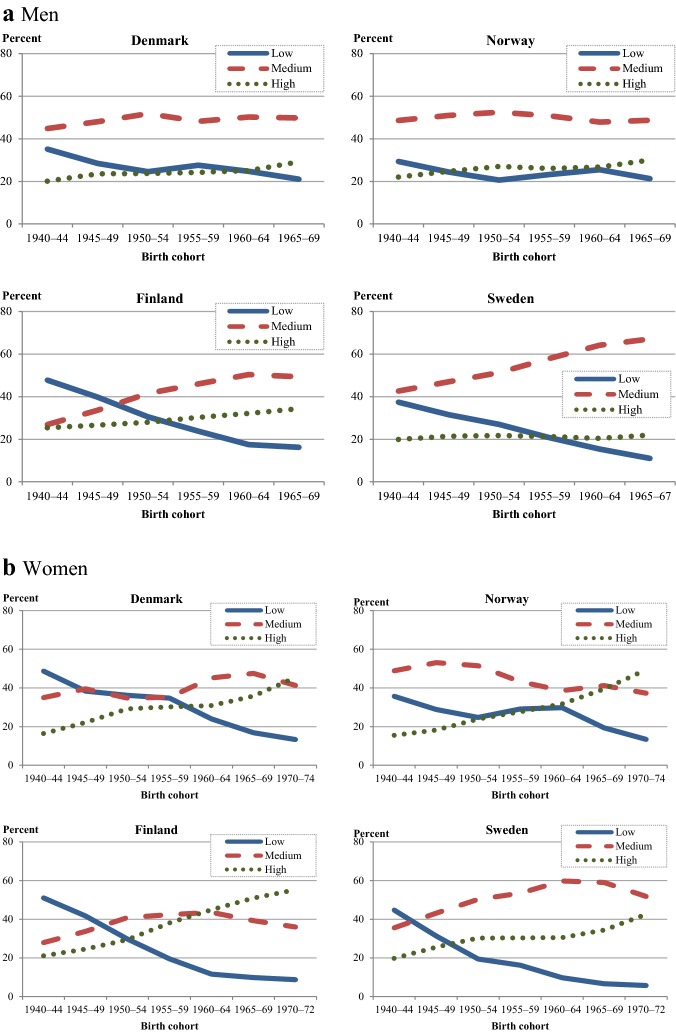
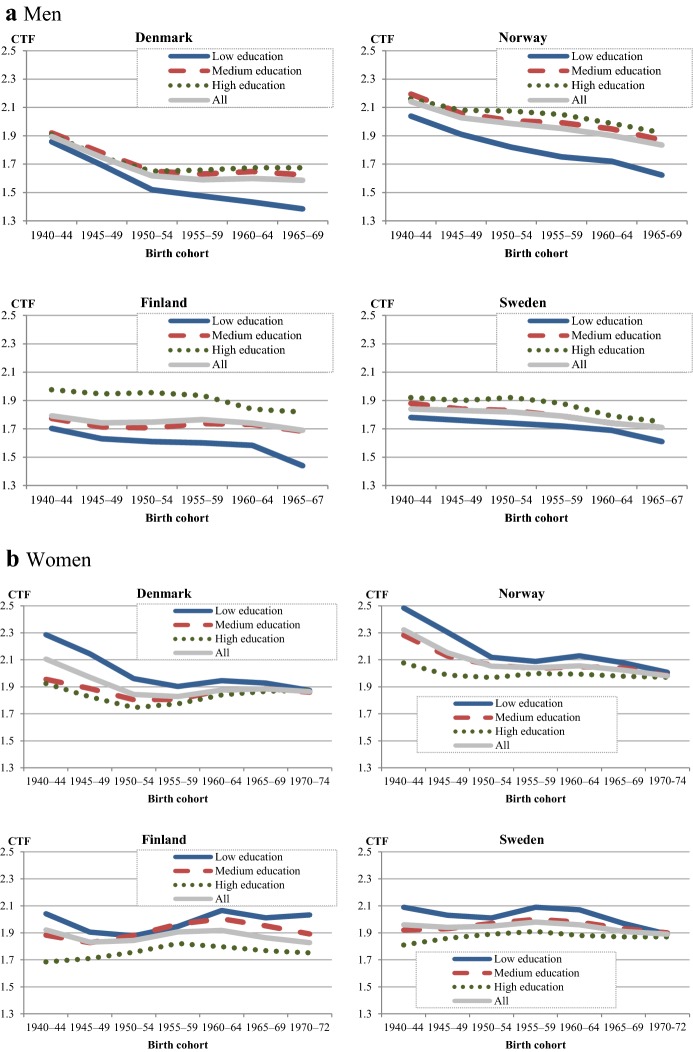
Systematic comparisons of fertility developments based on education, gender and country context are rare. Using harmonized register data, we compare cohort total fertility and ultimate childlessness by gender and educational attainment for cohorts born beginning in 1940 in four Nordic countries. Cohort fertility (CTF) initially declined in all four countries, although for cohorts born in the 1950s and later, the CTF remained stable or declined only modestly. Childlessness, which had been increasing, has plateaued in Denmark, Norway and Sweden. Women's negative educational gradient in relation to total fertility has vanished, except in Finland, while men's positive gradient has persisted. The highest level of men's childlessness appears among the least educated. In the oldest female cohorts, childlessness was highest among the highly educated, but these patterns have changed over the cohorts as childlessness has increased among the low educated and remained relatively stable among higher educated women. In Denmark, Norway and Sweden, childlessness is now highest among the least educated women. We witness both a new gender similarity and persistent (among men) and new (among women) educational disparities in childbearing outcomes in the Nordic region. Overall, the number of low educated has decreased remarkably over time. These population segments face increasing social and economic disadvantages that are reflected as well in their patterns of family formation.
基于教育程度、性别和国家背景对生育情况进行系统比较的研究很少见。我们利用协调后的登记数据,对四个北欧国家1940年以后出生队列的总和生育率及最终无子女情况按性别和教育程度进行了比较。所有四个国家的队列生育率(CTF)最初都有所下降,不过对于20世纪50年代及以后出生的队列,CTF保持稳定或仅略有下降。一直呈上升趋势的无子女率在丹麦、挪威和瑞典已趋于平稳。除芬兰外,女性在总和生育率方面的负教育梯度已消失,而男性的正教育梯度依然存在。男性无子女率最高的出现在受教育程度最低的人群中。在年龄最大的女性队列中,无子女率在高学历人群中最高,但随着低学历人群无子女率上升且高学历女性无子女率相对稳定,这些模式在不同队列间发生了变化。在丹麦、挪威和瑞典,现在受教育程度最低的女性无子女率最高。我们在北欧地区的生育结果中既看到了新的性别相似性,也看到了(男性中)持续存在的以及(女性中)新出现的教育差异。总体而言,随着时间推移,低学历人群数量显著减少。这些人群面临着日益增加的社会和经济劣势,这也体现在他们的家庭形成模式中。