Iaccarino Nunzia, Varming Camilla, Agerlin Petersen Mikael, Viereck Nanna, Schütz Birk, Toldam-Andersen Torben Bo, Randazzo Antonio, Balling Engelsen Søren
Department of Pharmacy, University of Naples Federico II, Via D. Montesano 49, 80131 Naples, Italy.
Novozymes, Biologiens Vej 2, 2800 Kongens Lyngby, Denmark.
Metabolites. 2019 Jul 11;9(7):139. doi: 10.3390/metabo9070139.
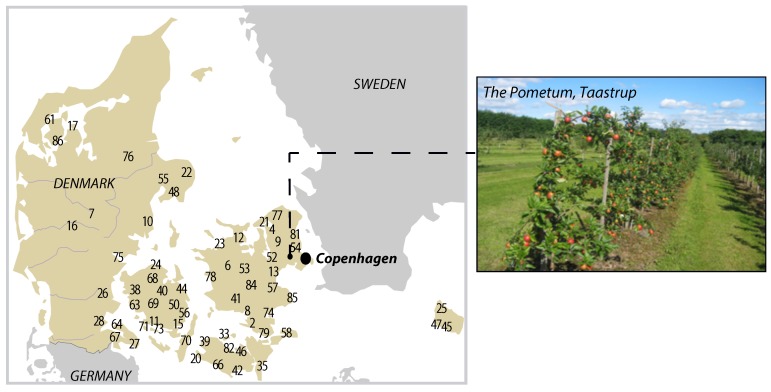
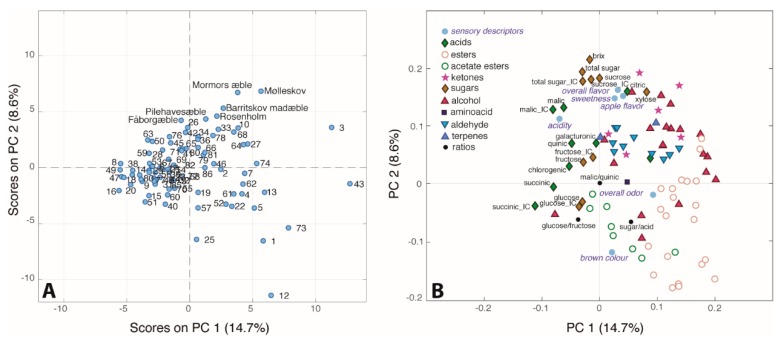
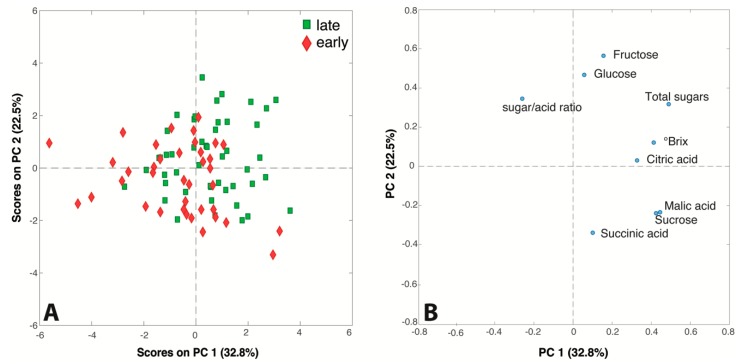
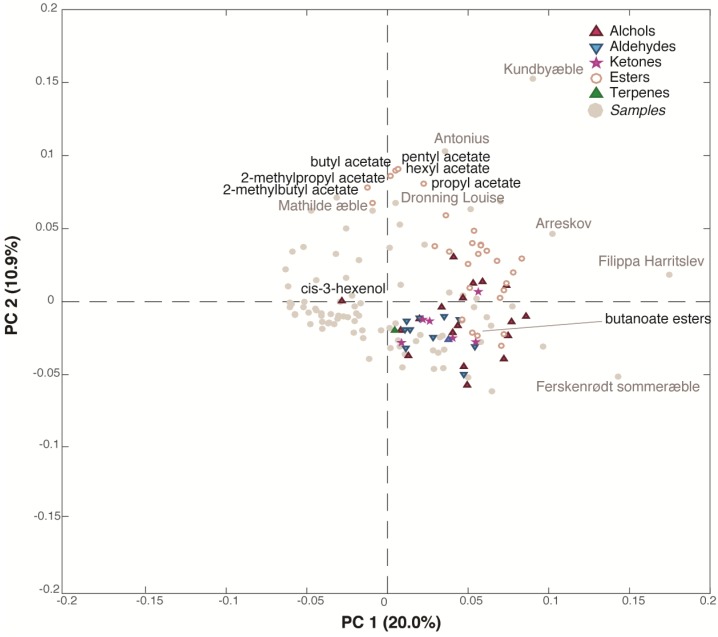
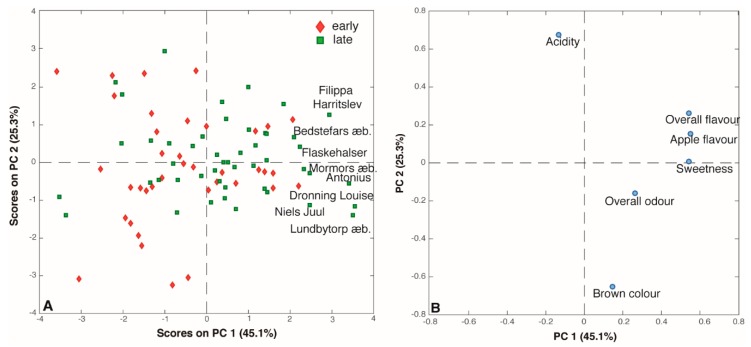
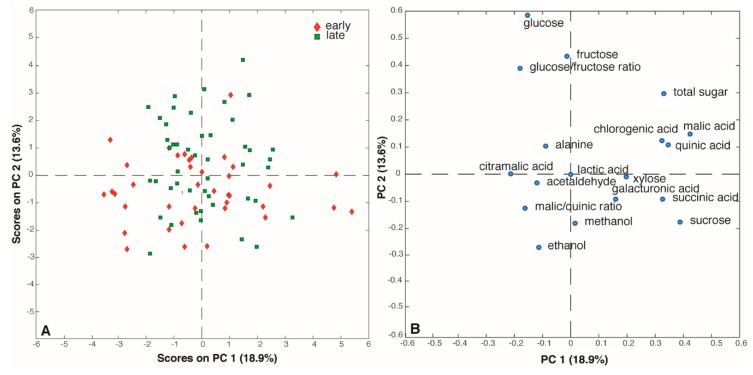
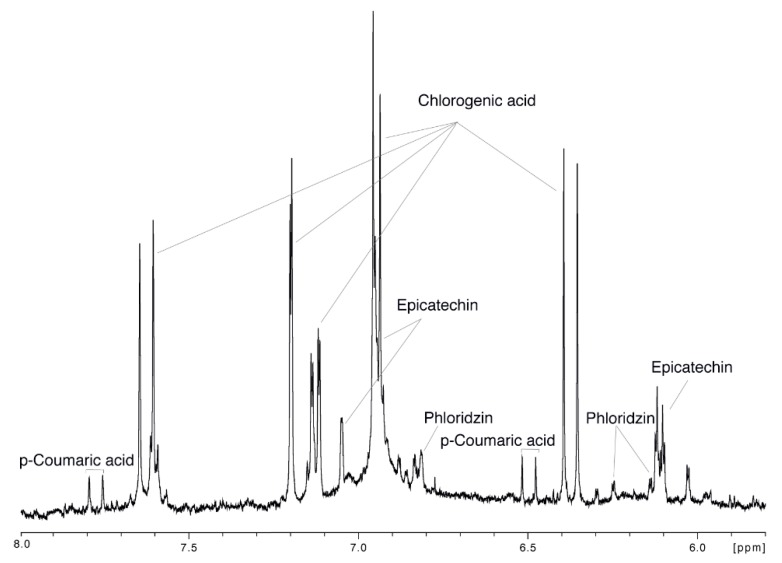
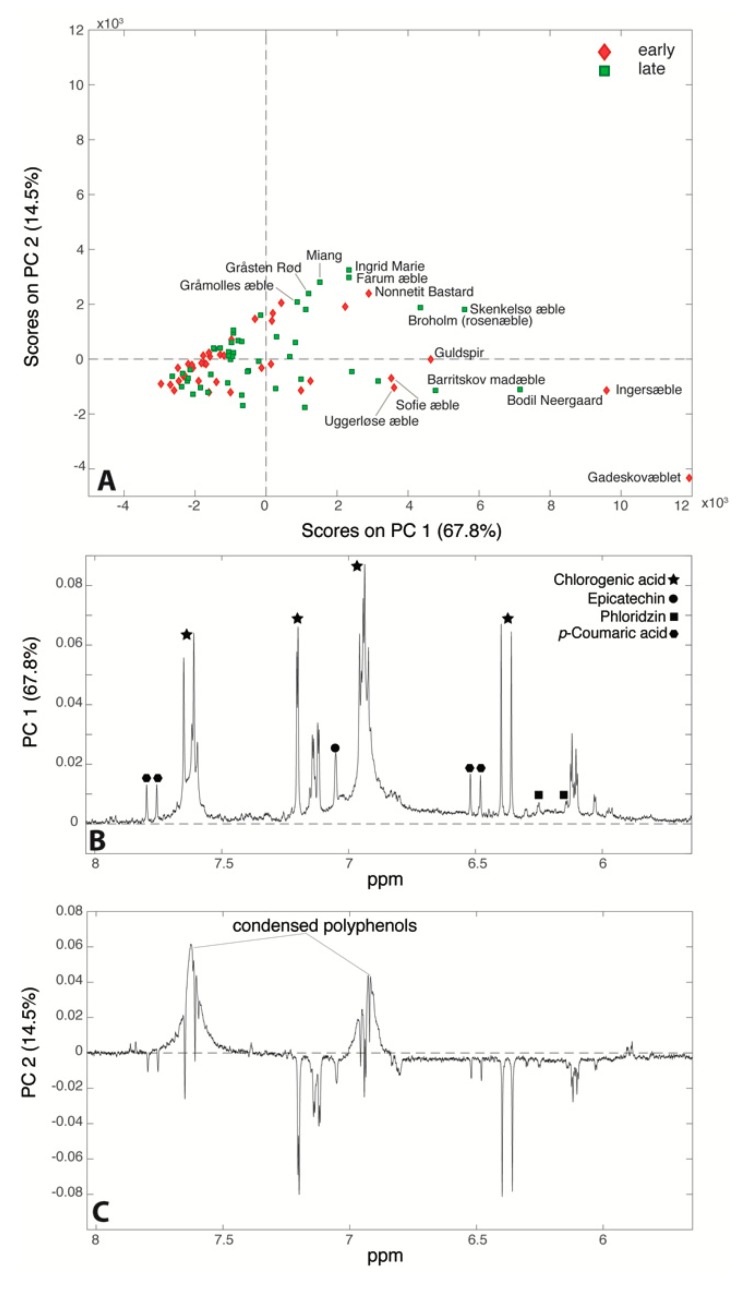
In recent decades, intensive selective breeding programs have allowed the development of disease-resistant and flavorsome apple cultivars while leading to a gradual decline of a large number of ancient varieties in many countries. However, the re-evaluation of such cultivars could lead to the production new apple-based products with health beneficial properties and/or unique flavor qualities. Herein, we report the comprehensive characterization of juices obtained from 86 old, mostly Danish, apple cultivars, by employing traditional analysis (ion chromatography, °Brix, headspace gas chromatography/mass spectrometry (GC-MS), and panel test evaluation) as well as an innovative nuclear magnetic resonance (NMR)-based screening method developed by Bruker for fruit juices, known as Spin Generated Fingerprint (SGF) Profiling™. Principal component analysis showed large differences in aroma components and sensory characteristics, including odd peculiar odors and flavors such as apricot and peach, and very different levels of phenolic compounds, acids and sugars among the analyzed juices. Moreover, we observed a tendency for late-season juices to be characterized by higher °Brix values, sugar content and they were perceived to be sweeter and more flavor intense than early-season juices. Our findings are useful for the production of specialty vintage-cultivar apple juices or mixed juices to obtain final products that are characterized both by healthy properties and peculiar sensory attributes.
近几十年来,密集的选择性育种计划培育出了抗病且美味的苹果品种,但同时也导致许多国家大量古老品种逐渐减少。然而,对这些品种进行重新评估可能会催生出具有有益健康特性和/或独特风味品质的新型苹果基产品。在此,我们报告了对86种古老苹果品种(大多来自丹麦)的果汁进行全面表征的结果,采用了传统分析方法(离子色谱法、波美度、顶空气相色谱/质谱联用仪(GC-MS)和感官测试评估)以及布鲁克公司开发的一种基于核磁共振(NMR)的创新型果汁筛选方法,即自旋生成指纹图谱(SGF)分析™。主成分分析表明,在分析的果汁中,香气成分和感官特征存在很大差异,包括一些奇特的气味和风味,如杏味和桃味,以及酚类化合物、酸和糖的含量水平也大不相同。此外,我们观察到,晚季果汁往往具有较高的波美度值和含糖量,且与早季果汁相比,它们被认为更甜、风味更浓郁。我们的研究结果有助于生产特色年份品种苹果汁或混合果汁,以获得兼具健康特性和独特感官属性的最终产品。