Di Matteo Giacomo, Spano Mattia, Esposito Cristina, Santarcangelo Cristina, Baldi Alessandra, Daglia Maria, Mannina Luisa, Ingallina Cinzia, Sobolev Anatoly P
Department of Chemistry and Technology of Drugs, Sapienza University of Rome, Piazzale Aldo Moro 5, 00185 Rome, Italy.
Department of Pharmacy, University of Naples Federico II, 80138 Naples, Italy.
Foods. 2021 Feb 1;10(2):289. doi: 10.3390/foods10020289.
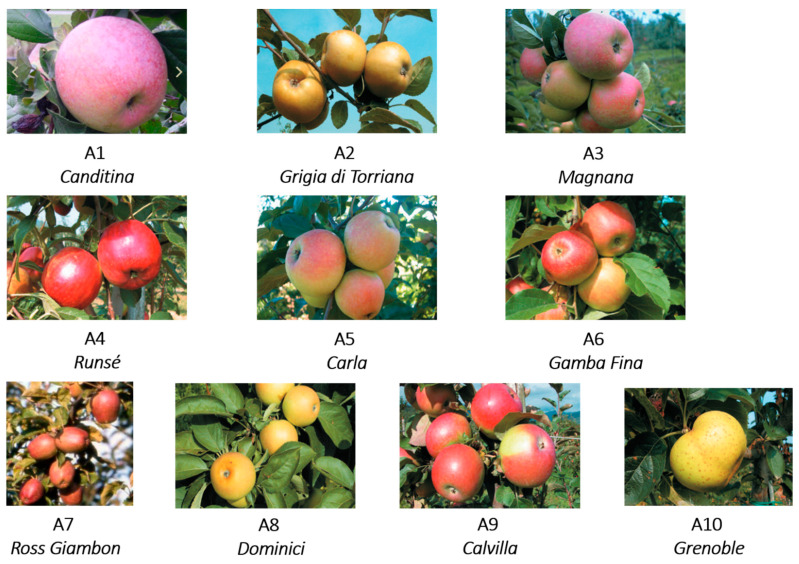
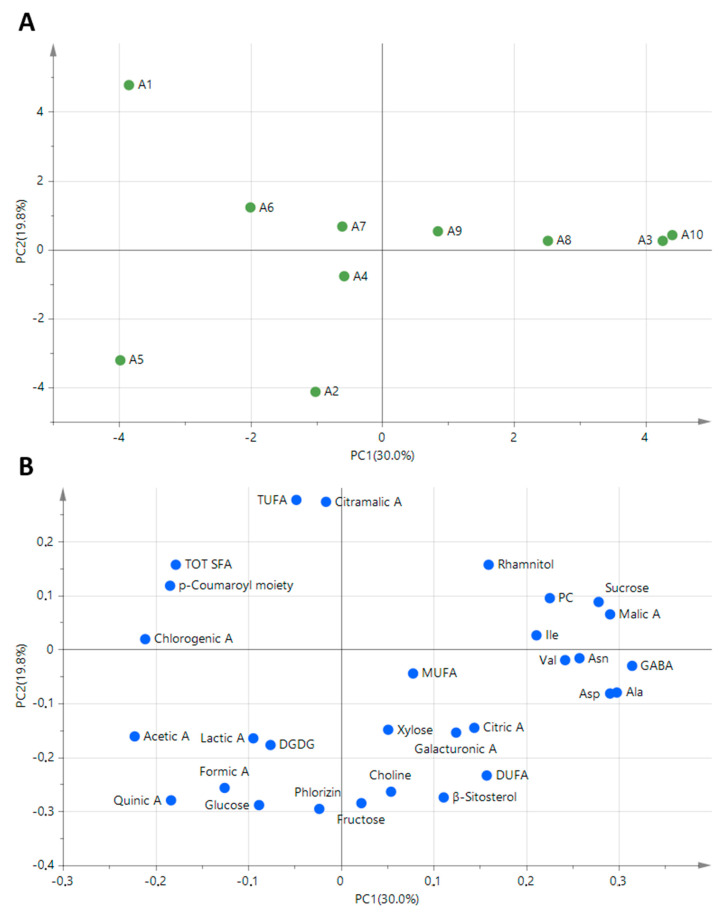
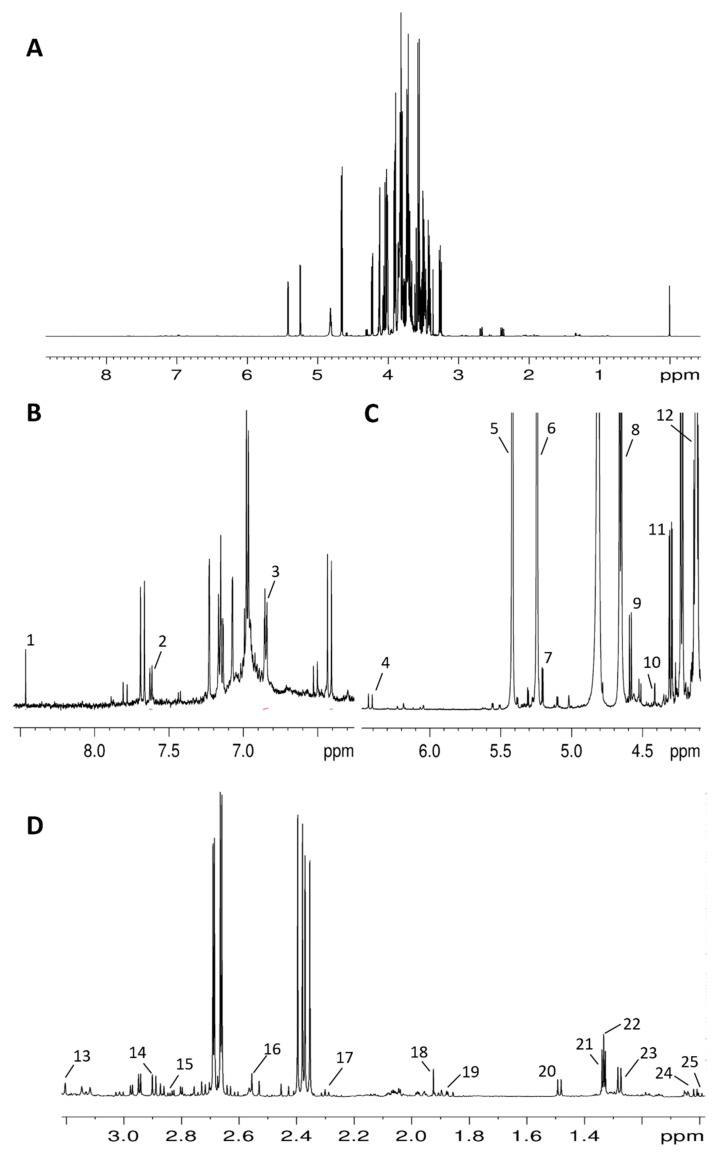
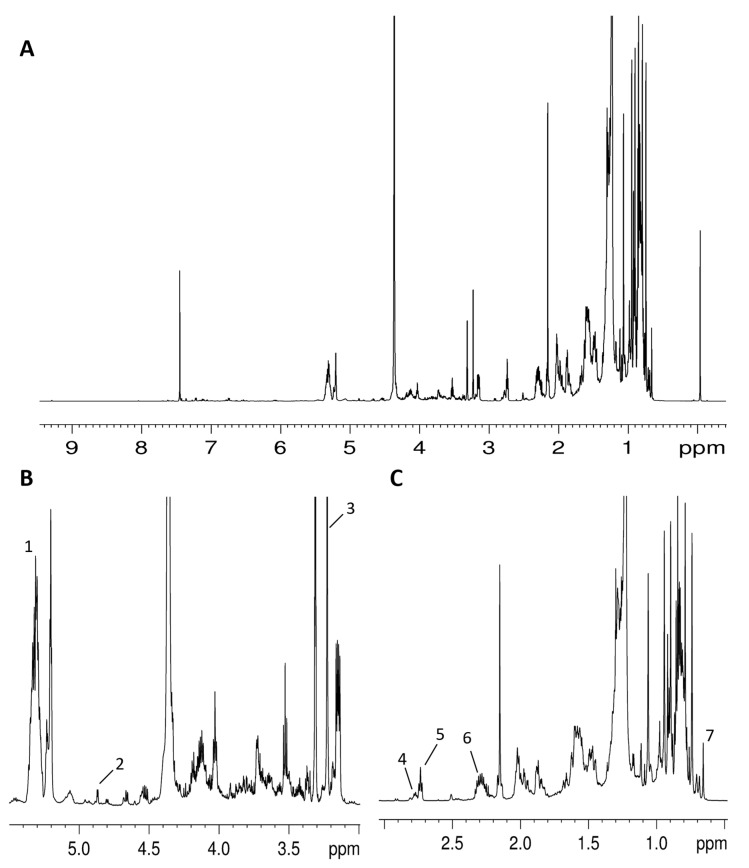
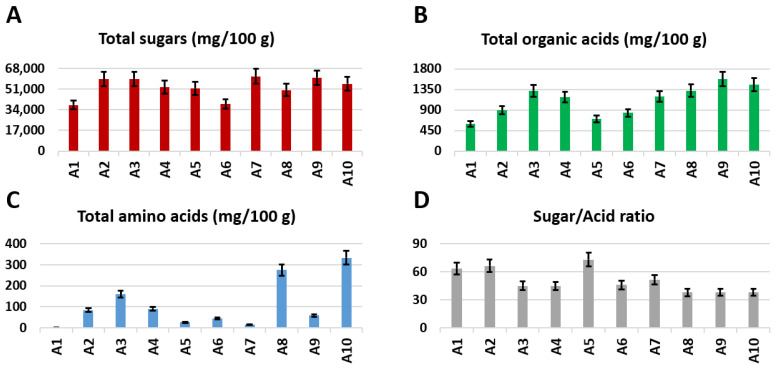
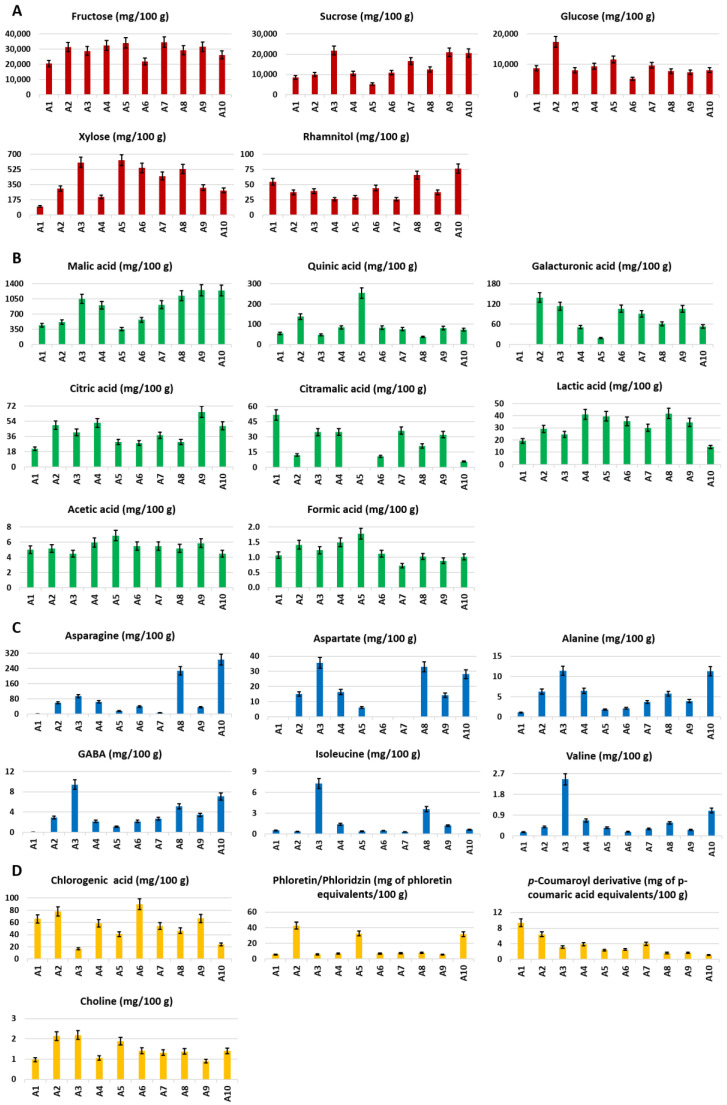
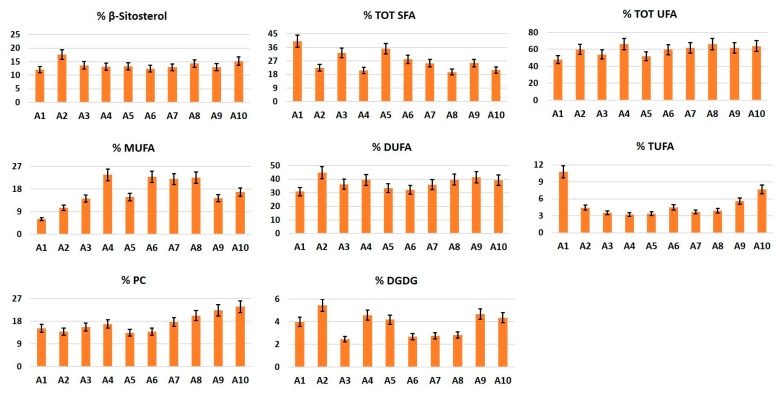
The metabolite profile of ten traditional apple cultivars grown in the Piedmont region (Italy) was studied by means of nuclear magnetic resonance spectroscopy, identifying an overall number of 36 compounds. A more complete assignment of the proton nuclear magnetic resonance (H NMR) resonances from hydroalcoholic and organic apple extracts with respect to literature data was reported, identifying fructose tautomeric forms, galacturonic acid, γ-aminobutyric acid (GABA), -coumaroyl moiety, phosphatidylcholine, and digalactosyldiacylglycerol. The chemical profile of each apple cultivar was defined by thorough quantitative NMR analysis of four sugars (fructose, glucose, sucrose, and xylose), nine organic acids (acetic, citric, formic, citramalic, lactic, malic, quinic, and galacturonic acids), six amino acids (alanine, asparagine, aspartate, GABA, isoleucine, and valine), rhamnitol, -coumaroyl derivative, phloretin/phloridzin and choline, as well as β-sitosterol, fatty acid chains, phosphatidylcholine, and digalactosyldiacylglycerol. Finally, the application of PCA analysis allowed us to highlight possible differences/similarities. The Magnana cultivar showed the highest content of sugars, GABA, valine, isoleucine, and alanine. The Runsé cultivar was characterized by high amounts of organic acids, whereas the Gamba Fina cultivar showed a high content of chlorogenic acid. A significant amount of quinic acid was detected in the Carla cultivar. The knowledge of apple chemical profiles can be useful for industries interested in specific compounds for obtaining ingredients of food supplements and functional foods and for promoting apple valorization and preservation.
通过核磁共振光谱法研究了意大利皮埃蒙特地区种植的10个传统苹果品种的代谢物谱,共鉴定出36种化合物。与文献数据相比,本研究对苹果水醇提取物和有机提取物中的质子核磁共振(H NMR)共振进行了更完整的归属,鉴定出了果糖互变异构体形式、半乳糖醛酸、γ-氨基丁酸(GABA)、对香豆酰部分、磷脂酰胆碱和二半乳糖基二酰基甘油。通过对四种糖(果糖、葡萄糖、蔗糖和木糖)、九种有机酸(乙酸、柠檬酸、甲酸、柠苹酸、乳酸、苹果酸、奎宁酸和半乳糖醛酸)、六种氨基酸(丙氨酸、天冬酰胺、天冬氨酸、GABA、异亮氨酸和缬氨酸)、鼠李糖醇、对香豆酰衍生物、根皮素/根皮苷和胆碱,以及β-谷甾醇、脂肪酸链、磷脂酰胆碱和二半乳糖基二酰基甘油进行全面的定量核磁共振分析,确定了每个苹果品种的化学谱。最后,主成分分析(PCA)的应用使我们能够突出可能存在的差异/相似性。Magnana品种的糖、GABA、缬氨酸、异亮氨酸和丙氨酸含量最高。Runsé品种的特点是含有大量有机酸,而Gamba Fina品种的绿原酸含量很高。在Carla品种中检测到大量奎宁酸。了解苹果的化学谱对于对特定化合物感兴趣以获取食品补充剂和功能性食品成分的行业,以及促进苹果的增值和保鲜可能会有所帮助。