Nnamani Amuche, Akabogu Josephine, Otu Mkpoikanke Sunday, Uloh-Bethels Annah C, Ukoha Evelyn, Iyekekpolor Olayinka M, Omile Jacinta Chinwe, Obiezu Maureen Nnenna, Dike Anastasia E, Ike Chioma Vivian, Otu Favour Mkpoikanke, Eseadi Chiedu
Department of Arts Education.
Department of Educational Foundations, University of Nigeria, Nsukka.
Medicine (Baltimore). 2019 Aug;98(31):e16550. doi: 10.1097/MD.0000000000016550.
BACKGROUND/OBJECTIVE: Studies show the need for improved communication and social skills of adolescents with autism spectrum disorders (ASDs). Therefore, the present study aimed to analyze the effect of using rational-emotive language education (RELE) to pursue this need for adolescents in Nigeria.
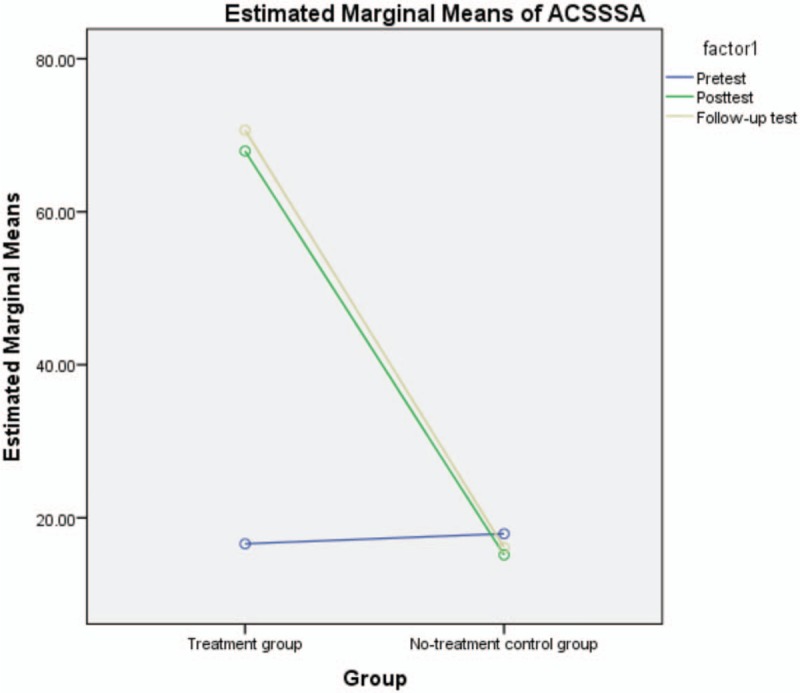
The design of the study was a group randomized trial, with pretest, post-test, and follow-up. Sixty-eight adolescents with ASDs participated in the study. Autism Communication and Social Skills Scale for Adolescent (ACSSSA) was used for data collection. The method of data analysis in the study was repeated measures ANOVA procedure, with Partial eta squared ((Equation is included in full-text article.)), adjusted R, mean, standard deviation, and upper/lower limit.
The RELE program significantly improved communication and social skills of adolescents with ASDs exposed to the treatment intervention when compared with waitlist control group.
Exposure to RELE significantly improved communication and social skills of adolescents with ASDs in this study. Therefore, we recommend that language educators, speech pathologists, language therapists, special educators and counsellors, and other professionals involved in the treatment and caring for ASDs patients be trained on the application of the RELE technique so as to enable them to employ the program in their professional practices.
背景/目的:研究表明,自闭症谱系障碍(ASD)青少年需要提高沟通和社交技能。因此,本研究旨在分析使用理性情绪语言教育(RELE)来满足尼日利亚青少年这一需求的效果。
本研究采用组随机试验设计,包括前测、后测和随访。68名患有自闭症谱系障碍的青少年参与了该研究。使用青少年自闭症沟通与社交技能量表(ACSSSA)进行数据收集。本研究的数据分析方法是重复测量方差分析程序,包括偏 eta 平方((公式包含在全文中。))、调整后的 R、均值、标准差以及上限/下限。
与等待名单对照组相比,接受治疗干预的自闭症谱系障碍青少年的理性情绪语言教育(RELE)项目显著提高了他们的沟通和社交技能。
在本研究中,接触理性情绪语言教育(RELE)显著提高了自闭症谱系障碍青少年的沟通和社交技能。因此,我们建议对语言教育工作者、言语病理学家、语言治疗师、特殊教育工作者和咨询师以及其他参与自闭症谱系障碍患者治疗和护理的专业人员进行理性情绪语言教育(RELE)技术应用方面的培训,以便他们能够在专业实践中运用该项目。