Antidote Therapeutics, Inc, 708 Quince Orchard Road, Suite 250-C, Gaithersburg, MD, 20878, USA.
Department of Molecular Biosciences, The University of Texas at Austin, Austin, TX, USA.
BMC Biotechnol. 2019 Aug 2;19(1):56. doi: 10.1186/s12896-019-0551-5.
Smoking and tobacco use continue to be the largest preventable causes of death globally. A novel therapeutic approach has recently been proposed: administration of an enzyme that degrades nicotine, the main addictive component of tobacco, minimizing brain exposure and reducing its reinforcing effects. Pre-clinical proof of concept has been previously established through dosing the amine oxidase NicA2 from Pseudomonas putida in rat nicotine self-administration models of addiction.
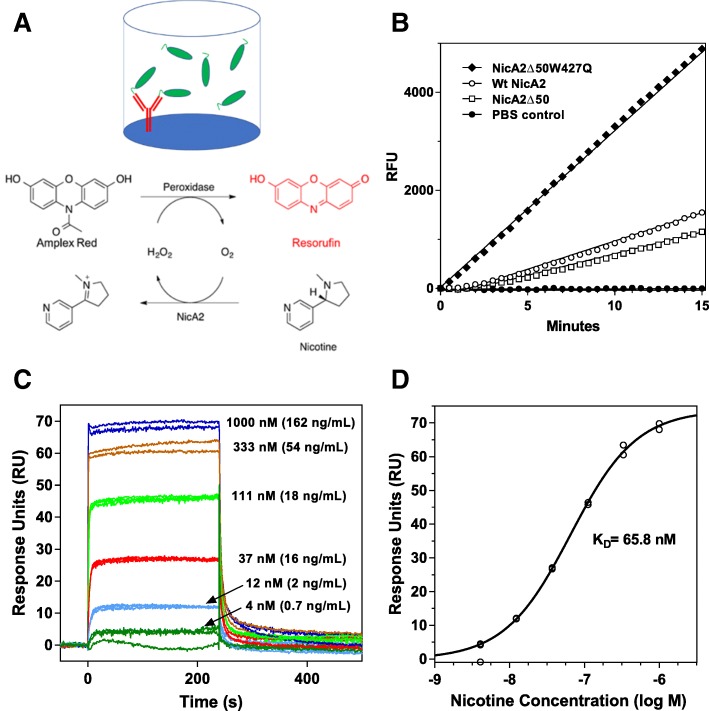
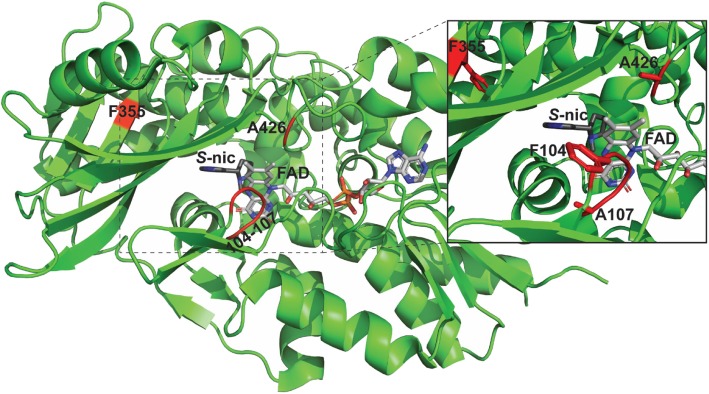
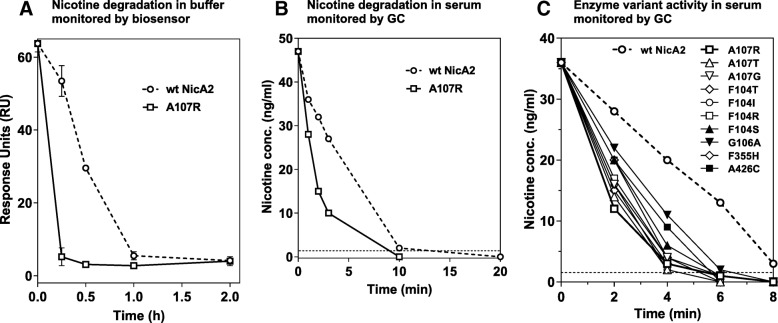
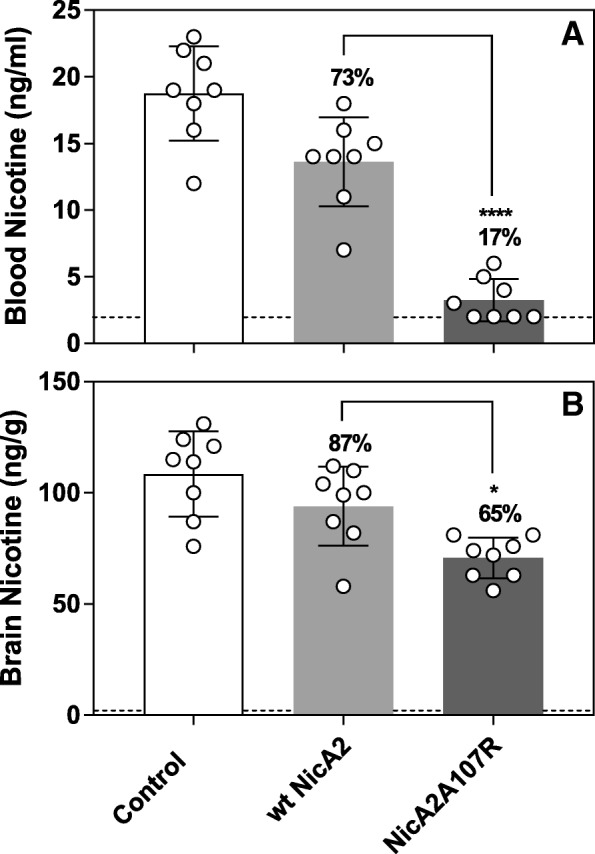
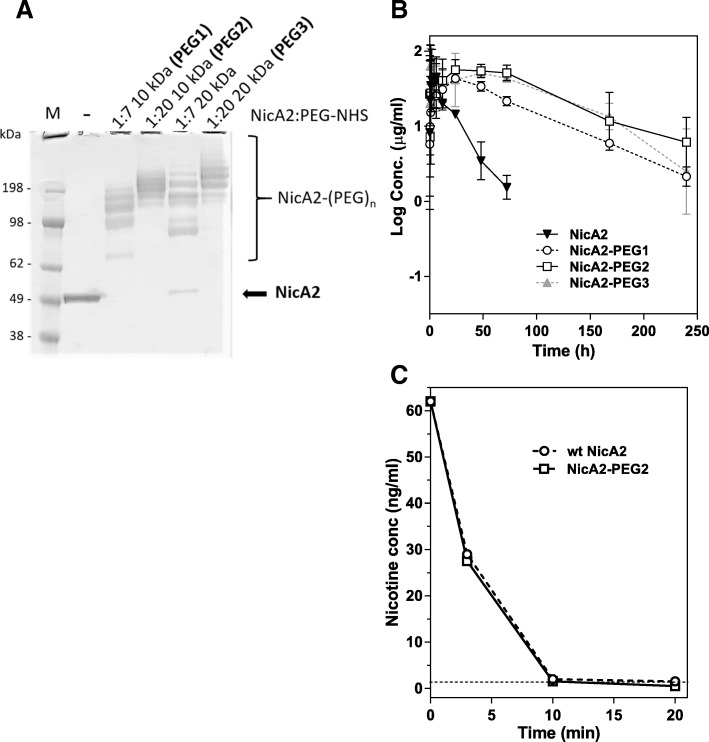
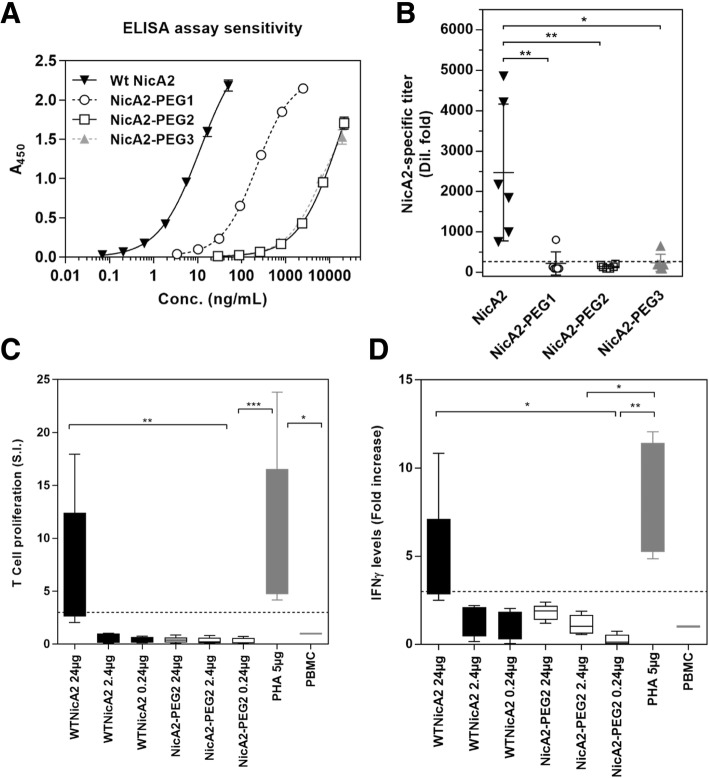
This paper describes efforts towards optimizing NicA2 for potential therapeutic use: enhancing potency, improving its pharmacokinetic profile, and attenuating immunogenicity. Libraries randomizing residues located in all 22 active site positions of NicA2 were screened. 58 single mutations with 2- to 19-fold enhanced catalytic activity compared to wt at 10 μM nicotine were identified. A novel nicotine biosensor assay allowed efficient screening of the many primary hits for activity at nicotine concentrations typically found in smokers. 10 mutants with improved activity in rat serum at or below 250 nM were identified. These catalytic improvements translated to increased potency in vivo in the form of further lowering of nicotine blood levels and nicotine accumulation in the brains of Sprague-Dawley rats. Examination of the X-ray crystal structure suggests that these mutants may accelerate the rate limiting re-oxidation of the flavin adenine dinucleotide cofactor by enhancing molecular oxygen's access. PEGylation of NicA2 led to prolonged serum half-life and lowered immunogenicity observed in a human HLA DR4 transgenic mouse model, without impacting nicotine degrading activity.
Systematic mutational analysis of the active site of the nicotine-degrading enzyme NicA2 has yielded 10 variants that increase the catalytic activity and its effects on nicotine distribution in vivo at nicotine plasma concentrations found in smokers. In addition, PEGylation substantially increases circulating half-life and reduces the enzyme's immunogenic potential. Taken together, these results provide a viable path towards generation of a drug candidate suitable for human therapeutic use in treating nicotine addiction.
吸烟和烟草使用仍然是全球最大的可预防死因。最近提出了一种新的治疗方法:给予一种能降解尼古丁的酶,尼古丁是烟草的主要成瘾成分,从而减少大脑暴露并降低其强化作用。以前已经通过在大鼠尼古丁自我给药成瘾模型中给予假单胞菌属中的胺氧化酶 NicA2 来证明临床前概念的合理性。
本文描述了为潜在治疗用途而对 NicA2 进行优化的努力:提高效力、改善其药代动力学特性和减轻免疫原性。对位于 NicA2 所有 22 个活性位点的残基进行随机化的文库进行了筛选。在 10 μM 尼古丁浓度下,与野生型相比,有 58 个单突变体的催化活性提高了 2 到 19 倍。一种新的尼古丁生物传感器测定法允许有效地筛选许多在吸烟者中通常发现的尼古丁浓度下具有活性的初筛化合物。在 250 nM 或以下的大鼠血清中,有 10 个突变体的活性得到改善。这些催化改进在体内表现为进一步降低尼古丁的血液水平和在 Sprague-Dawley 大鼠脑中的尼古丁积累,从而提高了效力。对 X 射线晶体结构的检查表明,这些突变体可能通过增强分子氧的进入来加速黄素腺嘌呤二核苷酸辅因子的限速再氧化。NicA2 的聚乙二醇化导致在人类 HLA DR4 转基因小鼠模型中观察到的血清半衰期延长和免疫原性降低,而不影响尼古丁降解活性。
对尼古丁降解酶 NicA2 的活性位点进行系统的突变分析,得到了 10 个变体,这些变体提高了催化活性及其在吸烟者体内发现的尼古丁血浆浓度下对尼古丁分布的影响。此外,聚乙二醇化大大增加了循环半衰期并降低了酶的免疫原性。总之,这些结果为生成适合人类治疗尼古丁成瘾的候选药物提供了可行的途径。