Sorbonne Université, INSERM, Saint-Antoine Research Center (CRSA), Paris, France.
INRA, UMR1319 Micalis, AgroParisTech, Jouy-en-Josas, France.
Microbiome. 2019 Aug 2;7(1):111. doi: 10.1186/s40168-019-0725-3.
Normal mammalian development and homeostasis are dependent upon the gut microbiota. Antibiotics, essential for the treatment and prophylaxis of bacterial infections, can have collateral effects on the gut microbiota composition, which can in turn have far-reaching and potentially deleterious consequences for the host. However, the magnitude and duration of such collateral effects appear to vary between individuals. Furthermore, the degree to which such perturbations affect the host response is currently unclear. We aimed to test the hypothesis that different human microbiomes have different responses to a commonly prescribed antibiotic and that these differences may impact the host response.
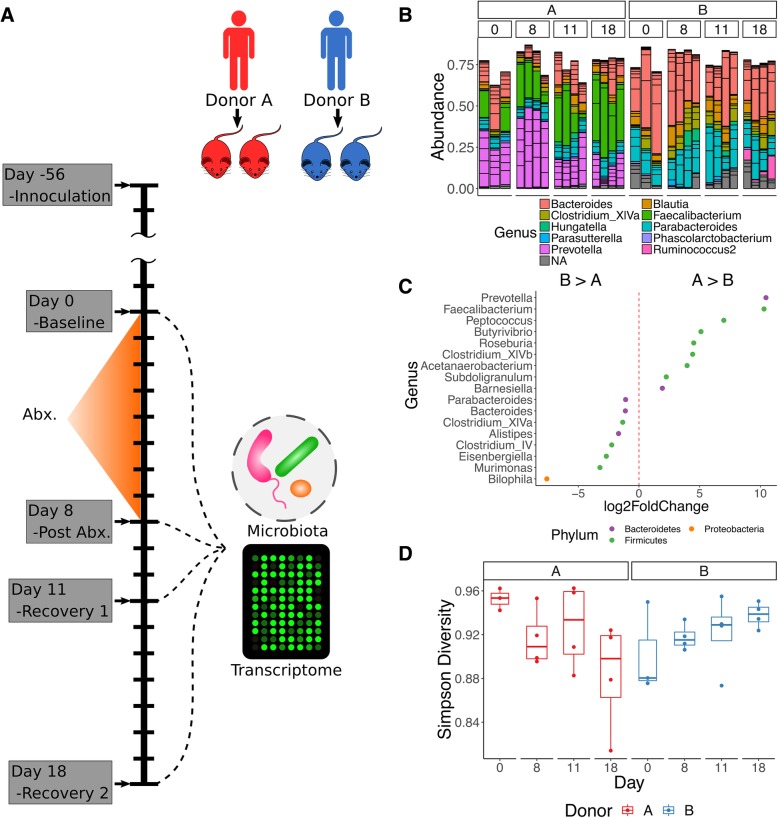
Germ-free mice (n = 30) humanized with the microbiota of two unrelated donors (A and B) were subjected to a 7-day antibiotic challenge with amoxicillin-clavulanate ("co-amoxiclav"). Microbiome and colonic transcriptome analysis was performed, pre (day 0) and post antibiotics (day 8) and subsequently into recovery (days 11 and 18).
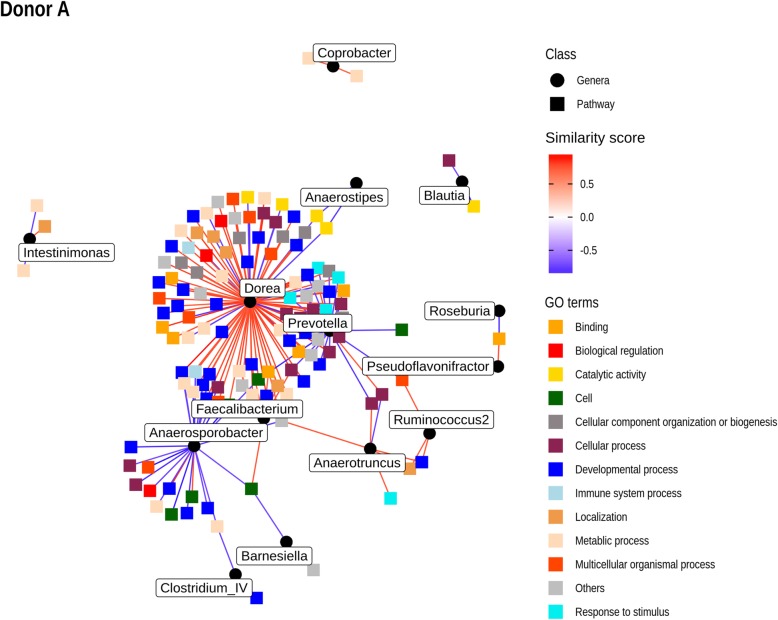
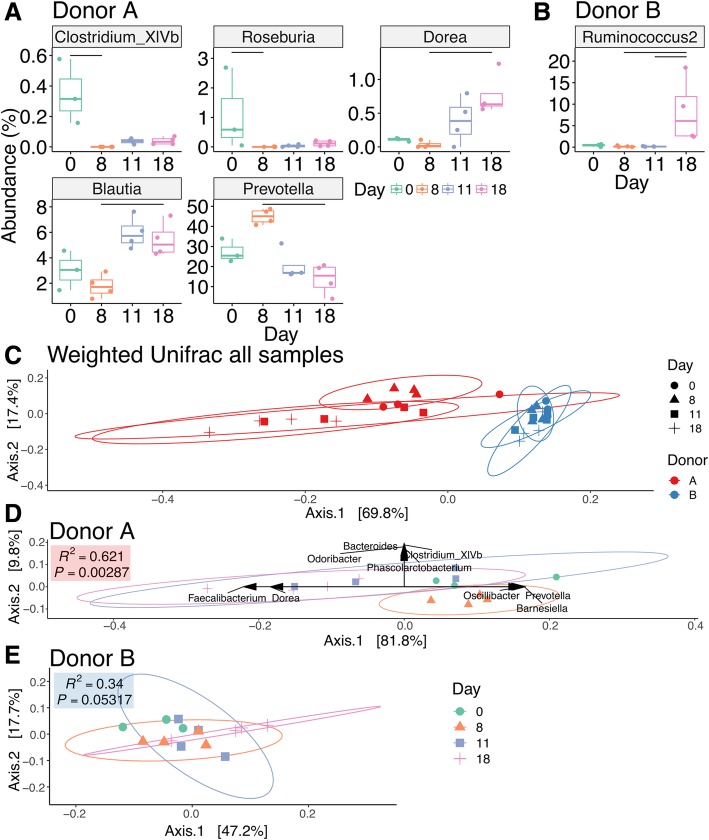
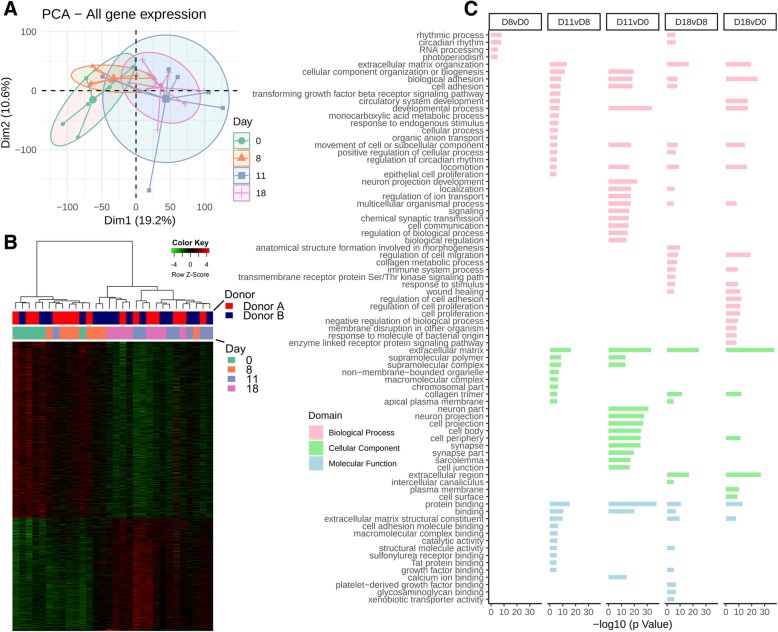
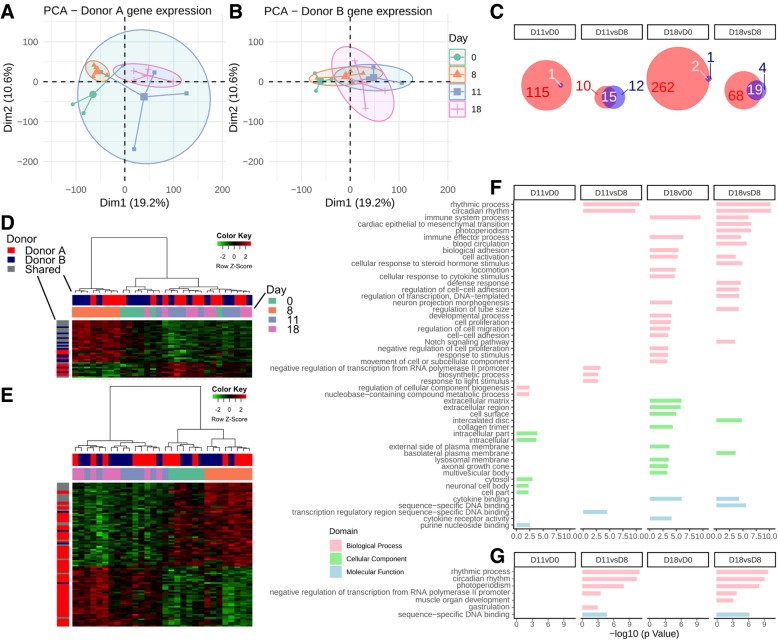
Unique community profiles were evident depending upon the donor, with donor A recipient mice being dominated by Prevotella and Faecalibacterium and donor B recipient mice dominated by Bacteroides and Parabacteroides. Donor A mice underwent a marked destabilization of their microbiota following antibiotic treatment, while donor B mice maintained a more stable profile. Dramatic and overlapping alterations in the host transcriptome were apparent following antibiotic challenge in both groups. Despite this overlap, donor A mice experienced a more significant alteration in gene expression and uniquely showed correlations between host pathways and key microbial genera.
Germ-free mice humanized by different donor microbiotas maintain distinct microbiome profiles, which respond in distinct ways to antibiotic challenge and evince host responses that parallel microbiome disequilibrium. These results suggest that inter-individual variation in the gut microbiota may contribute to personalized host responses following microbiota perturbation.
正常的哺乳动物发育和内稳态依赖于肠道微生物群。抗生素是治疗和预防细菌感染的重要药物,但它会对肠道微生物群的组成产生副作用,而这些副作用反过来又会对宿主产生深远且潜在有害的影响。然而,这种副作用的程度和持续时间似乎因人而异。此外,这种干扰对宿主反应的影响程度目前尚不清楚。我们旨在检验以下假设:不同的人类微生物组对一种常用的抗生素有不同的反应,这些差异可能会影响宿主的反应。
使用来自两个无关供体(A 和 B)的微生物组对无菌小鼠(n = 30)进行人源化处理,并用阿莫西林-克拉维酸(“复方阿莫西林”)进行为期 7 天的抗生素挑战。在抗生素前(第 0 天)和后(第 8 天)以及随后的恢复阶段(第 11 天和第 18 天)进行微生物组和结肠转录组分析。
根据供体的不同,出现了独特的群落图谱,供体 A 受体小鼠以普雷沃氏菌属和粪杆菌属为主,供体 B 受体小鼠以拟杆菌属和副拟杆菌属为主。抗生素治疗后,供体 A 小鼠的微生物群发生了明显的不稳定,而供体 B 小鼠则保持了更稳定的图谱。两组抗生素挑战后,宿主转录组均出现了明显且重叠的改变。尽管存在这种重叠,但供体 A 小鼠的基因表达发生了更为显著的改变,并且独特地显示了宿主途径与关键微生物属之间的相关性。
由不同供体微生物组人源化的无菌小鼠维持着不同的微生物组图谱,它们对抗生素挑战的反应方式不同,并表现出与微生物组失衡相平行的宿主反应。这些结果表明,肠道微生物组的个体间差异可能导致菌群扰动后宿主反应的个体化。