Draper Lorraine A, Ryan Feargal J, Dalmasso Marion, Casey Pat G, McCann Angela, Velayudhan Vimalkumar, Ross R Paul, Hill Colin
APC Microbiome Ireland, University College Cork, Cork, Ireland.
School of Microbiology, University College Cork, Cork, Ireland.
BMC Biol. 2020 Nov 20;18(1):173. doi: 10.1186/s12915-020-00906-0.
It has become increasingly accepted that establishing and maintaining a complex and diverse gut microbiota is fundamental to human health. There are growing efforts to identify means of modulating and influencing the microbiota, especially in individuals who have experienced a disruption in their native microbiota. Faecal microbiota transplantation (FMT) is one method that restores diversity to the microbiota of an individual by introducing microbes from a healthy donor. FMT introduces the total microbial load into the recipient, including the bacteria, archaea, yeasts, protists and viruses. In this study, we investigated whether an autochthonous faecal viral transfer (FVT), in the form of a sterile faecal filtrate, could impact the recovery of a bacteriome disrupted by antibiotic treatment.
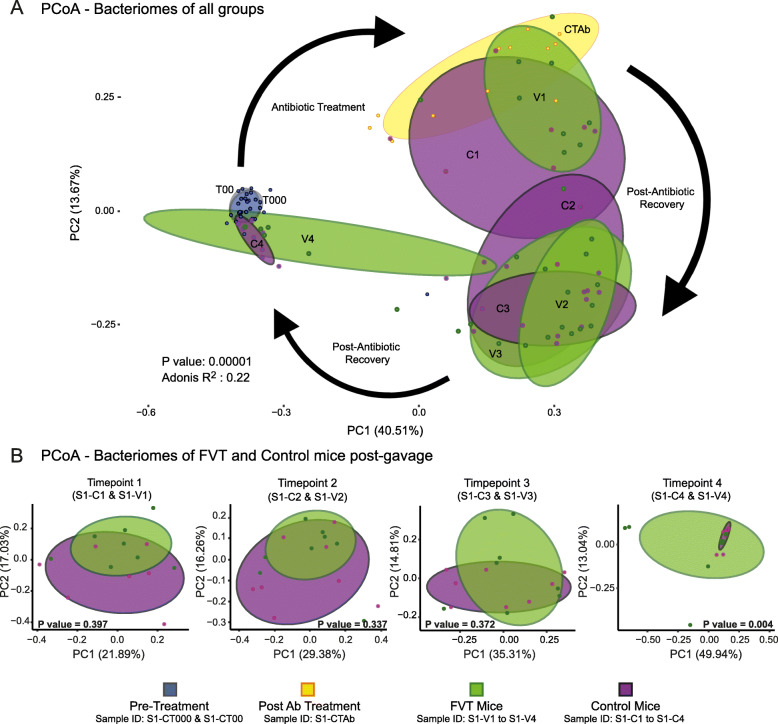
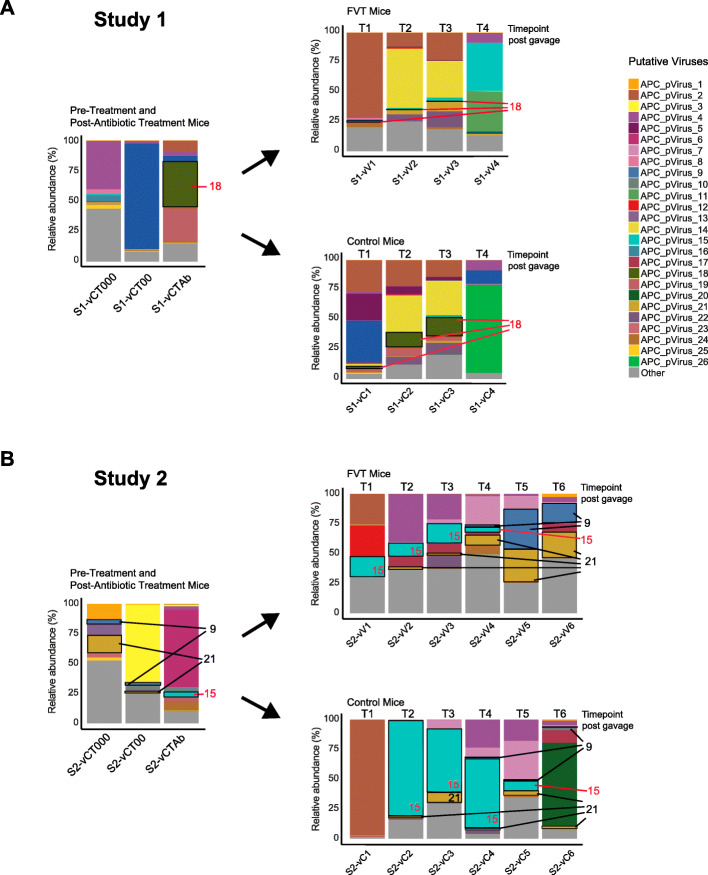
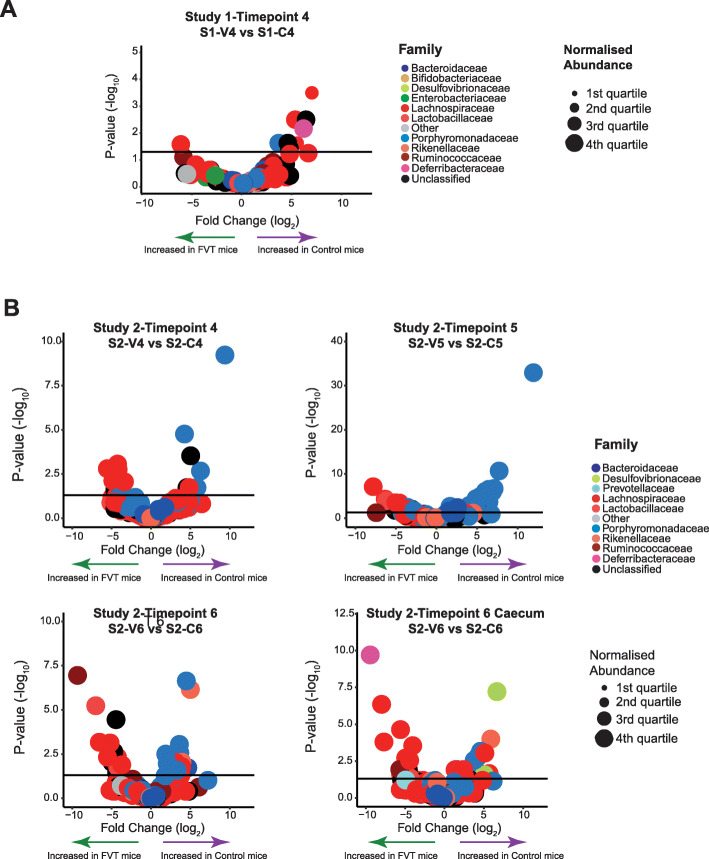
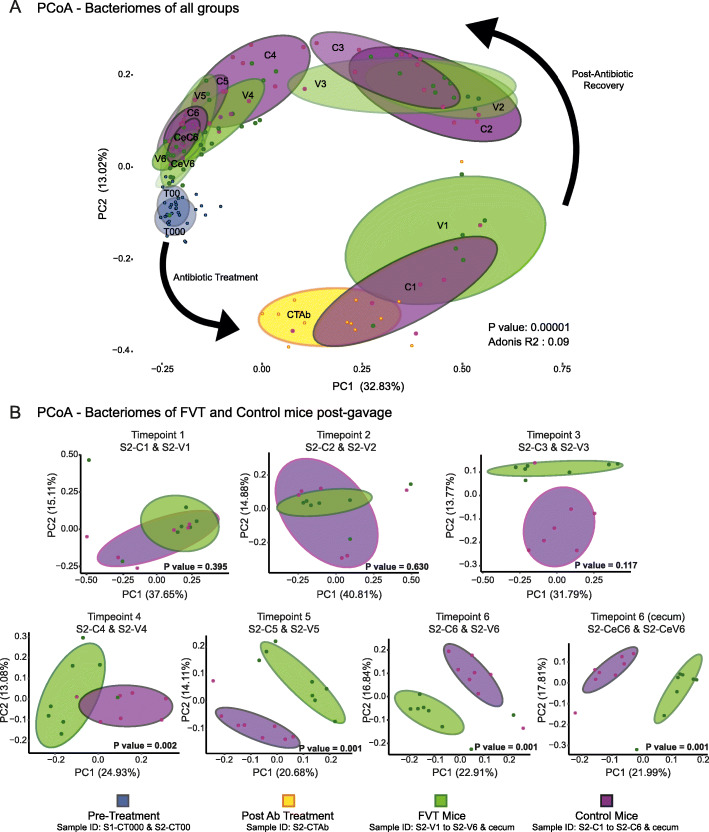
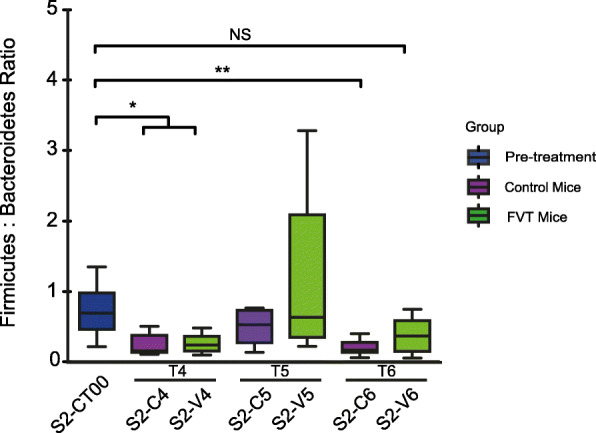
Following antibiotic disruption of the bacteriome, test mice received an FVT harvested prior to antibiotic treatment, while control mice received a heat- and nuclease-treated FVT. In both groups of mice, the perturbed microbiome reverted over time to one more similar to the pre-treatment one. However, the bacteriomes of mice that received an FVT, in which bacteriophages predominate, separated from those of the control mice as determined by principal co-ordinate analysis (PCoA). Moreover, analysis of the differentially abundant taxa indicated a closer resemblance to the pre-treatment bacteriome in the test mice that had received an FVT. Similarly, metagenomic sequencing of the virome confirmed that faecal bacteriophages of FVT and control mice differed over time in both abundance and diversity, with the phages constituting the FVT persisting in mice that received them.
An autochthonous virome transfer reshaped the bacteriomes of mice post-antibiotic treatment such that they more closely resembled the pre-antibiotic microbiota profile compared to mice that received non-viable phages. Thus, FVT may have a role in addressing antibiotic-associated microbiota alterations and potentially prevent the establishment of post-antibiotic infection. Given that bacteriophages are biologically inert in the absence of their host bacteria, they could form a safe and effective alternative to whole microbiota transplants that could be delivered during/following perturbation of the gut flora.
建立并维持复杂多样的肠道微生物群对于人类健康至关重要,这一观点已越来越被人们所接受。人们越来越努力地去寻找调节和影响微生物群的方法,尤其是在那些原生微生物群已受到破坏的个体中。粪便微生物群移植(FMT)是一种通过引入健康供体的微生物来恢复个体微生物群多样性的方法。FMT将包括细菌、古菌、酵母、原生生物和病毒在内的全部微生物负荷引入受体。在本研究中,我们调查了以无菌粪便滤液形式进行的自体粪便病毒转移(FVT)是否会影响因抗生素治疗而被破坏的细菌群落的恢复。
在细菌群落被抗生素破坏后,试验小鼠接受了在抗生素治疗前采集的FVT,而对照小鼠接受了经过加热和核酸酶处理的FVT。在两组小鼠中,受干扰的微生物群随时间推移恢复到更接近治疗前的状态。然而,通过主坐标分析(PCoA)确定,接受以噬菌体为主的FVT的小鼠的细菌群落与对照小鼠的细菌群落分离。此外,对差异丰富的分类群的分析表明,接受FVT的试验小鼠的细菌群落与治疗前的细菌群落更相似。同样,病毒组的宏基因组测序证实,FVT小鼠和对照小鼠的粪便噬菌体在丰度和多样性上随时间变化不同,构成FVT的噬菌体在接受它们的小鼠中持续存在。
自体病毒组转移重塑了抗生素治疗后小鼠的细菌群落,使其比接受无活性噬菌体的小鼠更接近抗生素治疗前的微生物群特征。因此,FVT可能在解决抗生素相关的微生物群改变以及潜在预防抗生素后感染的建立方面发挥作用。鉴于噬菌体在没有宿主细菌的情况下是无生物活性的,它们可以成为在肠道菌群受到干扰期间/之后进行的全微生物群移植的一种安全有效的替代方法。