Center for Epigenomics and Department of Genetics (Division of Genomics), Albert Einstein College of Medicine, 1301 Morris Park Avenue, Bronx, NY, 10461, USA.
Nat Commun. 2019 Aug 2;10(1):3472. doi: 10.1038/s41467-019-11412-5.
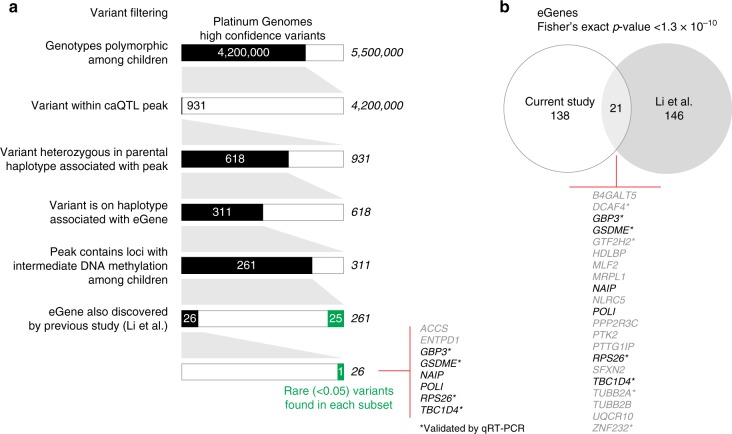
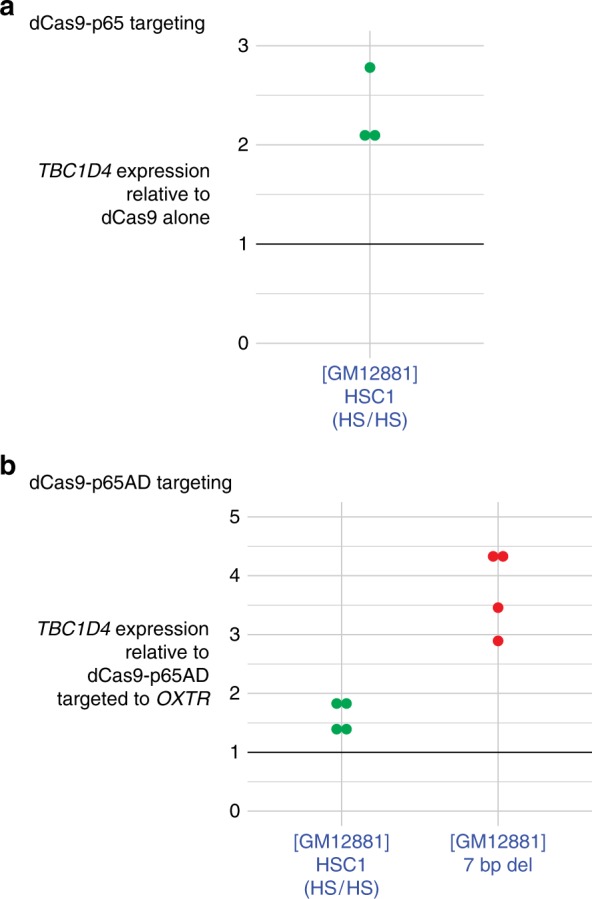
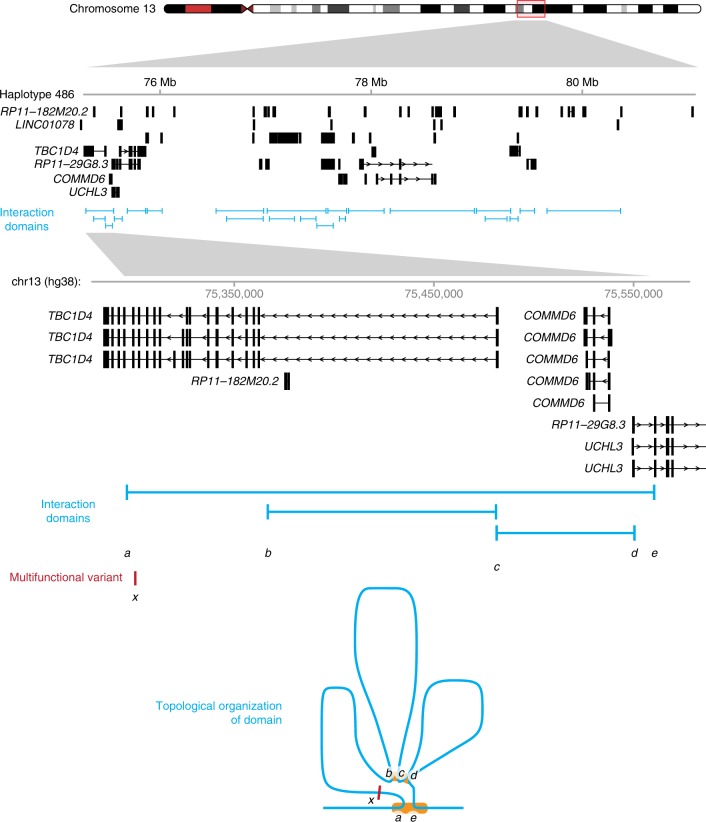
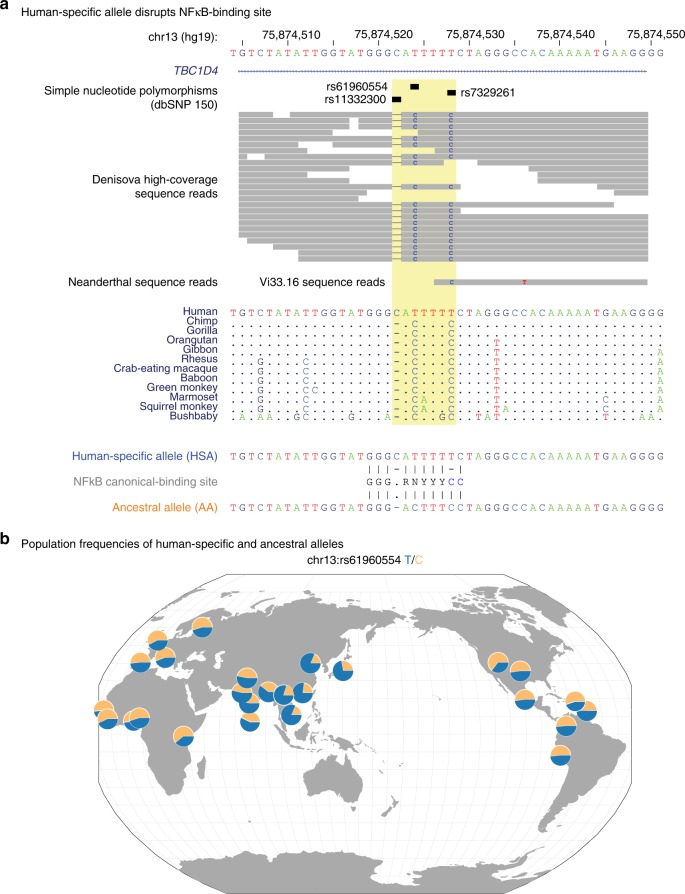
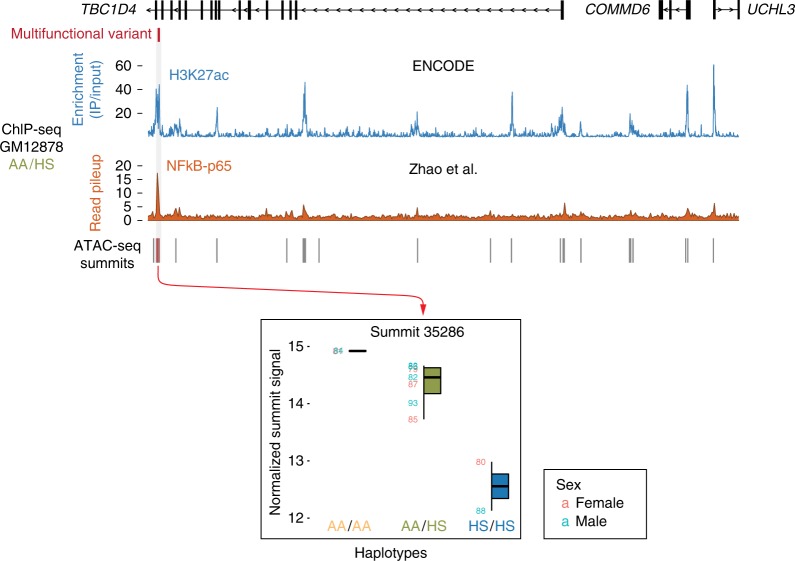
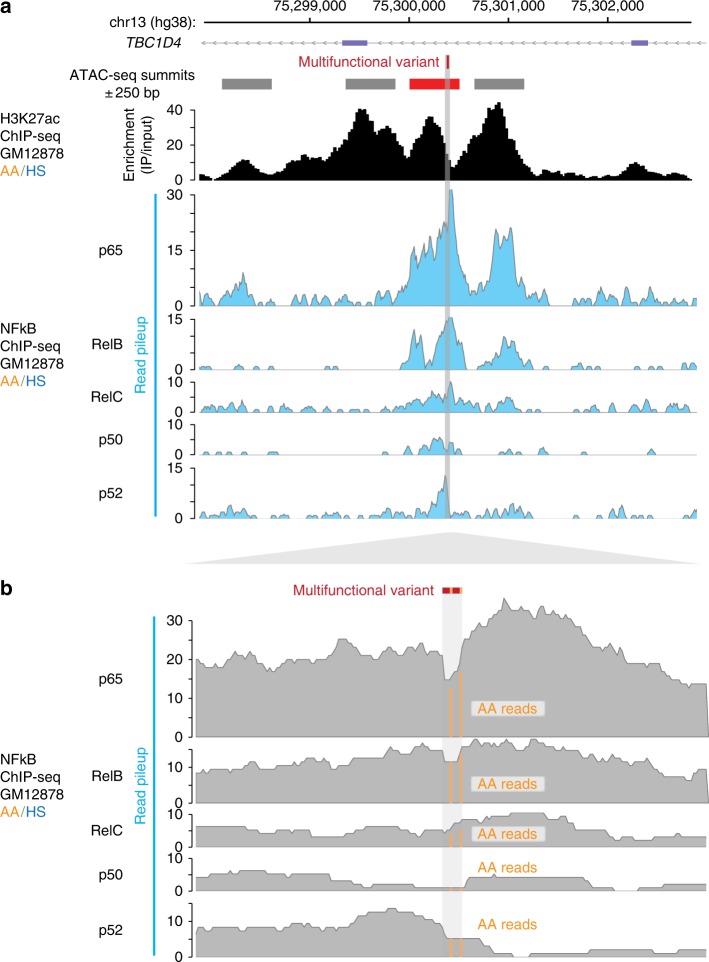
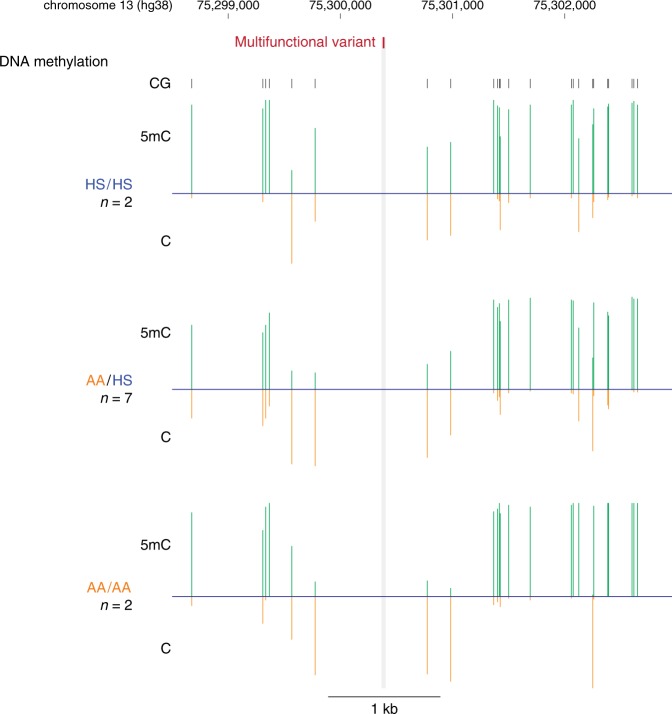
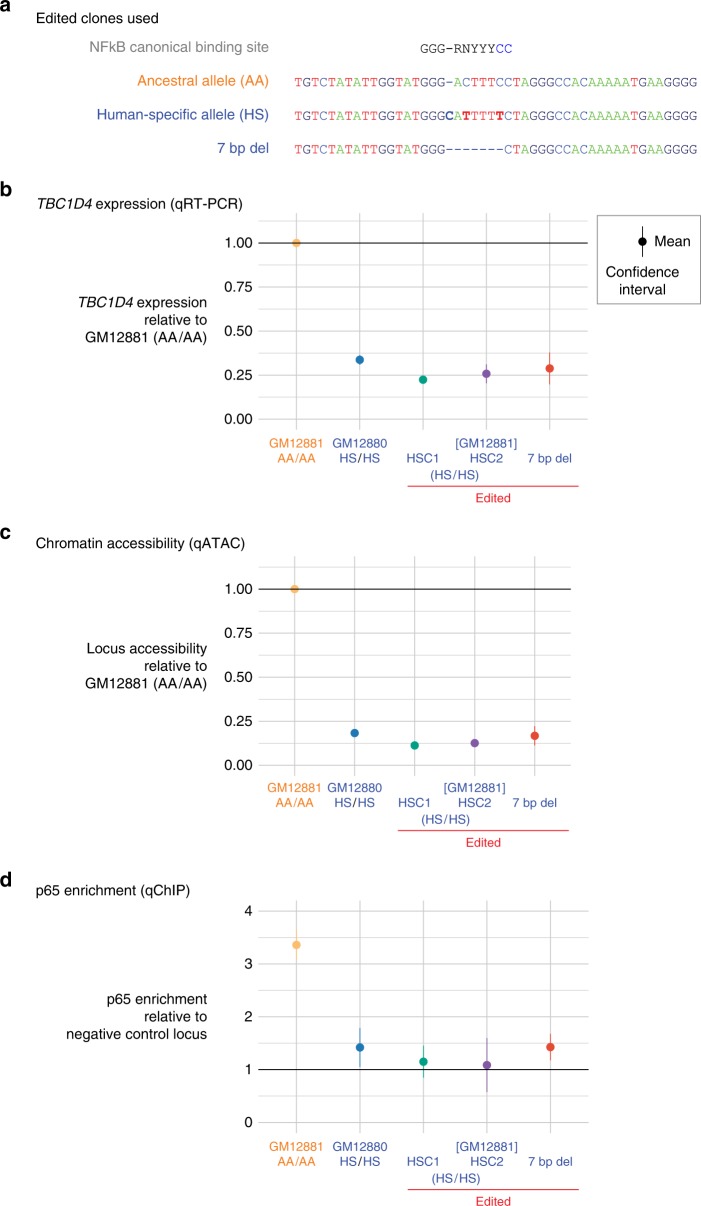
Functional variants in the genome are usually identified by their association with local gene expression, DNA methylation or chromatin states. DNA sequence motif analysis and chromatin immunoprecipitation studies have provided indirect support for the hypothesis that functional variants alter transcription factor binding to exert their effects. In this study, we provide direct evidence that functional variants can alter transcription factor binding. We identify a multifunctional variant within the TBC1D4 gene encoding a canonical NFκB binding site, and edited it using CRISPR-Cas9 to remove this site. We show that this editing reduces TBC1D4 expression, local chromatin accessibility and binding of the p65 component of NFκB. We then used CRISPR without genomic editing to guide p65 back to the edited locus, demonstrating that this re-targeting, occurring ~182 kb from the gene promoter, is enough to restore the function of the locus, supporting the central role of transcription factors mediating the effects of functional variants.
基因组中的功能变体通常通过与局部基因表达、DNA 甲基化或染色质状态的关联来识别。DNA 序列基序分析和染色质免疫沉淀研究为功能变体改变转录因子结合以发挥作用的假设提供了间接证据。在这项研究中,我们提供了功能变体可以改变转录因子结合的直接证据。我们在编码经典 NFκB 结合位点的 TBC1D4 基因中鉴定出一个多功能变体,并使用 CRISPR-Cas9 编辑该变体以去除该位点。我们表明,这种编辑会降低 TBC1D4 的表达、局部染色质可及性以及 NFκB 的 p65 组成部分的结合。然后,我们使用不进行基因组编辑的 CRISPR 将 p65 重新靶向到编辑的基因座,证明这种重新靶向,发生在距离基因启动子约 182kb 的位置,足以恢复基因座的功能,支持转录因子在介导功能变体的作用中起核心作用。