Klatzkin Rebecca R, Dasani Reedhi, Warren McKay, Cattaneo Catrina, Nadel Tzvi, Nikodem Cleo, Kissileff Harry R
Department of Psychology, Rhodes College, USA.
Department of Psychology, Rhodes College, USA.
Physiol Behav. 2019 Oct 15;210:112639. doi: 10.1016/j.physbeh.2019.112639. Epub 2019 Aug 1.
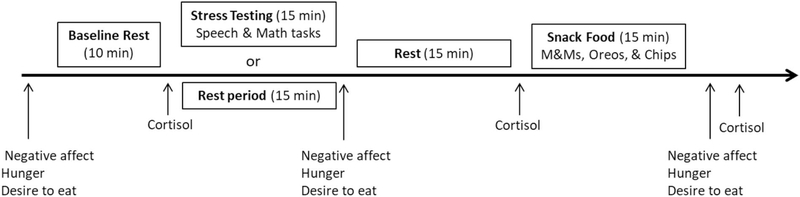
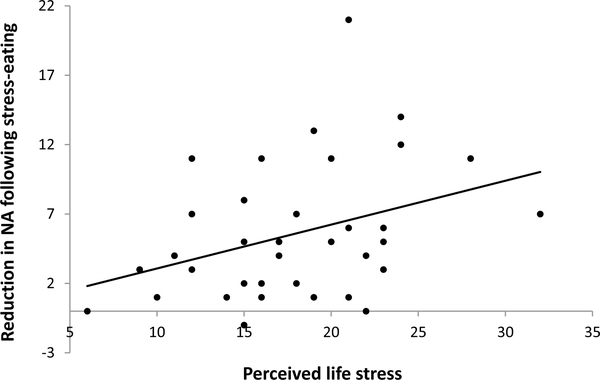
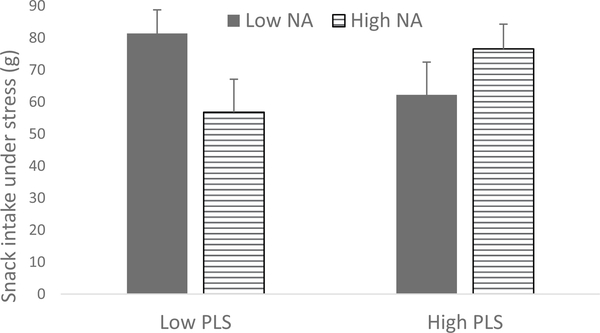
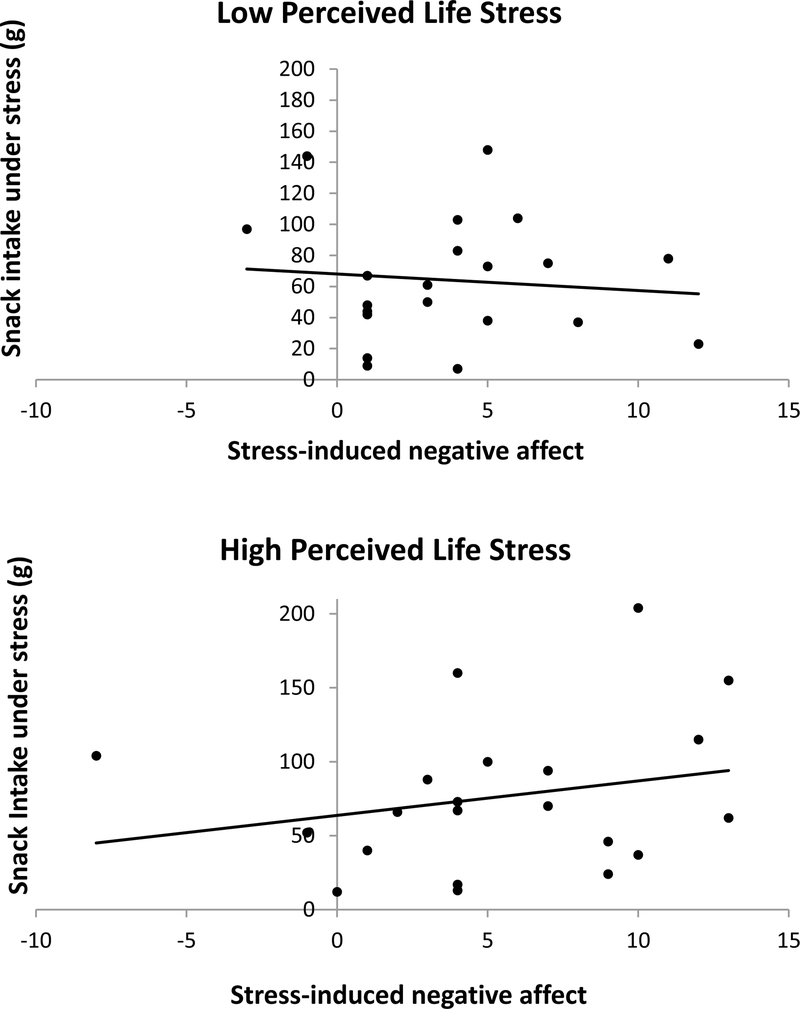
Perceived life stress (PLS) and cognitive restraint are associated with increased comfort food intake under stress and lead to weight gain and obesity, but the mechanisms by which they do so remain unclear. Stress and negative affect (NA) are associated with increased reward-driven comfort food intake as a means to 'feel better', particularly for individuals with higher PLS and cognitive restraint. Thus, we propose that PLS and cognitive restraint increase stress-eating by strengthening the relationship between stress-induced NA and comfort food intake. Upon comfort eating, individuals with higher PLS show greater reductions in the negative consequences of stress (e.g. NA). The rewarding effects of this 'emotional relief' may promote future stress-induced comfort eating, but this has yet to be examined. Thus, we investigate the pathways by which PLS or cognitive restraint increase snack intake under stress by proposing that 1) stress-induced NA is a stronger predictor of increased snack intake for women with greater PLS and cognitive restraint, and 2) greater PLS will be associated with greater reductions in NA upon snacking under stress (i.e. emotional relief). Forty-three healthy women were given snacks (chips, golden oreos, and M&Ms) to eat after a Trier Social Stress Test or rest period on separate days in counterbalanced order. Following linear regression analyses, we determined that stress-induced NA predicted more snack intake for women with higher PLS, and that higher PLS was associated with heightened emotional relief upon snacking under stress. Future studies are needed to directly assess whether greater emotional relief following stress-eating reinforces the learned association between stress-induced NA and intake, and ultimately explains greater stress-eating and obesity in women with higher PLS. This work may lead clinicians to focus on NA in the treatment of obesity-and stress-related illnesses for women with higher PLS.
感知生活压力(PLS)和认知抑制与压力下安慰性食物摄入量增加有关,并导致体重增加和肥胖,但其作用机制尚不清楚。压力和负面影响(NA)与奖励驱动的安慰性食物摄入量增加有关,这是一种“感觉更好”的方式,尤其是对于PLS和认知抑制较高的个体。因此,我们提出,PLS和认知抑制通过加强压力诱导的NA与安慰性食物摄入量之间的关系来增加应激性进食。在进行安慰性进食时,PLS较高的个体在压力的负面影响(如NA)方面表现出更大程度的减轻。这种“情绪缓解”的奖励效应可能会促进未来压力诱导的安慰性进食,但这一点尚未得到研究。因此,我们通过提出以下两点来研究PLS或认知抑制在压力下增加零食摄入量的途径:1)压力诱导的NA是PLS和认知抑制较高的女性零食摄入量增加的更强预测因素;2)在压力下吃零食时,更高的PLS将与NA的更大程度减轻相关(即情绪缓解)。43名健康女性在不同的日子里,在经历了特里尔社会压力测试或休息期后,以平衡的顺序被给予零食(薯片、金色奥利奥饼干和M&M's巧克力豆)食用。经过线性回归分析,我们确定,压力诱导的NA预测了PLS较高的女性更多的零食摄入量,并且更高的PLS与压力下吃零食时更强的情绪缓解相关。未来需要进行研究,以直接评估应激性进食后更大的情绪缓解是否会加强压力诱导的NA与摄入量之间的习得关联,并最终解释PLS较高的女性中更大的应激性进食和肥胖现象。这项工作可能会引导临床医生在治疗PLS较高的女性的肥胖症和与压力相关的疾病时关注NA。