Laboratory of Genetically Encoded Small Molecules, the Rockefeller University, 1230 York Avenue, New York City, NY 10065, USA.
Division of Gastroenterology, Department of Medicine, Icahn School of Medicine at Mount Sinai, New York City, NY 10029, USA.
Cell Host Microbe. 2019 Aug 14;26(2):273-282.e7. doi: 10.1016/j.chom.2019.07.002. Epub 2019 Aug 1.
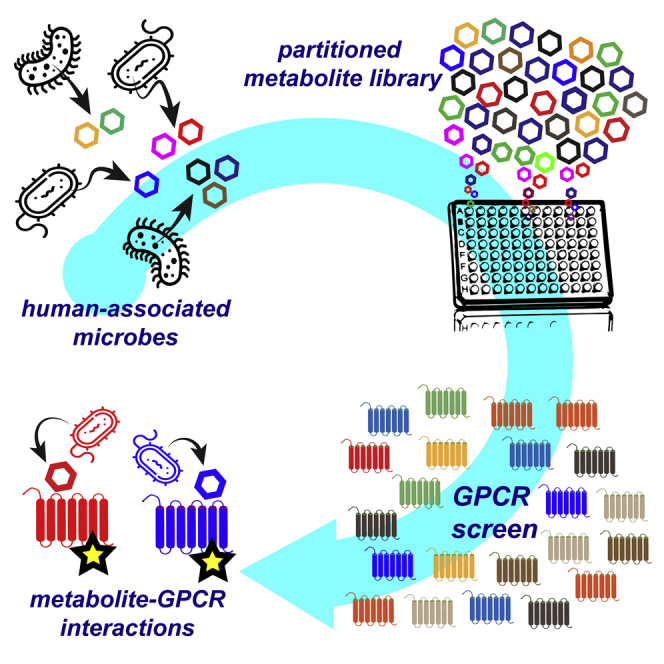
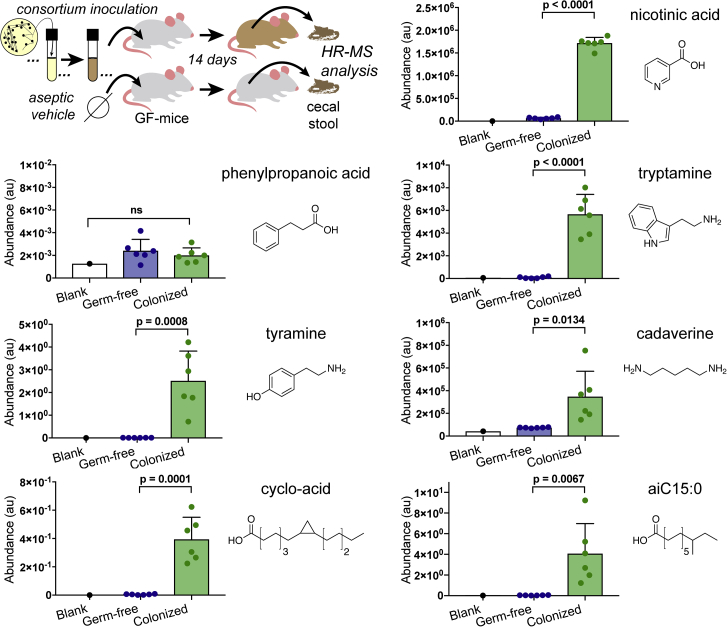
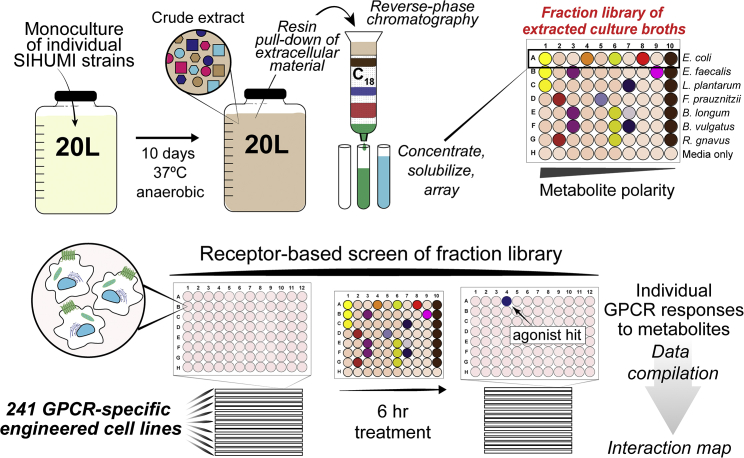
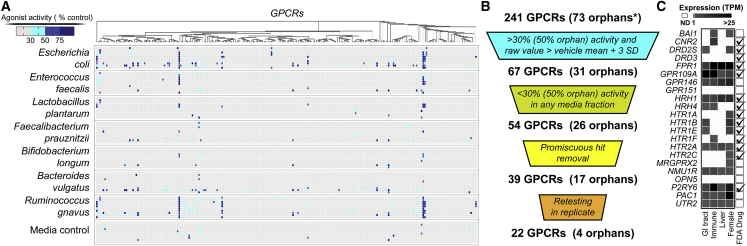
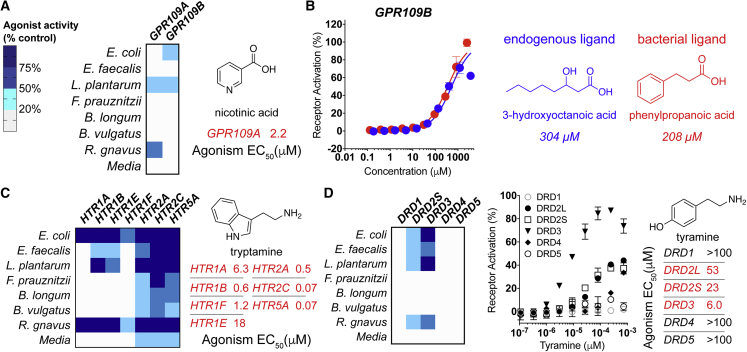
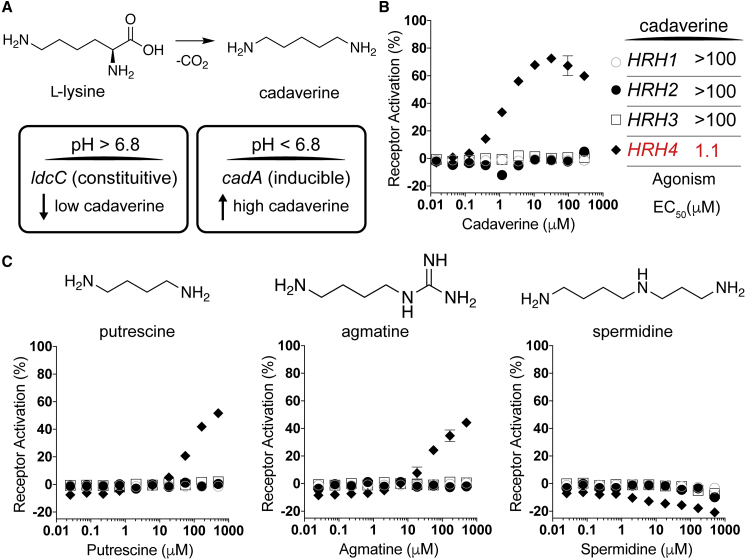
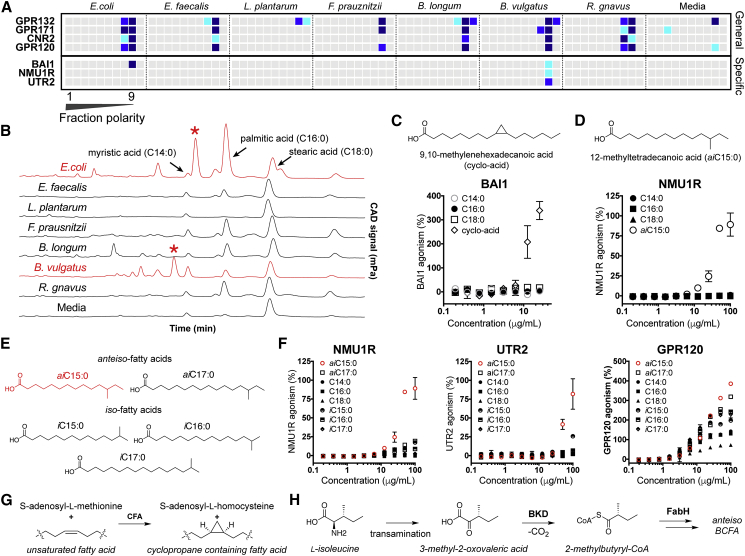
Despite evidence linking the human microbiome to health and disease, how the microbiota affects human physiology remains largely unknown. Microbiota-encoded metabolites are expected to play an integral role in human health. Therefore, assigning function to these metabolites is critical to understanding these complex interactions and developing microbiota-inspired therapies. Here, we use large-scale functional screening of molecules produced by individual members of a simplified human microbiota to identify bacterial metabolites that agonize G-protein-coupled receptors (GPCRs). Multiple metabolites, including phenylpropanoic acid, cadaverine, 9-10-methylenehexadecanoic acid, and 12-methyltetradecanoic acid, were found to interact with GPCRs associated with diverse functions within the nervous and immune systems, among others. Collectively, these metabolite-receptor pairs indicate that diverse aspects of human health are potentially modulated by structurally simple metabolites arising from primary bacterial metabolism.
尽管有证据表明人类微生物组与健康和疾病有关,但微生物组如何影响人体生理学在很大程度上仍是未知的。微生物组编码的代谢产物有望在人类健康中发挥重要作用。因此,赋予这些代谢产物功能对于理解这些复杂的相互作用和开发受微生物启发的疗法至关重要。在这里,我们使用对简化的人类微生物组的单个成员产生的分子进行大规模功能筛选,以鉴定激动 G 蛋白偶联受体 (GPCR) 的细菌代谢产物。多种代谢产物,包括苯丙酸、尸胺、9-10-亚甲基十六烷酸和 12-甲基十四烷酸,被发现与与神经系统和免疫系统等多种功能相关的 GPCR 相互作用。总的来说,这些代谢物-受体对表明,结构简单的代谢产物可能来自于主要细菌代谢,从而调节人类健康的多个方面。