Quan Qiankun, Qian Yihua, Li Xi, Li Ming
Department of Geriatrics, The Second Affiliated Hospital of Xi'an Jiaotong University, Xi'an, China.
Department of Human Anatomy, Histology and Embryology, School of Basic Medical Sciences, Xi'an Jiaotong University Health Science Center, Xi'an, China.
Front Aging Neurosci. 2019 Jul 17;11:178. doi: 10.3389/fnagi.2019.00178. eCollection 2019.
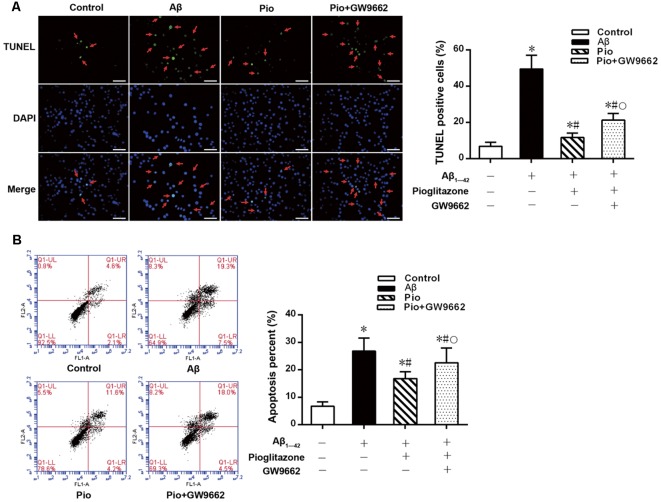
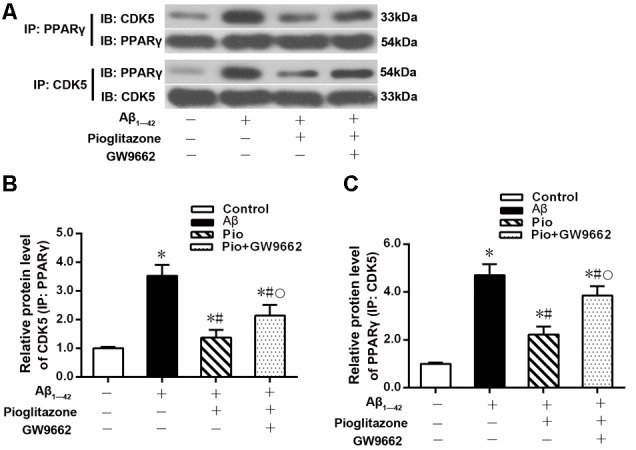
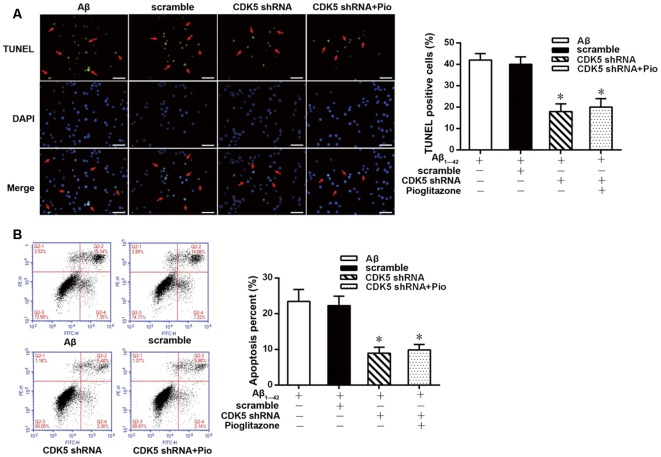
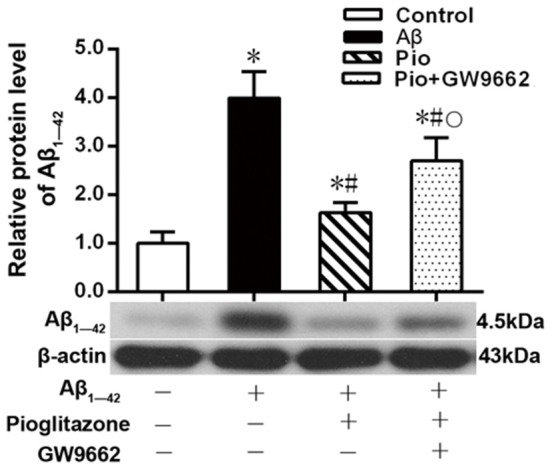
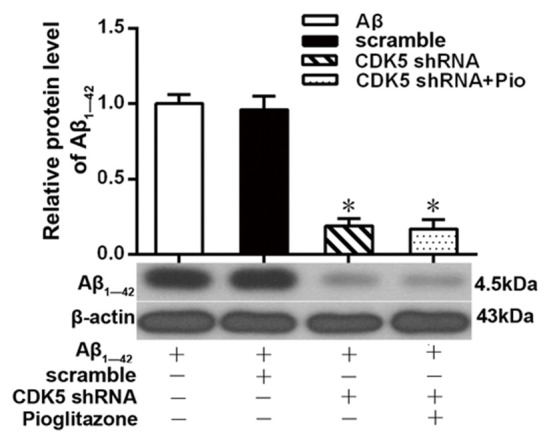
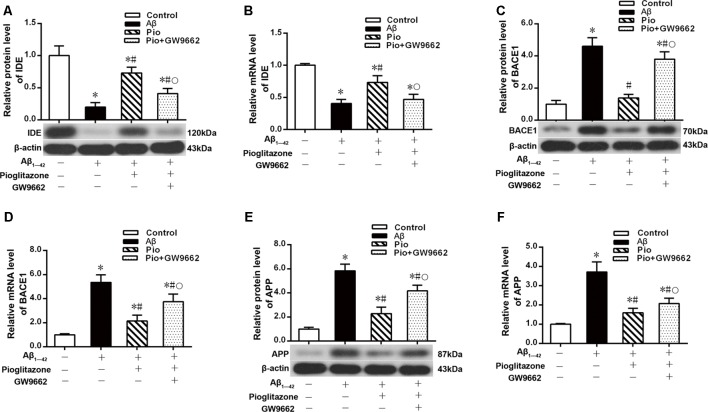
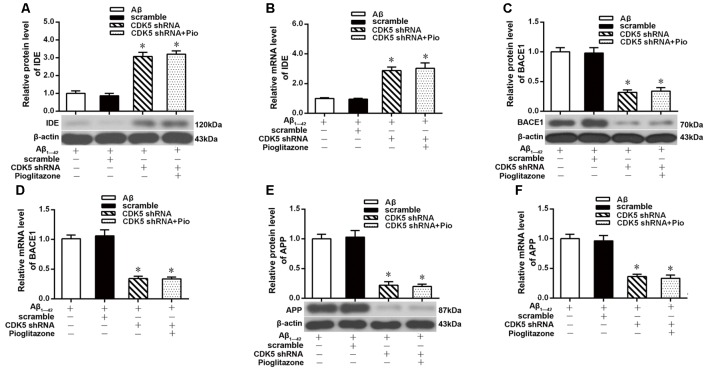
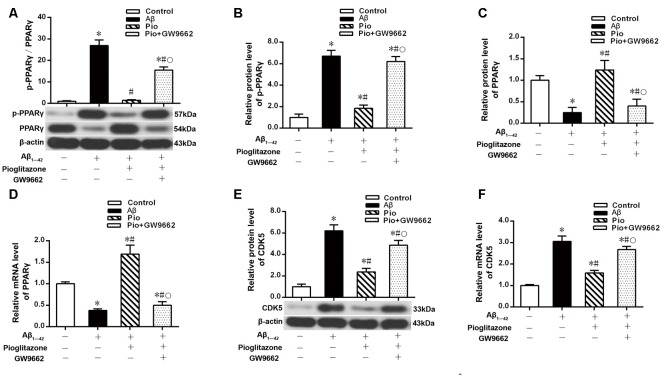
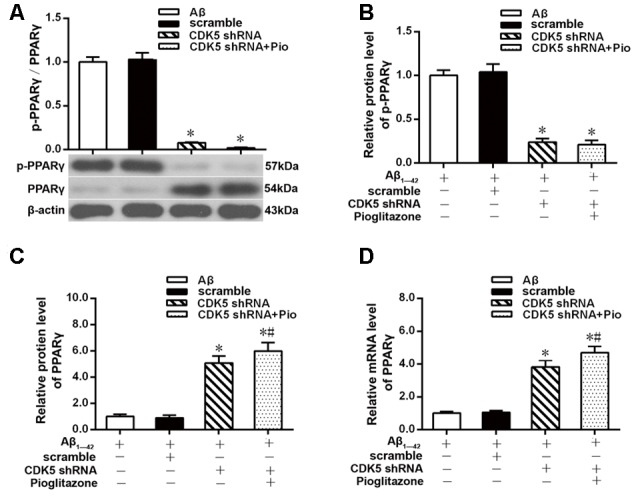
It has been demonstrated that peroxisome proliferator-activated receptor γ (PPARγ) can regulate the transcription of its target gene, insulin-degrading enzyme (), and thus enhance the expression of the IDE protein. The protein can degrade β amyloid (Aβ), a core pathological product of Alzheimer's disease (AD). PPARγ can also regulate the transcription of other target gene, β-amyloid cleavage enzyme 1 (), and thus inhibit the expression of the BACE1 protein. BACE1 can hydrolyze amyloid precursor protein (APP), the precursor of Aβ. In adipose tissue, PPARγ agonists can inhibit the phosphorylation of PPARγ by inhibiting cyclin-dependent kinase 5 (CDK5), which in turn affects the expression of target genes regulated by PPARγ. PPARγ agonists may also exert inhibitory effects on the phosphorylation of PPARγ in the brain, thereby affecting the expression of the aforementioned PPARγ target genes and reducing Aβ levels. The present study confirmed this hypothesis by showing that PPARγ agonist pioglitazone attenuated the neuronal apoptosis of primary rat hippocampal neurons induced by Aβ, downregulated CDK5 expression, weakened the binding of CDK5 to PPARγ, reduced PPARγ phosphorylation, increased the expression of PPARγ and IDE, decreased the expression of BACE1, reduced APP production, and downregulated intraneuronal Aβ levels. These effects were inhibited by the PPARγ antagonist GW9662. After CDK5 silencing with CDK5 shRNA, the above effect of pioglitazone was not observed, except when upregulating the expression of PPARγ in Aβ treated neurons. In conclusion, this study demonstrated that pioglitazone could inhibit the phosphorylation of PPARγ by inhibiting CDK5 expression, which in turn affected the expression of PPARγ target genes and , thereby promoting Aβ degradation and reducing Aβ production. This reduced Aβ levels in the brain, thereby exerting neuroprotective effects in an AD model.
已证实过氧化物酶体增殖物激活受体γ(PPARγ)可调节其靶基因胰岛素降解酶(IDE)的转录,从而增强IDE蛋白的表达。该蛋白可降解β淀粉样蛋白(Aβ),这是阿尔茨海默病(AD)的核心病理产物。PPARγ还可调节其他靶基因β-淀粉样蛋白裂解酶1(BACE1)的转录,从而抑制BACE1蛋白的表达。BACE1可水解Aβ的前体淀粉样前体蛋白(APP)。在脂肪组织中,PPARγ激动剂可通过抑制细胞周期蛋白依赖性激酶5(CDK5)来抑制PPARγ的磷酸化,进而影响PPARγ调控的靶基因的表达。PPARγ激动剂也可能对大脑中PPARγ的磷酸化产生抑制作用,从而影响上述PPARγ靶基因的表达并降低Aβ水平。本研究通过以下方式证实了这一假设:PPARγ激动剂吡格列酮可减轻Aβ诱导的原代大鼠海马神经元的神经元凋亡,下调CDK5表达,减弱CDK5与PPARγ的结合,降低PPARγ磷酸化,增加PPARγ和IDE的表达,降低BACE1的表达,减少APP产生,并下调神经元内Aβ水平。这些作用被PPARγ拮抗剂GW9662抑制。在用CDK5 shRNA沉默CDK5后,除了上调Aβ处理神经元中PPARγ的表达外,未观察到吡格列酮上述作用。总之,本研究表明吡格列酮可通过抑制CDK5表达来抑制PPARγ的磷酸化,进而影响PPARγ靶基因IDE和BACE1的表达,从而促进Aβ降解并减少Aβ产生。这降低了大脑中的Aβ水平,从而在AD模型中发挥神经保护作用。