Wu Shizhou, Liu Yunjie, Zhang Hui, Lei Lei
Department of Orthopedics, West China Hospital, Sichuan University, Chengdu, China.
State Key Laboratory of Oral Diseases, Department of Preventive Dentistry, West China Hospital of Stomatology, Sichuan University, Chengdu, China.
Evid Based Complement Alternat Med. 2019 Jul 16;2019:3276156. doi: 10.1155/2019/3276156. eCollection 2019.
Antibiotic abuse contributes to the emergence of methicillin-resistant (MRSA). It is increasingly important to screen new antimicrobial agents for the management of MRSA infections. a nontoxic Chinese herbal medicine, is considered a potential antibacterial agent. The aim of this study was to investigate the bactericidal effects of the aqueous extracts of on MRSA. The potential mechanisms of aqueous extract inhibition of the pathogenicity of MRSA are also discussed.
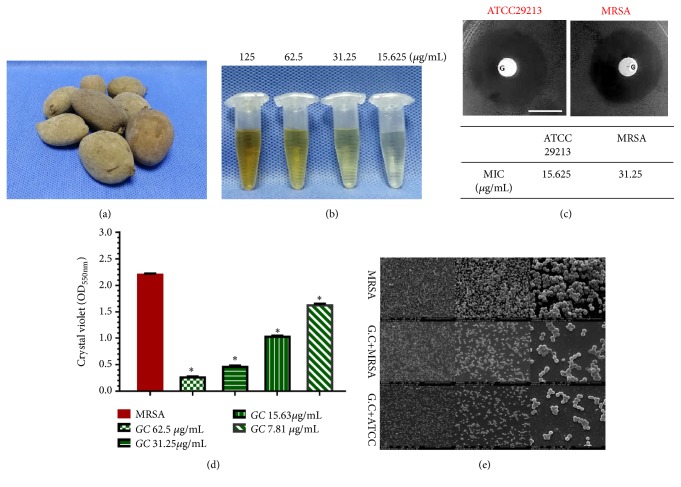
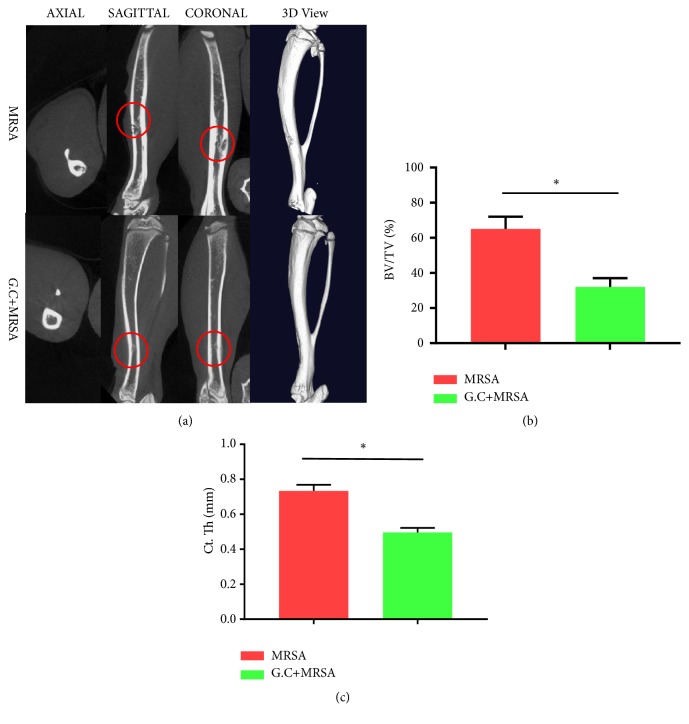
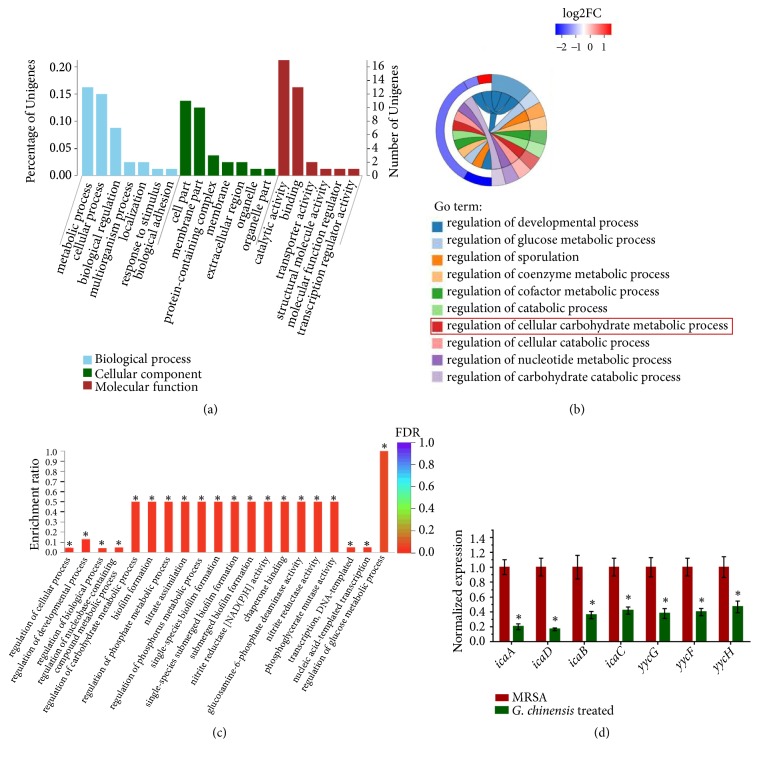
aqueous extract was prepared and its antimicrobial activities were examined by determining its minimum inhibitory concentration (MIC). Biofilm biomass was determined by scanning electron microscopy (SEM) and confocal laser scanning microscopy (CLSM). RNA sequencing (RNA-seq) was used to evaluate differentially expressed functional pathways in MRSA treated with aqueous extract. We validated the role of aqueous extract in the invasive ability and pathogenicity of MRSA using a rat infectious model.
The results indicated that MRSA was sensitive to the aqueous extracts at concentration of 31.25g/mL. extract led to a reduction in dextran-dependent aggregation and biofilm formation in MRSA. Based on the transcriptome analysis, aqueous extracts significantly downregulated the gene expression related to biofilm formation and carbohydrate metabolism. aqueous extract inhibited the invasive ability and the pathogenicity of MRSA .
The antimicrobial properties of aqueous extract are likely related to its modulation of MRSA biofilm formation and carbohydrate metabolism. aqueous extract is a promising supplementary therapy to lessen or eliminate the use of antibiotics and is a potential tool for the management of MRSA infections.
抗生素滥用导致耐甲氧西林金黄色葡萄球菌(MRSA)的出现。筛选用于治疗MRSA感染的新型抗菌剂变得越来越重要。一种无毒的中草药被认为是一种潜在的抗菌剂。本研究的目的是研究该中草药水提取物对MRSA的杀菌作用。还讨论了该中草药水提取物抑制MRSA致病性的潜在机制。
制备该中草药水提取物,并通过测定其最低抑菌浓度(MIC)来检测其抗菌活性。通过扫描电子显微镜(SEM)和共聚焦激光扫描显微镜(CLSM)测定生物膜生物量。RNA测序(RNA-seq)用于评估经该中草药水提取物处理的MRSA中差异表达的功能途径。我们使用大鼠感染模型验证了该中草药水提取物在MRSA侵袭能力和致病性方面的作用。
结果表明,MRSA对浓度为31.25g/mL的该中草药水提取物敏感。该提取物导致MRSA中葡聚糖依赖性聚集和生物膜形成减少。基于转录组分析,该中草药水提取物显著下调了与生物膜形成和碳水化合物代谢相关的基因表达。该中草药水提取物抑制了MRSA的侵袭能力和致病性。
该中草药水提取物的抗菌特性可能与其对MRSA生物膜形成和碳水化合物代谢的调节有关。该中草药水提取物是一种有前途的辅助疗法,可减少或消除抗生素的使用,是治疗MRSA感染的潜在工具。