
孕期补充益生菌会影响肠道菌群和免疫状态。
Probiotic Supplementation During Human Pregnancy Affects the Gut Microbiota and Immune Status.
机构信息
Department of Obstetrics and Gynecology, The First Affiliated Hospital of Jinan University, Guangzhou, China.
Department of Obstetrics and Gynecology, The Third Affiliated Hospital of Sun Yat-Sen University, Guangzhou, China.
出版信息
Front Cell Infect Microbiol. 2019 Jul 16;9:254. doi: 10.3389/fcimb.2019.00254. eCollection 2019.
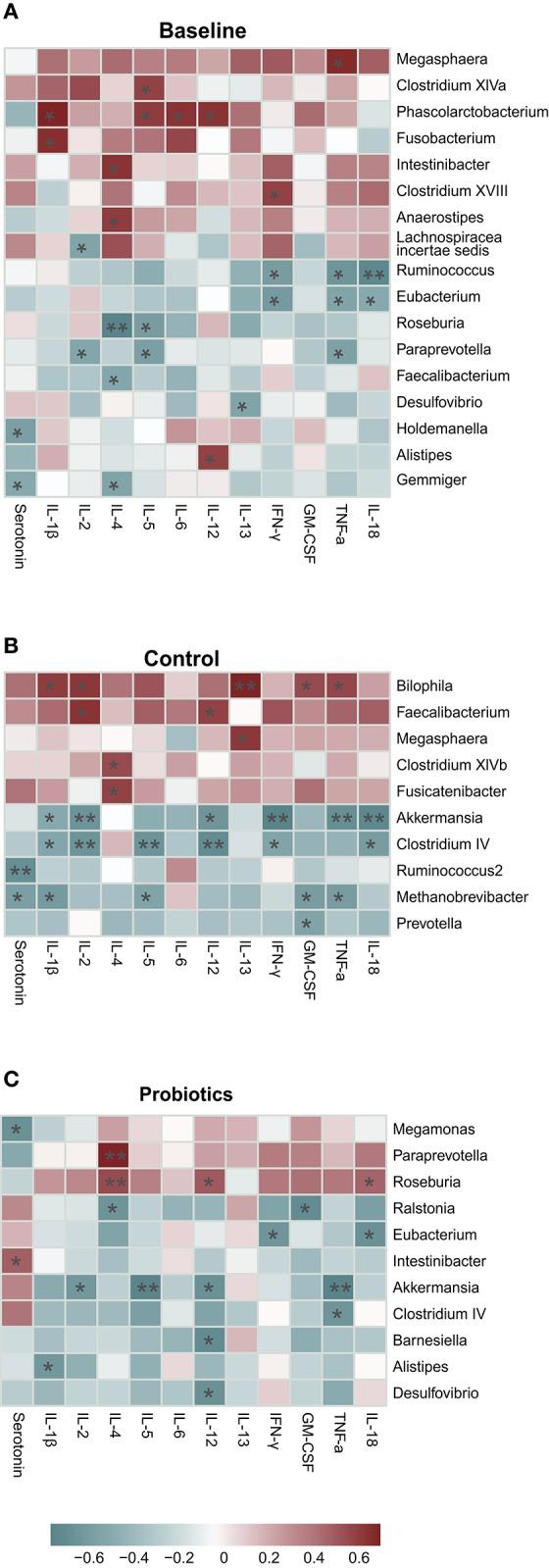
The consumption of probiotics and fermented foods has been very popular in recent decades. The primary aim of our study was to evaluate the effect of probiotics on the gut microbiota and the changes in inflammatory cytokines after an average of 6.7 weeks of probiotic administration among normal pregnant women. Thirty-two healthy pregnant women at 32 weeks of gestation were recruited and divided into two groups. The probiotic group ingested combined probiotics until after birth. The base characteristics of the probiotics and control groups showed no significant differences. The structure of the fecal microbiota at the genus level varied during the third trimester, and administration of probiotics had no influence on the composition of the fecal microbiota however, many highly abundant taxa and core microbiota at the genus level changed in the probiotic group when compared to the control group. The analysis of cytokines showed that IL-5, IL-6, TNF-α, and GM-CSF had equal levels between the baseline and control groups but were significantly increased after probiotic administration (baseline = control < probiotics). Additionally, levels of IL-1β, IL-2, IL-12, and IFN-γ significantly increased among the three groups (baseline < control < probiotics). This result demonstrated that probiotics helped to shift the anti-inflammatory state to a pro-inflammatory state. The correlation analysis outcome suggested that the relationship between the microbiota and the cytokines was not strain-dependent. The gut microbiota varied during the third trimester. The probiotics demonstrated immunomodulation effects that helped to switch over to a pro-inflammatory immune state in the third trimester, which was important for labor.
近几十年来,益生菌和发酵食品的消费非常流行。我们的主要目的是评估益生菌对肠道微生物群的影响,以及在正常孕妇平均 6.7 周的益生菌给药后炎症细胞因子的变化。招募了 32 名妊娠 32 周的健康孕妇,并将其分为两组。益生菌组在分娩后服用复合益生菌。益生菌组和对照组的基本特征无显著差异。在第三个三个月,粪便微生物群在属水平上的结构发生了变化,益生菌的给药对粪便微生物群的组成没有影响,然而,与对照组相比,益生菌组的许多高度丰富的分类群和核心微生物群在属水平上发生了变化。细胞因子分析表明,IL-5、IL-6、TNF-α 和 GM-CSF 在基线和对照组之间水平相等,但在益生菌给药后显著增加(基线=对照组<益生菌组)。此外,三组中 IL-1β、IL-2、IL-12 和 IFN-γ 的水平均显著升高(基线<对照组<益生菌组)。这一结果表明,益生菌有助于将抗炎状态转变为促炎状态。相关性分析结果表明,微生物群和细胞因子之间的关系不受菌株的影响。在第三个三个月,肠道微生物群发生了变化。益生菌表现出免疫调节作用,有助于在第三个三个月转向促炎免疫状态,这对分娩很重要。


 Zotero 插件