Campiglio Chiara Emma, Contessi Negrini Nicola, Farè Silvia, Draghi Lorenza
Department of Chemistry, Materials and Chemical Engineering "G. Natta", Politecnico di Milano, via Mancinelli 7, 20131 Milan, Italy.
INSTM, National Interuniversity Consortium of Materials Science and Technology, Local Unit Politecnico di Milano, Piazza Leonardo da Vinci 32, 20133 Milan, Italy.
Materials (Basel). 2019 Aug 4;12(15):2476. doi: 10.3390/ma12152476.
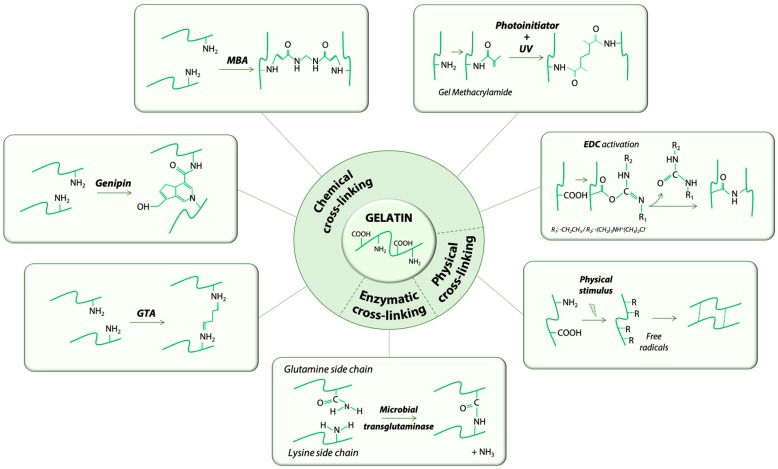
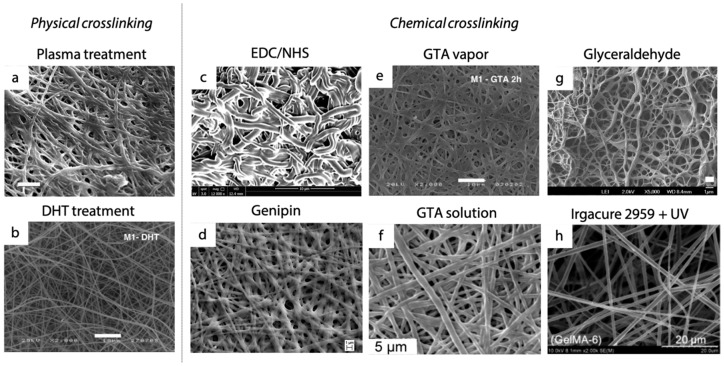
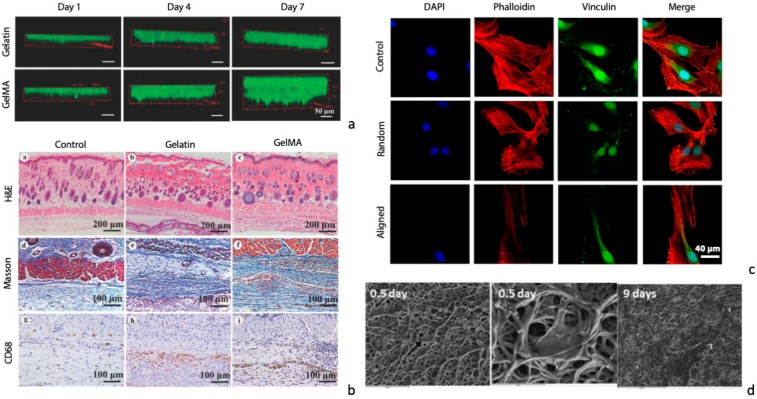
Electrospinning is an exceptional technology to fabricate sub-micrometric fiber scaffolds for regenerative medicine applications and to mimic the morphology and the chemistry of the natural extracellular matrix (ECM). Although most synthetic and natural polymers can be electrospun, gelatin frequently represents a material of choice due to the presence of cell-interactive motifs, its wide availability, low cost, easy processability, and biodegradability. However, cross-linking is required to stabilize the structure of the electrospun matrices and avoid gelatin dissolution at body temperature. Different physical and chemical cross-linking protocols have been described to improve electrospun gelatin stability and to preserve the morphological fibrous arrangement of the electrospun gelatin scaffolds. Here, we review the main current strategies. For each method, the cross-linking mechanism and its efficiency, the influence of electrospinning parameters, and the resulting fiber morphology are considered. The main drawbacks as well as the open challenges are also discussed.
静电纺丝是一种用于制造用于再生医学应用的亚微米级纤维支架以及模拟天然细胞外基质(ECM)的形态和化学性质的卓越技术。尽管大多数合成聚合物和天然聚合物都可以进行静电纺丝,但由于明胶存在细胞相互作用基序、来源广泛、成本低、易于加工且具有生物可降解性,因此它常常是首选材料。然而,需要进行交联以稳定静电纺丝基质的结构,并避免明胶在体温下溶解。已经描述了不同的物理和化学交联方案,以提高静电纺丝明胶的稳定性,并保持静电纺丝明胶支架的形态纤维排列。在此,我们综述当前的主要策略。对于每种方法,我们都考虑了交联机制及其效率、静电纺丝参数的影响以及所得纤维形态。还讨论了主要缺点以及面临的挑战。